When it comes to their food and beverages, today’s consumers want it all.
Fun and function. Affordability plus convenience. Pleasure with a side of purpose. Exotic, multi-sensory experiences – but only if they’re also sustainable and clean label.
These competing priorities were a subject of focus in a recent webinar entitled “Innovation Under Pressure: How Brands Are Winning Today’s Consumer” hosted by The Food Institute and sponsored by SIAL Paris in which presenters highlighted key global innovation trends.
“Consumers want it all, and everything must be tailored to their expectations, needs, and desires,” said Camille Broyard, Director of Innovation at ProteinesXTC and a webinar presenter.
Let’s examine how this shift has been showing up across various categories.
The Pleasure Axis, Reinvented
Broyard kicked off her portion of the webinar by guiding attendees through a chart illustrating the weight of various innovation “axes” across global regions.
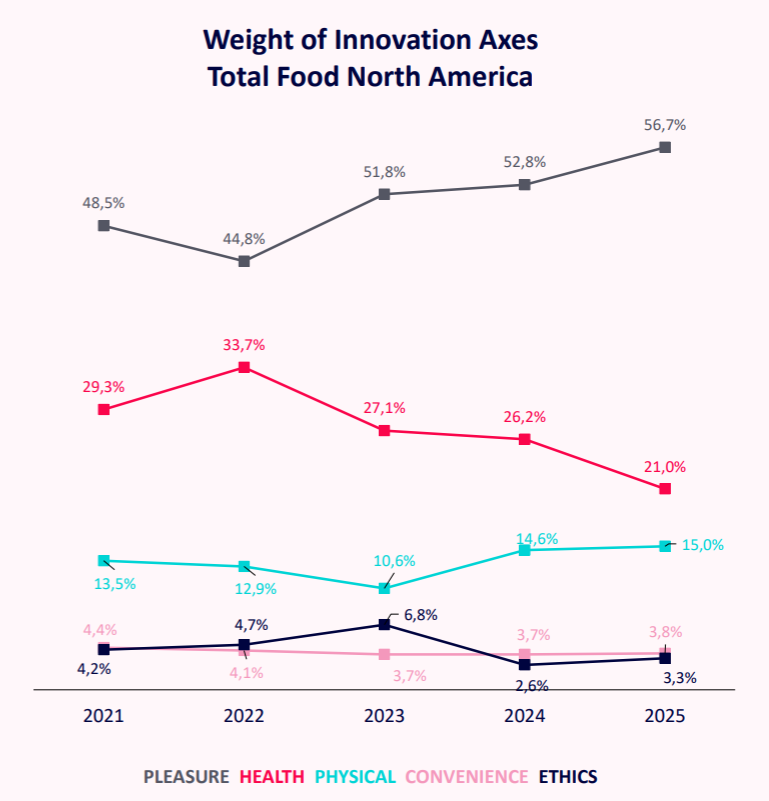
Image courtesy of Camille Broyard and ProtéinesXTC.
While the ‘pleasure axis’ reigns supreme in North America, where pleasure is a key purchasing driver, Broyard argued that the attribute is no longer limited to premium indulgences or traditional comfort foods and therefore requires strategic reinvention to remain relevant.
In recent years, consumers have become increasingly interested in this innovation axis, which encompasses pleasure-related trends ranging from multi-sensory experiences to bold flavors.
This is why F&B brands have been heavily leaning into “boldness and highly personal taste experiences” like intense flavors and novel textures in discovery-forward formats.
Broyard cited condiments and sauces as a clear example, identifying the category as a “dynamic playground” for innovation – especially innovation that’s imbued with ‘exoticism’ and sensory variety.
As consumer demand for Asian-inspired sauces, fermented products, and ultra-spicy formats continues to rise, the segment has evolved from a mere afterthought into a full-fledged culinary priority.
In North America, much of the innovation is being fueled by what Broyard described as “intense flavors and unique textures,” e.g. Nashville-style hot chicken, mega-spicy products, crunchy formats, and TikTok-friendly foods that stimulate multiple senses simultaneously.

Wellness and ‘Medicalization’
Although pleasure remains king, other innovation axes are at play that brands shouldn’t overlook – especially health.
Broyard contended that health remains a major priority, though it’s changing shape.
Rather than relying on broad claims around ‘natural’ or organic ingredients, brands have been veering toward functional claims that are more specific, such as protein/fiber content and products catered toward GLP-1 users.
“North America is not turning away from health. It is redefining it,” Broyard explained, while highlighting a shift toward a “more functional, almost clinical, and performance-oriented approach.”
However, it’s crucial for F&B brands to figure out how to make all of this feel and sound enjoyable – not medicinal.
And then there’s the affordability aspect.
Due to a prolonged period of inflation, consumers remain price-conscious, indicating that the brands launching products that combine pleasure and health at a justifiable price point are the most likely to win.
The Food Institute Podcast
2026 may be the year of the GLP-1, but what are the risks to consumers who take this class of drugs? Suzy Badaracco, president of Culinary Tides Inc., explains the health risks associated with GLP-1 usage, and how the food industry can best serve this category of consumers.