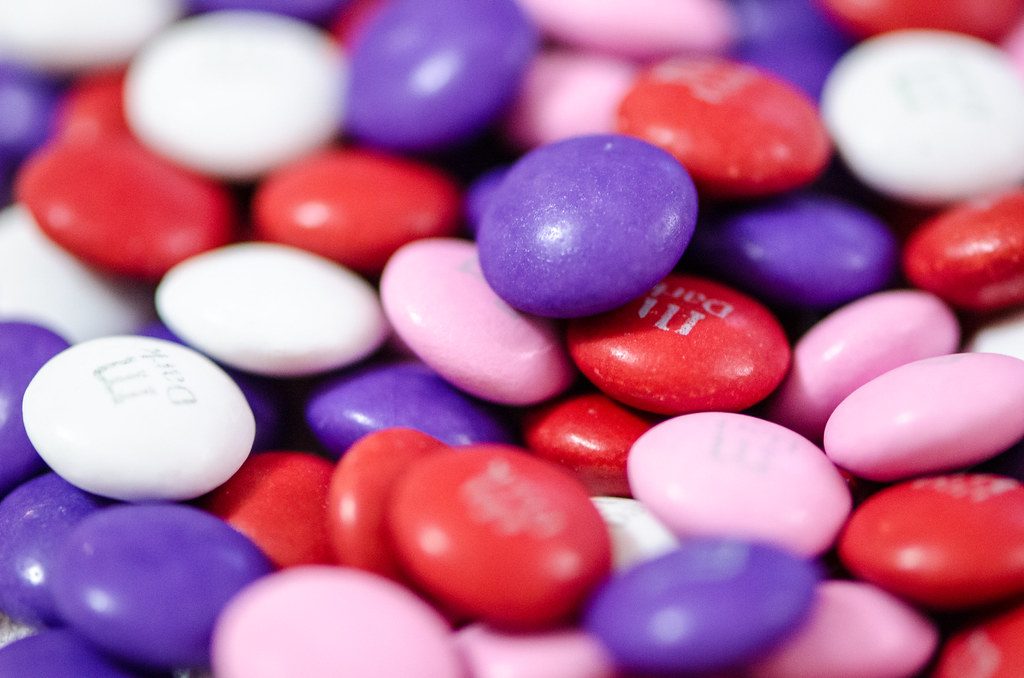
This month, Mars launched a version of M&Ms made without synthetic colorants, as reported by The Wall Street Journal.
However, two classic colors will be missing from this batch – blue and brown – as producing candies in these shades using only natural dyes has been more difficult and expensive than anticipated.
Mars initially opted to use spirulina, a nutrient-dense blue-green algae, as its substitute for Blue 1 dye. However, because it’s a powder, it foams when combined with sugary syrups, producing a viscous mixture that’s been clogging up the spray nozzles and leaving a sticky residue inside pipes at the company’s factories, increasing both production costs and the likelihood of food-safety risks like mold.
I was curious to learn more about these challenges, which highlight broader challenges in clean-label candy production, so I spoke with Jane Moon, a pharmacist and supplement formulator.
“Blue is by far the hardest natural colorant to formulate, and the margin between synthetic and natural is enormous. Synthetic dyes are small and robust enough to survive pH, temperature, and light changes without issues, which is why they were used successfully for a century,” Moon told FI.
“Spirulina blue relies on phycocyanin, a protein pigment,” she added, noting that it has a melting point of approximately 140° F and a low pH tolerance that results in a grayish-green color – and light exposure makes it fade even further.
“This instability of a protein-based colorant is what’s ‘gumming up’ the high throughput production line. Candies need rapid high-throughput manufacturing, which works with intense heat and light exposure,” Moon explained.
I was initially confused about the company’s inability to produce a natural version of its brown candies, given that cocoa is brown; however, Moon told me intuition can be misleading in this regard.
“Cocoa solves brown in case of chocolate, sure, but brown is often layered and mixed with other colorants to create a specific, precise color, and, more importantly, many browns are mixed with blue,” Moon explained, which directly applies to the M&Ms debacle, as its brown shade reportedly contains “a fair bit of blue” dye.
“If you have lost your blue, you will have no brown either. Of course, natural browns do exist, for example, cocoa and caramel coloring. However, hitting that specific brown is an engineering problem of a completely different order compared to making something dark brown,” Moon told FI.
Challenges and Opportunities
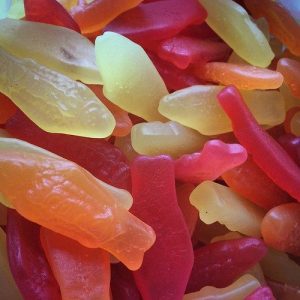
Moon emphasized the complexity that’s associated with producing clean-label candy, as changing one component can have a ripple effect across the entire system.
“If you replace gelatin with a vegan substitute for your gummy candies (e.g. pectin or starch), your setting time and product properties change. If you use natural sugars instead of refined sugar or HFCS (e.g. dates or allulose), the properties of the mixture such as crystallization and browning change,” Moon explained.
Perhaps this is why the category remains relatively uncrowded on Faire, according to Hannah Wall, a trend expert for the online wholesale platform for independent retailers. In fact, Faire identified clean-label Swedish candy as one of four candy trends outlined in its Independent Retail Pulse report.
Wall said that, while “organic” has essentially become mandatory for high-performing confectionery items on Faire, “explicit clean-label positioning remains unique enough that brands leading with it may read as premium rather than mainstream,” noting that this has created opportunities for both makers of clean-label candy and retailers selling it.
When asked why clean-label Swedish candy performs especially well, Wall pointed to its TikTok virality, as independent retailers often pay close attention to such trends.
“Swedish candy lands perfectly at the intersection of indulgent and not-as-naughty. The virality creates the initial excitement, but the lack of synthetic dyes and exclusion of high-fructose corn syrup make it an easy yes for any sweet tooth,” Wall explained.
“A retailer who’s already excited about a trend doesn’t have to talk themselves into stocking it. They can feel good about putting it on their shelves and know their customers will feel guilt-free putting it in their carts.”
Food for Thought Leadership
Brittany Borer, The Food Institute’s meteorologist turned food reporter, talks about the potential arrival and implications of a Super El Niño. Learn how elevated temperatures, heavier precipitation, flooding, drought conditions, and ongoing water-management challenges in the American West could impact the food industry.