New research from Lightspeed Commerce reveals that support for both adults-only and dog-friendly dining spaces is growing, although it varies significantly among age demographics.
The company’s “State of Hospitality 2026” report found that younger diners in particular are reshaping the dining-out experience, influencing everything from the menu to the atmosphere.
Let’s dig into each of these trends.
Adults Only
Three out of four survey respondents (75%) said they believe restaurants should offer some form of adults-only dining, including 79% of parents – and while 50% say it depends on the setting, 26% are in full support of the idea.
Consumers are most supportive of policies restricting children in the late evening (49%), followed by restrictions in:
- Designated adults-only sections (46%)
- Romantic settings (46%)
- Alcohol-focused venues (43%)
At the same time, many of these diners are A-OK with canines hanging out in these spaces.
Pups Welcome
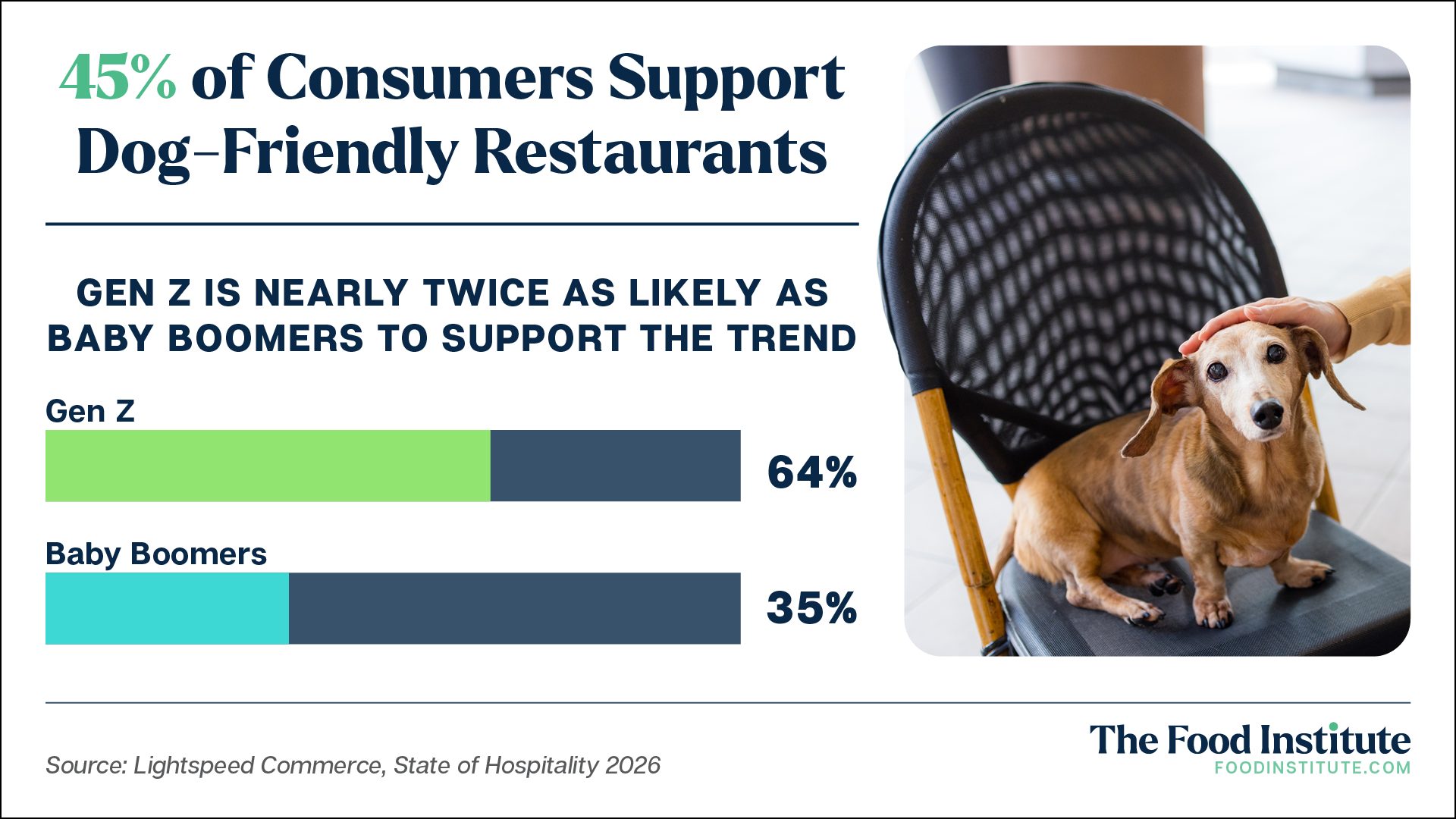
According to the report, 45% of consumers are fully on board with allowing dogs at restaurants in some capacity, including:
- 16% who are comfortable with dogs both indoors and outdoors
- 29% who support outdoor-only access
And among Gen Z consumers, that support increases to 64%, compared with just 35% of Baby Boomers.
Izzy Kharasch, president of foodservice advisory firm Hospitality Works, told FI that the first dog-friendly restaurant in the U.S. actually opened in the early 1980s; however, the trend didn’t truly take off until the last decade or so.
“Now, the popularity of dog-friendly restaurants is exploding,” he explained.
Angela Moore, a self-described dog lover and owner of consultancy firm Moore Hospitality, believes the pandemic fueled the growth of the trend, when dog ownership was booming, and many folks began prioritizing quality time with their pets to a greater degree.
“People want to spend as much time as possible with their furry friends,” Moore told FI, adding that many view their dogs as their “constant companions, or even their children,” and don’t want to leave them at home for too long.
“Allowing dogs is a great opportunity for dining and drinking establishments, as owners are likely to stay longer and spend more money with their pets in tow,” Moore explained.
This attribute is especially appealing in tourism hotspots like Napa, where Lauren Taylor works as general manager of Wilfred’s Lounge, a tiki cocktail bar and island-inspired restaurant on the riverfront.
“Where our restaurant is located, being dog-friendly is very important. In recent years, more hotels are dog-friendly, which means we need to accommodate these tourists and their furry friends,” Taylor told FI.
As for the folks who either dislike dogs or don’t want them around at dinner, the lounge accommodates these guests by seating them in human-only areas to ensure they also enjoy their experience.
While running a dog-friendly establishment can be great for boosting traffic, it comes with its own challenges – as does owning a dog.

Dog-Friendly Dilemmas
Moore said she often works at a dog-friendly café in NYC called Boris & Horton, and a common issue that arises is “pups peeing on the floor.”
However, the establishment has several solutions in place, including stocking spray bottles of cleaner and paper towels.
Fights can also transpire at times, so the café doesn’t allow toys on site.
“They also provide bandanas for dogs who don’t like to be petted. During my first visit, I met a chihuahua named Freddy wearing a bandana reading: I BITE,” Moore noted.
Helene Henderson, chef and founder of Malibu Farm, a concept with restaurants in Malibu, Newport Beach, San Diego, Tiburon, and Lanai, has also dealt with her fair share of fights – and not only between dogs.
“In general, we have more unruly humans than dogs, but if we do have dogs that seem like they might not get along, we try to seat them as far apart from each other as possible,” Henderson told FI.
Now that we’ve covered the perks and drawbacks of dog-friendly establishments, let’s explore some success strategies.
Best Practices
Several experts advised operators of dog-friendly establishments to post clear policies on the premises.
Kharasch recommends requiring that dogs are leashed at all times and informing owners that their dogs will be asked to leave if they bark excessively or display aggression, while Moore stressed the importance of complying with all health codes and regulations.
She also advised operators to register their businesses on sites like bringfido.com to keep them on dog owners’ radar.