Emily Buckley demands one thing, above all others, from her employer: her boss better have a deep belief in their business. In that respect, Buckley and DTC brand Wild Alaskan Company have been an ideal pairing.
“I’ve been on a mission to change the food industry one business at a time,” said Buckley, the senior VP of marketing and innovation with Wild Alaskan Company, whose CEO, Arron Kallenberg, made it known from Day 1 that he takes a stringent approach to sourcing quality seafood.
“We’re trying to be a model in the industry,” Buckley said, adding that, early in her tenure at Wild Alaskan, she knew “okay, this is the right place to be, because (Kallenberg) is really going to make a difference – not only in seafood but the broader industry – with the way he’s running his business.”
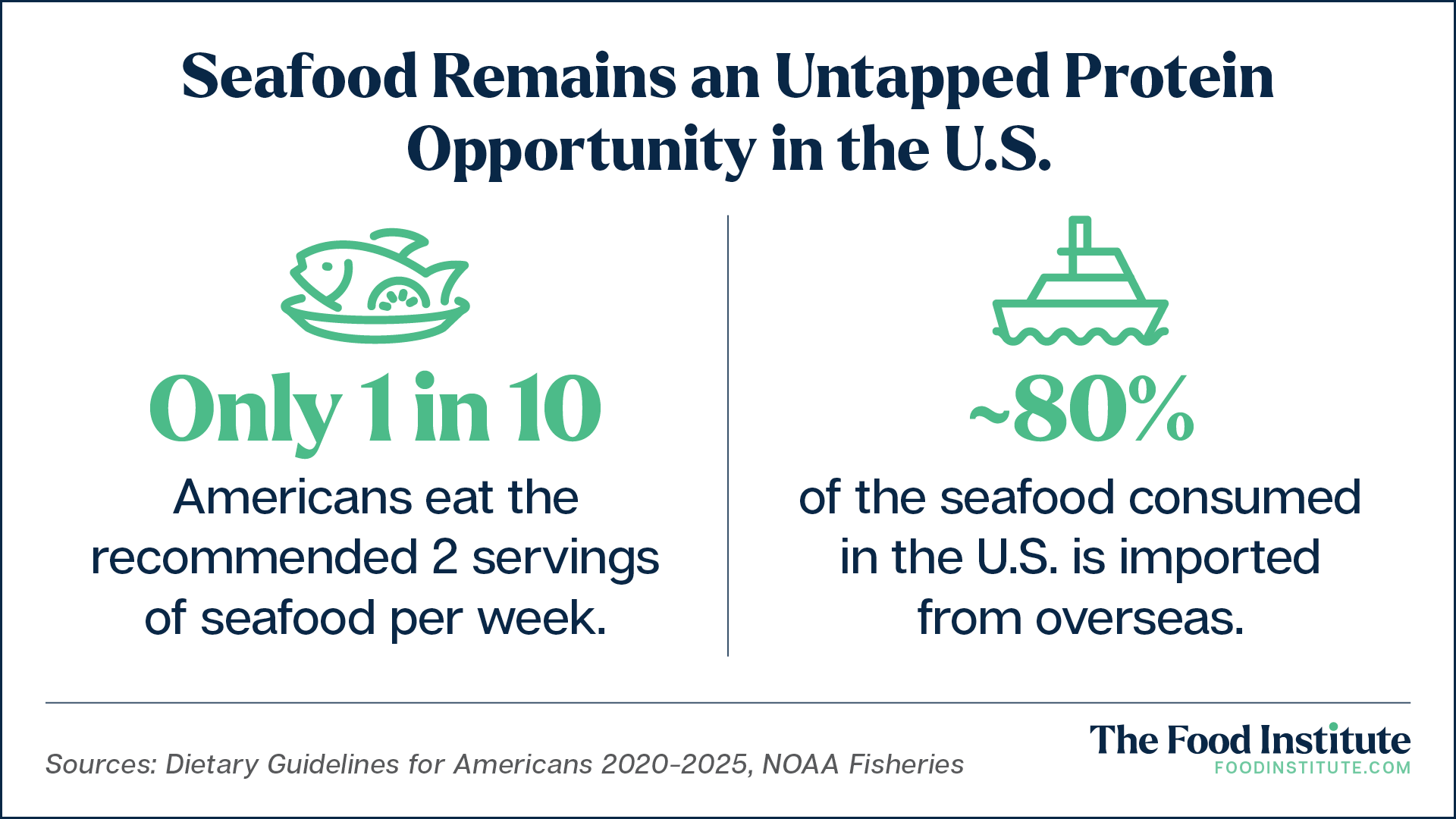
Achieving success in a direct-to-consumer business is never easy. But Wild Alaskan stands out from the crowd in a few key respects. First, the nine-year-old company, based in Homer, Alaska, sells seafood that’s above reproach. The CEO, his wife (Wild Alaskan head of communications Monica Haim-Kallenberg) along with their nearly 100 employees, find it unacceptable that nearly 80% of the seafood consumed in the U.S. is imported from overseas.
As a result, Wild Alaskan is focused on selling premium, wild-caught seafood.
Seafood, Buckley said, “is the most untapped protein in the United States.”
“One in 10 consumers eat the recommended two portions of seafood a week – and 68 percent of it is happening outside of the household. That basically means that (consumers) don’t really know what to do with it,” she told The Food Institute. “They don’t know how to cook it, and the consumption rates and repurchase rates pale in comparison to chicken, pork, and beef.
“So, from our perspective, we have to educate Americans on what quality seafood means.”

The Keys to DTC Business Success
The DTC space has become rather crowded in recent years. In recent years, major protein businesses, like Butcher Box, joined the fray in selling fish via the Internet.
Brands like Wild Alaskan also must combat a general lack of trust from consumers toward DTC businesses. Wild Alaskan addresses those concerns through transparent storytelling.
“We invest a lot in content,” Buckley said. “We invest a lot in storytelling about our seafood and put Arron and his family at the forefront of the brand, because their story is legitimate and it’s authentic. … Arron and Monica’s story really resonates, so (we) lean into their story.”
Wild Alaskan has utilized social media platforms like Facebook, Instagram, and TikTok to build a devoted following. Now the brand has surpassed 200,000 weekly email subscribers.
“People love Alaskan content,” Buckley said. “We find that consumers want to engage with Alaska.”
What do Gen Z Consumers Demand?
The DTC seafood brand especially resonates with Gen Z.
“With younger consumers, you’re just seeing so many of them are getting their groceries online, from Instacart and Amazon,” Buckey noted. “So, there’s a willingness to purchase direct to consumer.”
In 2026, American consumers also demand convenience.
“You see a lot of the younger demographics that are favoring convenience over a couple dollars of savings at retail, so that certainly helps us,” Buckley explained.
Brands that can articulate and back their sustainability claims are also finding success these days – even if they operate in the premium DTC space, where brands are essentially asking their customers to make additional purchases beyond their usual visit to a grocery store.
“DTC gives you the platform to tell a bit more of a story,” Buckley said. “So, if the story is authentic and you can tell that, then we see that there’s more willingness [from consumers] to pay. … The beauty of DTC is it gives you a mic to tell that story, versus in retail where you only have your packaging to educate (shoppers).
“Convenience and sustainability: if you hit those markers then you tend to see people stretch to purchase products that are more on the premium side.”