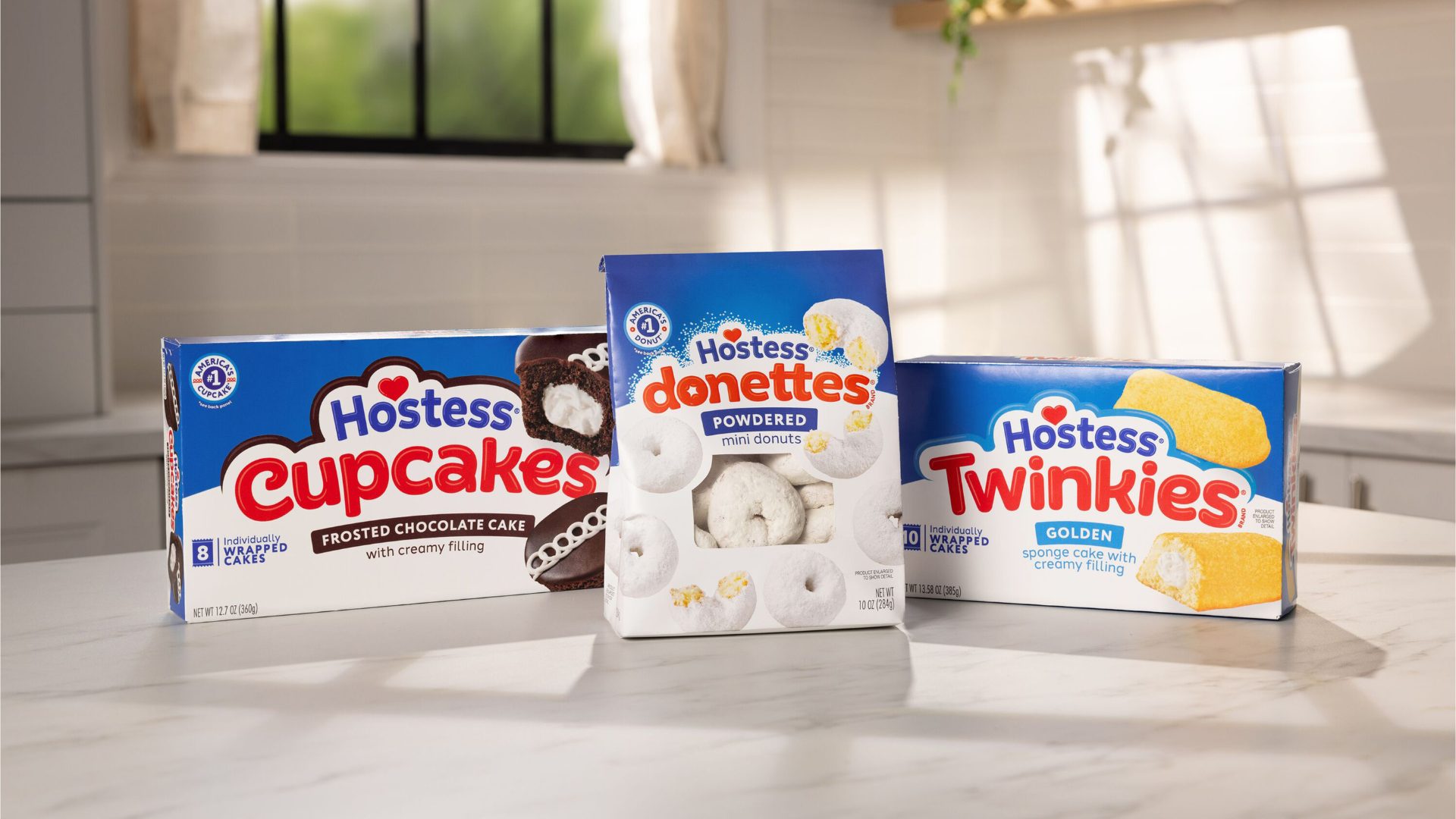
It’s been more than a century since Hostess introduced its cupcakes and nearly that long since it introduced the Twinkie. Smucker’s is finding out the hard way that snacking habits have changed since then.
The iconic cupcake was introduced in 1919 and the Twinkie in 1930. They’ve been deep-fried and mixed into ice cream. Yet The Wall Street Journal reports Smucker’s $5 billion purchase three years ago has hit its bottom line: missed profit targets, a 14% drop in the company’s share price and nearly $3 billion in impairment.
Sweet Deal Turns Sour
The troubles experienced by Smucker’s started even before Health Secretary Robert F. Kennedy Jr. introduced his Make America Healthy Again campaign and turned the food pyramid upside down, villainizing sweets.
“Smucker’s finds itself in the same predicament as many legacy CPG companies today – a perfect storm of changing consumer snacking habits combined with the impact of inflation and economic uncertainty on household budgets,” said Katherine O’Hara, president of the Oxigeno Project, which helps Fortune 500 companies and nonprofits execute marketing campaigns, in a conversation with The Food Institute.
The number of Hostess offerings has been reduced by 25%, and the Hostess Indianapolis plant has been shuttered. Part of the problem, the Journal reported, was Smucker’ distribution network, which was not set up to distribute products with a shorter shelf-life than its iconic jams and jellies.
The U.S. is the largest snack food market in the world, accounting for $53 billion in sales. Cookies are the most popular snack among those who admitted to snacking at least once a day, Statista reported.
A Penn State Extension survey found snack selections now are driven by nutrition considerations and social-media flavor and product discoveries.
Can GLP-1 Users Still Snack?
The Smucker’s purchase came as GLP-1 weight-loss drugs were gaining traction, making such considerations as fiber and protein more important to those shedding pounds, amid growing consumer awareness of the health impact of ultra-processed foods.
“A growing number are moving away from traditional indulgent sweets in favor of products that offer functional benefits such as protein, fiber, lower sugar, or better portion control. It doesn’t imply that Americans are buying fewer snacks, they’re rethinking what a snack is and leaning towards options that support overall health and wellness,” O’Hara said.
Smucker’s CFO Tucker Marshall told the Journal that Hostess is a $1 billion business inside a $9 billion business, and it’s a matter of right sizing operations.
“Really what we’ve seen is just a slowdown,” Marshall said. “Snacking is still important, indulgent snacking is still important.”
Registered dietitian Emily Van Eck told FI that though she thinks snacking continues to be valued by consumers, the trend now is toward more filling options like nuts, yogurt, fruit, and cheese.
“Research actually shows households with someone on a GLP-1 cut snack and sweets spending by 5–10% within months of starting,” Van Eck said. “The other cause [of shrinking snack sales] is likely economic pressure and inflation, which has price-sensitive shoppers skipping packaged snacks or opting for store brands.”
Food for Thought Leadership
Food retail is undergoing a fundamental transformation, and few people have a better vantage point than the SupermarketGuru Phil Lempert. In this episode of Food for Thought Leadership, Lempert joins FI’s Chris Campbell to discuss the forces reshaping grocery, from inflation and private label growth to changing consumer expectations around health, wellness, and transparency.