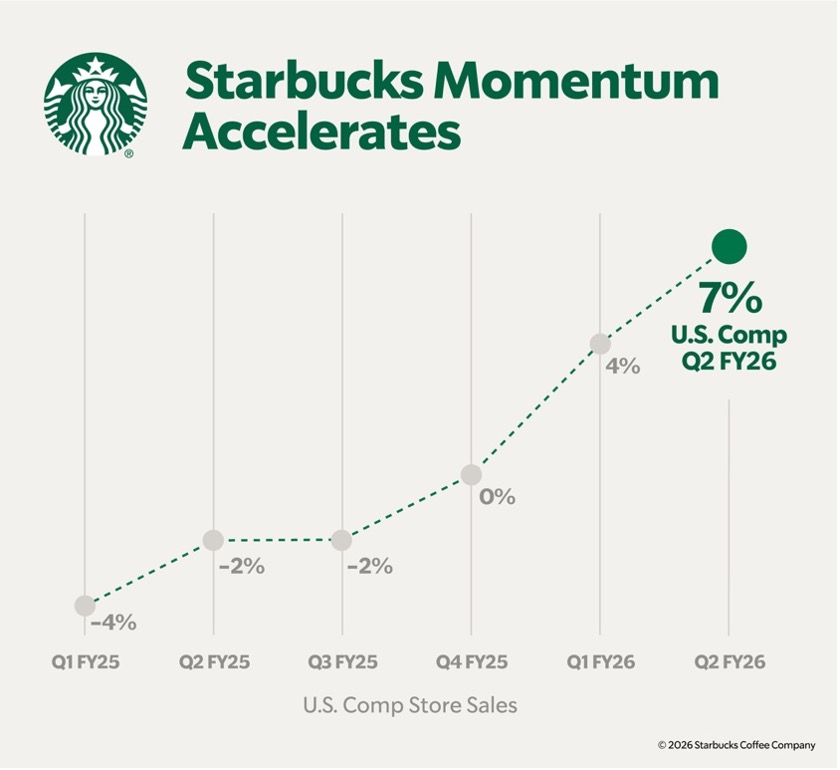
On the surface, Starbucks’ Q2 2026 results are spectacular by all accounts: U.S. comparable store sales are in the green for the third straight quarter, up 7% in North America; net revenues are up 9%; and 2026 guidance expects more growth to come. However, a 1.7-basis point slippage in operating margin complicates the road to success.
Starbucks is successfully bringing customers back, but at a higher cost.
Overall, CEO Brian Niccol is optimistic about his “Back to Starbucks” initiative underpinning the bottom-line growth.
“This is the Starbucks our customers deserve and the Starbucks we believe will deliver long-term growth and value for our partners and shareholders as we execute consistently, at-scale,” he said in a call with analysts.
Compared to last year, more customers believe their Starbucks purchases are worth it, he added. This is no easy feat considering the price premium that shoppers have come to expect from the chain.
The heart of the strategy involves analog-first experiences that eschew some of the technological integrations tested by predecessor Laxman Narasimhan. It involves rebranding the café with a “coffeehouse” feel that returns the aesthetics to its original, third-wave coffee shop format: Think physical mugs, milk stations, and comfortable seating. The look and feel is paired with a comprehensive menu innovation strategy intended to delight today’s experience-driven consumer.
The impact on foot traffic has been resoundingly positive, with independent data insights firm Placer.ai confirming that traffic data increased handily in Q4 2025 and Q1 2026, growing alongside same-store sales.
But these operational modifications eat away at margins. Compounded with an environment where all cafes are facing higher input costs, a strategy that inevitably increases dwell time has compelled Starbucks to find creative solutions to keep its momentum going.
Niccol Wants You There All Day
As the chain works to improve the morning visit, it is also working to shift consumer behavior to think of the café as a desirable afternoon destination. A comprehensive grab-and-selection, substantial eats, and afternoon pick-me-ups are some innovations they’re leveraging to train the consumers to develop these habits.
Hinted in January, global chief brand officer Tressie Lieberman noted that the afternoon day part will represent a key growth area in 2026.
“We see an opportunity to own a new occasion in the afternoon. An afternoon reset. A culture-shaping ritual that Starbucks is perfectly poised to define and own,” said Lieberman.
To this end, the chain announced last month a plan to have its digital menu transition to a specific afternoon menu that spotlights Energy Refreshers, iced teas, and food items that perform well after the morning rush. Additionally, they will play playlists designed to create an upbeat energy.
There’s something to be said about their afternoon legacy. Already open until late evening in many markets, midday and afternoon dayparts generate roughly $11 billion in sales for the brand.
Although Lieberman is optimistic about organic growth in the afternoon, Starbucks’ afternoon push puts it into direct competition with QSR chains and convenience retailers that lead with its value-driven and energy-focused occasions. McDonald’s, for example, recently debuted its own line of refreshers in a move to capture a larger afternoon share of sip.
The Gen Z Lifeline
It shouldn’t come as a surprise that Starbucks’ key demographic in the afternoon and evening is Gen Z.
In the recent earnings call, Niccol noted that recent gains were led by Gen Z and Millennial consumers, with Gen Z favoring recent innovations, especially the introduction of protein-enhancement options and cold foam.
The analog-first approach to the Back to Starbucks mission also caters to Gen Z’s desire for human connection.
The bid for the demographic comes with myriad benefits. For one, making these younger consumers more loyal now could lead to long-term gains once they become higher-income earners later in life. Moreover, a report from Bank of America found that Gen Z has higher discretionary and necessity spending than the average consumer, indicating they’re willing to pay more, especially for low-cost splurges, such as food and beverage.
Starbucks recent menu innovations embody the Gen Z zeitgeist, activating on-trend offerings with Instagrammable pops of color, layered beverages, seasonal takes on matcha, and a robust cold beverage portfolio.
As promising as the cohort may be, Gen Z is known for their fickle preferences and disloyal spending patterns, making it difficult to rely on them for sustained growth.
The Food Institute Podcast
This episode features Julie Chapon, CEO and co-founder of Yuka, the fast-growing app that helps consumers better understand the health impact of food and cosmetic products. Chapon shares the origin story of Yuka, which began as a personal mission to decode confusing food labels and has since expanded into a global platform with over 80 million users.