Most acquisitions don’t work. Decades of experience and evidence prove that fact. The rule of thumb at this point is that about 75% of corporate deals fail; that number can move somewhat depending on the definition of “fail,” but few if any credible commentators see acquisitions as a generally positive step by management.
Of course, when acquisitions do fail, the executives who led the deals don’t often rush out and admit the error of their ways. Particularly in the early going, any admission that an acquisition is underperforming usually is attributed to short-term and/or already-foreseen factors. Customers might be slower than hoped to adjust to new ownership, but will come around. Integration of the two businesses causes friction which (almost always) should be resolved quickly. Supply chain changes caused by the acquisition lead to shortages that, too, will surely be temporary.
For many acquisitions, investors don’t have a detailed picture of either recent results or pre-purchase financials, which leaves them reliant on management’s narrative. But given how many deals do go south, experienced investors usually are exceptionally skeptical toward explanations that insist all will soon be fine. It’s possible that management is correct.
It’s much more likely, however, that any early problems are the sign of deeper, more permanent issues that management doesn’t want to acknowledge – either publicly or to themselves.
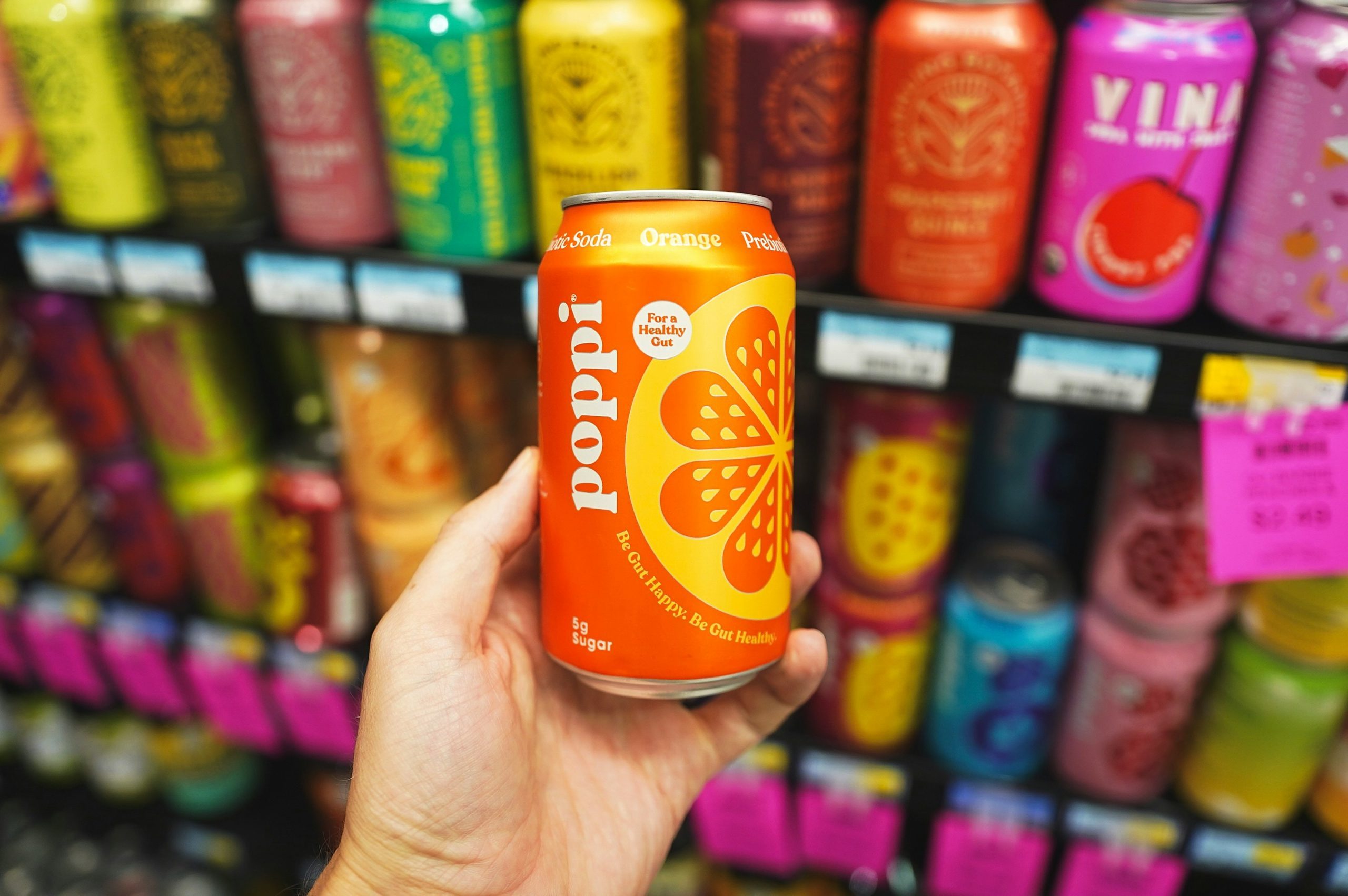
In the fourteen months since PepsiCo closed its acquisition of prebiotic soda maker Poppi, that same pattern is starting to emerge. As is often the case, investors don’t yet have definitive information on how the brand is performing within the beverage and snack giant. Pepsi does break out organic revenue and net revenue growth, but the difference includes increased energy drink sales, for instance, from a partnership with Celsius.
There are signs in management commentary that suggest Poppi is off to a disappointing start as part of PepsiCo.
The most obvious piece of evidence is one that isn’t there. Poppi cost just shy of $2 billion (albeit with an expected $300 million in tax benefits to PepsiCo), yet management has had very little to say. In the initial months of ownership, executives pointed to the brand as a potential driver of organic growth in the third and fourth quarters of this fiscal year (after 12 months of ownership, Poppi would be included in organic calculations and be increasing sales at a faster rate than the legacy business). But there were no hard figures given to growth at the time, or even any real public display of optimism.
Poppi’s Prognosis
Notably, in PepsiCo’s recent second quarter earnings call, management didn’t reiterate the projection for a big contribution in the second half of the year, despite analysts clearly having some skepticism toward the outlook for the North American beverages business as a whole over that period.
A quarter earlier, on an earnings call in April, CEO Ramon Laguarta said that “our Poppi business is starting to accelerate now in Q2”. That was a bit of a strange remark, given that the second quarter was less than four weeks old and that executives hadn’t to that point mentioned the business even needed to accelerate. But one imagines that Laguarta and his team knew that the Wall Street analysts on the call had their own data showing some apparent weakness in Poppi at the start of the year.
That weakness was then discussed publicly on Thursday, with Laguarta saying that the transition from Poppi’s existing distributors to Pepsi’s system caused some issues. “Now that is pretty much solved,” he said, adding that with Poppi fully onboarded, the benefits of its ownership by the much larger PepsiCo could start to play out. “We’re seeing Poppi growing again at a good pace,” he concluded.
As is always the case with acquisitions, it’s possible the narrative from management will prove correct. It is a massive effort shifting distribution systems, particularly given Poppi was reportedly generating about $500 million in sales before it sold. There are obvious benefits to bringing the brand under the PepsiCo umbrella. But, again, this kind of story is simply so familiar to investors – and particularly those in the broader food space, where the majority of deals over the past decade or more have not panned out. Early issues are left unmentioned, then attributed to short-term factors, and only when the disappointment becomes glaringly obvious is it fully addressed.
In the case of Poppi, there is one financial reason for concern. The agreement included $1.95 billion in cash consideration upfront, plus a $300 million payment “upon achievement of certain performance milestones” by the third quarter of next year. Those milestones are not disclosed, but PepsiCo has to calculate a liability for that payment, known as an “earnout”. That calculation is based on the likelihood the payment will be made, along with a discount for the time elapsed until the due date. (A $300 million payment due in two years is not, in accounting terms, a liability of $300 million, since $300 million in 24 months is not worth $300 million today.)

When the liability was first booked a year ago, PepsiCo calculated it at $226 million. (The figure is disclosed in quarterly reports filed with the U.S. Securities and Exchange Commission, though those reports do not include the exact calculation or its parameters.) That suggests PepsiCo’s financial team saw a roughly 80% chance of Poppi hitting its targets, and its former owners receiving the incremental payment. (Back of the envelope, a $300 million liability two-plus years out would probably be carried at about $280 million; $226 million is just over 80% of that figure.)
By the end of last year’s fourth quarter, the carrying value of the liability had increased to $278 million. That number meant that PepsiCo saw the payout as nearly guaranteed. But after Q1, the liability was revalued down sharply to $162 million. In and of itself, that suggests that the distribution issues during the quarter materially impacted the growth trajectory of the brand. And while Laguarta said in April that the business was “starting to accelerate”, his financial team again reduced the likelihood of the earnout after the second quarter. The liability is now carried at $116 million.
In two quarters, according to PepsiCo’s own financial team, the odds of Poppi hitting the unspecified milestone has gone from over 90% to closer to 40%. To be fair, that doesn’t necessarily mean that Poppi has collapsed, or that prebiotic soda has peaked. But it is a hard piece of financial evidence suggesting that the outlook for the business is less optimistic than it was six months ago.
Which are the Healthiest Sodas?
One question is whether Poppi’s slower outlook is company-specific or reflective of trends for the category as a whole. That, too, is difficult to answer. Rival Olipop did raise $200 million at a valuation over $2 billion in May, according to reporting from Axios. That seems like a win, given that in early 2025, the company brought in just $50 million at a $1.85 billion valuation.
But the nature of startup financing almost requires ever-higher valuations, and there are ways to get a bigger headline number through better terms for investors. (One of the most common is to increase downside protection: investors could, for instance, contribute $200 million and then also have a claim for the first $200 million in assets should the business struggle or be sold at a discount to the valuation in the deal.) There, too, experienced investors at the least would have some questions even if the commentary from the company itself seems quite positive.
On the whole, we don’t have nearly enough information to believe that prebiotic soda is in big trouble. But we do have a few pieces of evidence to start wondering if it might be heading in that direction.
Vince Martin is an analyst and author whose work has appeared on multiple financial industry websites for more than a decade; he’s currently the lead writer for Wall Street & Main. As of this writing, he has no positions in any companies mentioned.
The Food Institute Podcast
2026 may be the year of the GLP-1, but what are the risks to consumers who take this class of drugs? Suzy Badaracco, president of Culinary Tides Inc., explains the health risks associated with GLP-1 usage, and how the food industry can best serve this category of consumers.