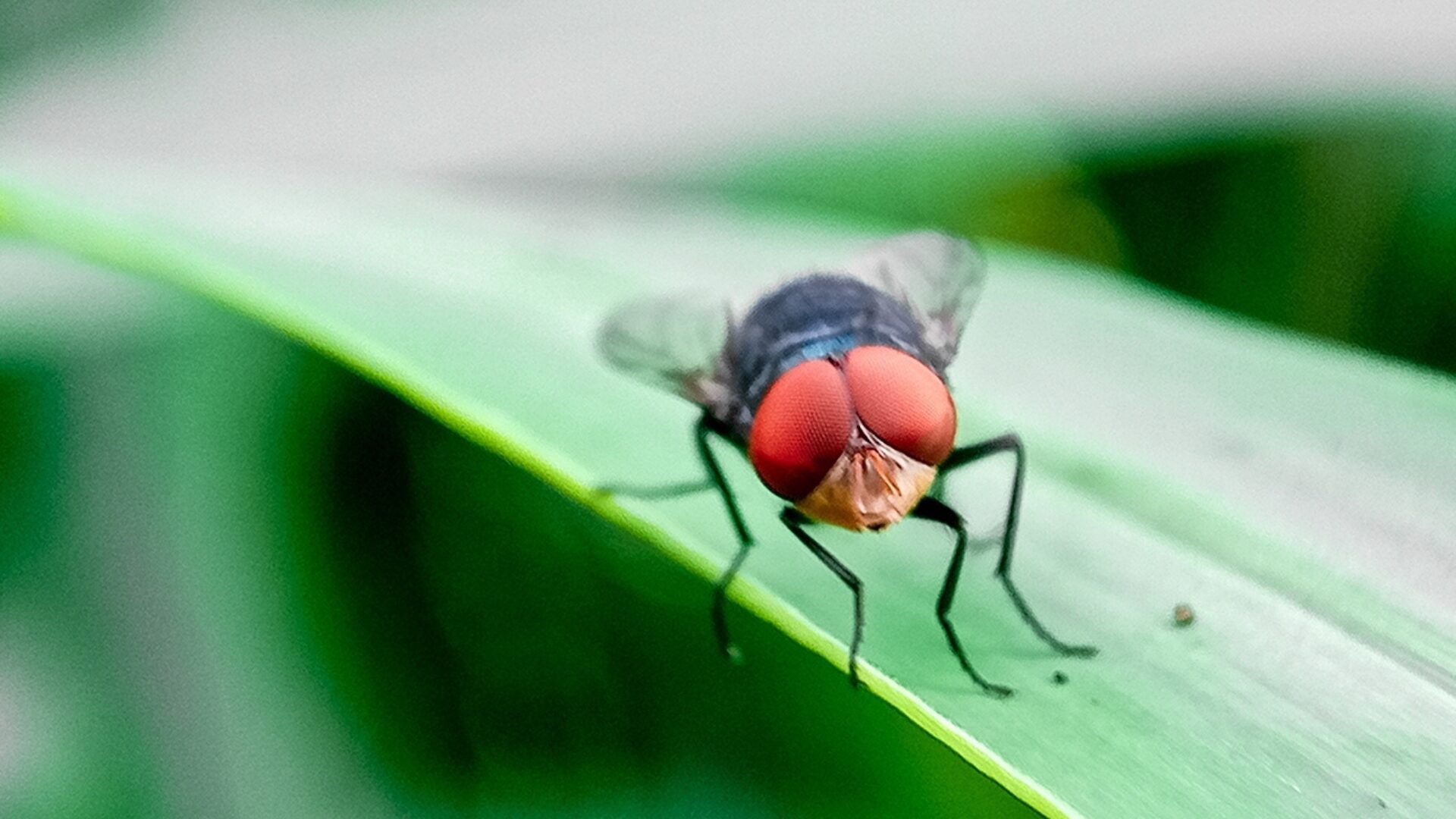
The possibility of a New World screwworm infestation sent cattle futures higher Thursday. The presence of the pest, which could devastate the livestock industry, was confirmed in a 3-week-old Texas calf by the USDA.
On Thursday afternoon cattle futures were trading $2-$5 above Wednesday’s close on the CME.
The USDA Animal and Plant Health Inspection agency said the U.S. food supply remains safe, and the Texas Animal Health Commission is deploying personnel to the area to establish a 12.5-mile quarantine zone. USDA also is releasing sterile flies to the area to stem a possible infestation.

Deby Cassill, associate professor of integrative biology at the University of South Florida, told The Food Institute that, though a female screwworm mates just once during its life cycle, it lays as many as 3,000 eggs in at least 10 groupings.
“Under warm tropical conditions, the transition from egg to adult can be completed in as little as three weeks. For an insect, it is a remarkably efficient career path,” Cassil said.
“From the rancher’s perspective, it is a horror story.”
Is Livestock at Risk After Texas Screwworm Confirmation?
Agriculture Secretary Brooke Rollins told a news conference immediate action would be taken related to the possible infestation. The New World screwworm larvae feed on livestock, wildlife, pets and in rare cases, people, burrowing into orifices or open wounds and feeding on the flesh before dropping to the ground to pupate.
“If we all work together and follow the animal treatment protocols and movement restriction guidance, there is no reason to believe that this incursion will result in an establishment of the pest in our country,” Rollins said. She said the pest has yet to be detected elsewhere north of the Mexico border.
Dudley Hoskins, undersecretary for marketing and regulatory programs, said the USDA had actually expected the screwworm to enter the U.S. last year.
“USDA invested heavily in the tools needed to eliminate NWS ever since cases started increasing in Central America and Mexico. The United States has defeated this pest before, and we will do it again,” Hoskins said.
The last appearance of the New World screwworm in the U.S. ended six decades ago, and the last infestation was more than a century ago.
What is the New World screwworm?
The New World screwworm is the larval stage of a blow fly species. It’s endemic to South America and had slowly been working its way north for the last two to three years.
Until 2023, agriculture officials had kept NWS south of the Darien Gap between Panama and Colombia. The last human case in the U.S. was reported last August: an individual who had traveled to El Salvador. The individual recovered.
The USDA said at least 26,000 cases were identified across Mexico with more than 10% of them remaining active.
“The screwworm’s single-mating habit is the foundation of one of the most successful insect-control programs ever developed: the sterile insect technique,” Cassill said. “Millions of screwworms are mass-reared in specialized facilities. The larvae are raised on artificial diets and the pupae are sterilized. This is traditionally through carefully controlled irradiation.
“The resulting sterile males are then released across infested regions. Wild females, unable to distinguish a sterile suitor from a fertile one, mate once and only once. Having unknowingly chosen a reproductive dead end, they produce no viable offspring. It may be the only pest-management strategy that depends on convincing insects to make poor dating decisions.”
The Food Institute Podcast
In this episode of Food for Thought Leadership, Chris Campbell, George Hajjar, and Anna Kinder examine how consumers are adapting to mounting economic pressure, rising gas prices and shifting travel behaviors in 2026. From staycations and micro-vacations to scaled-back road trips and reduced air travel, the FI All-Stars explore how households are reevaluating spending while still searching for meaningful experiences and moments of indulgence.