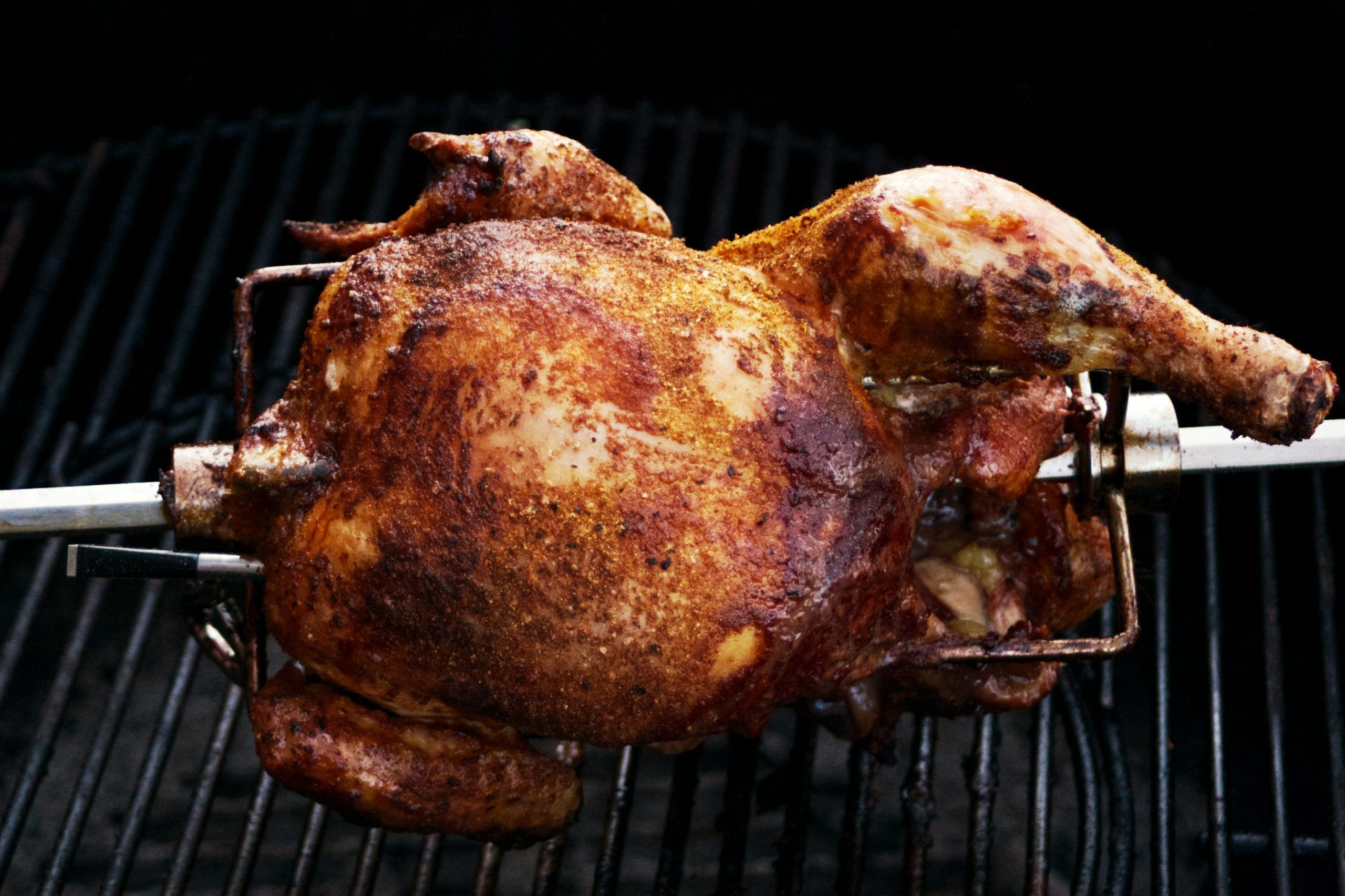
In late April, The Hill reported that Rep. Grace Meng (D-N.Y.) pushed her Hot Foods Act for Supplemental Nutrition Assistance Program (SNAP), which would permit recipients to use their benefits to buy hot meals, including hot rotisserie chickens plus other hot, prepared foods like soups and sandwiches.
Earlier that month, a bipartisan group of senators had introduced the Hot Rotisserie Chicken Act, which would allow members to purchase hot rotisserie chickens with their benefits.
The federal food assistance program currently has a provision that limits purchases to cold, prepared foods, as well as foods that must be prepared at home prior to consumption.
“America’s best (and delicious) affordability play is Costco’s $4.99 rotisserie chicken,” Fetterman said in a statement. “It’s one of my family’s favorites, and I’m proud to join this bill with Senator Justice for all to try. SNAP funds would be well spent to feed our nation’s families who need it.”
After Fetterman posted a similar statement on X, Meng replied: “Everyone should be able to buy a hot meal, with or without a Costco membership (or even liking chicken). That’s why my Hot Foods Act lets SNAP cover ALL hot, prepared foods!”

Hot Foods Act Sparks Questions About SNAP Access
Before I joined FI, I worked at an ad agency specializing in behavior change marketing with multiple public health clients, including a state chapter of the Tobacco Settlement Endowment Trust. One of its brands focused on helping lower-income individuals eat healthier by addressing three barriers – food deserts, lack of time, and tight budgets – by developing recipes that were affordable and easy to make.
Many of these recipes featured rotisserie chicken to reduce preparation time and complexity, so this bill particularly piqued my interest.
I spoke with several public health experts to get their perspective on the bill, including Margot Zaharek-Girgasky, Ph.D., RDN, assistant professor and director of the Didactic Program in Dietetics, which is under the Department of Nutrition and Public Health at the University of Saint Joseph in Connecticut.
“The rationale behind this bill is that some SNAP recipients lack kitchen equipment and storage space. Many often work multiple jobs and have little time, and some lack cooking knowledge,” Zaharek-Girgasky told FI.
She noted that funding for SNAP-Ed, which provided evidence-based knowledge and technical skills to SNAP-Ed recipients, helping them navigate cooking and basic meal preparation on a SNAP budget, was discontinued last July. As a result, many families lost access to invaluable nutrition education programming.
“Providing pre-cooked meals, such as rotisserie chicken, provides a ‘band-aid’ solution but does not substitute for the cooking knowledge and skills SNAP-Ed had provided,” Zaharek-Girgasky explained.
“While many families will benefit from this short-term solution, if their SNAP benefits are cancelled, or they are no longer eligible, and they do not have the knowledge or skills to plan, meal-prep, and cook, they may find the cost of these pre-prepared foods prohibitive,” she added.
Why SNAP’s Hot Foods Debate Matters for Grocers
Parke Wilde, a food economist, the author of Food Policy in the United States (3rd ed., 2025), and a professor at the Friedman School of Nutrition Science and Policy at Tufts University in Boston, agrees that the bill would make a modest difference in terms of helping low-income families acquire prepared foods. However, he also acknowledged the complexity of this issue.
When asked about the initial reasoning behind excluding hot foods from SNAP, Wilde told FI, “There is a certain logic to excluding hot foods in supermarkets from eligibility, because these same hot foods in fast-food restaurants are ineligible. It is difficult to explain to a local restaurant owner why her product is ineligible when the corporate supermarket next door is getting government revenue from selling the same rotisserie chicken.”
Amanda Nothaft, director of data and analysis at Poverty Solutions at the University of Michigan, added that the current restriction dates back to the 1970s and operates under the assumption that families have a stay-at-home parent who cooks with raw ingredients.
“Purchasing raw ingredients also promoted the agricultural industry, and hot foods supported the foodservice industry. Grocery store offerings were very different at this time; most grocery stores didn’t sell hot foods. Grocery stores that sold hot foods were more expensive, and the hot foods sold were viewed as luxury items,” Nothaft said.
She also pointed out that the rule doesn’t reflect the realities of modern grocery stores and food offerings.
“The modern grocery store is filled with processed and prepared foods, which may be less healthy than hot foods. Consequently, it is unclear whether this restriction actually results in a healthier diet. Additionally, there are no such restrictions on cold-prepared foods – a household can buy a cold lasagna, but not one kept warm in the deli case.”
The Food Institute Podcast
This episode features Julie Chapon, CEO and co-founder of Yuka, the fast-growing app that helps consumers better understand the health impact of food and cosmetic products. Chapon shares the origin story of Yuka, which began as a personal mission to decode confusing food labels and has since expanded into a global platform with over 80 million users.