A simple mantra, in essence, guides Michael Parlapiano and his team’s work at The Culinary Edge consultancy.
Right place. Right time. Maximum impact. 
That philosophy illustrates how The Culinary Edge provides restaurants with consultation that sets an industry standard.
“Anyone can see a trend out there. We refer to trends as ‘shiny objects,’” said Parlapiano, the managing director at The Culinary Edge. “You might say, ‘Hot honey is trending; we’ve got to get that on the menu.’ But here’s the first question you need to ask: ‘Is this something our customers are actually looking for?’
“We can all read the trend reports, but you have to have an understanding of consumers, and an understanding of supply chain operating platforms, and thread the needle between all the different inputs to truly understand if a given trend or ingredient is right for your brand.”
Over the course of nearly a quarter century, The Culinary Edge has helped restaurant brands of all sizes take their menus, operations, and profits to the next level. The agency’s extensive expertise helps operators scale their businesses.
Most consultancy firms specialize in a piece of the puzzle regarding strategies, branding, or food. The Culinary Edge integrates all of it, building restaurant concepts from idea through execution. The San Francisco-based firm is about to begin its third year as part of CORE Foodservice, an Acosta Group agency. The partnership has provided access to additional brand connections and consumer insights and analytics, supercharging the consultancy.
“Part of what makes us unique as an organization is the ability to start from that blank page and then go all the way through to a launch,” Parlapiano explained. “When we’re approached by restaurant chains – whether they’re an emerging regional chain, or a scaled national chain – they’re looking for innovation support, either in righting the ship as part of a turnaround or, with emerging chains, to set themselves up for the next stage of growth.”
While The Culinary Edge is a chef-founded company, it has grown to work not just with restaurants but also entrepreneurs, manufacturers, and suppliers, while also operating in the CPG space.
Powerful Partnerships
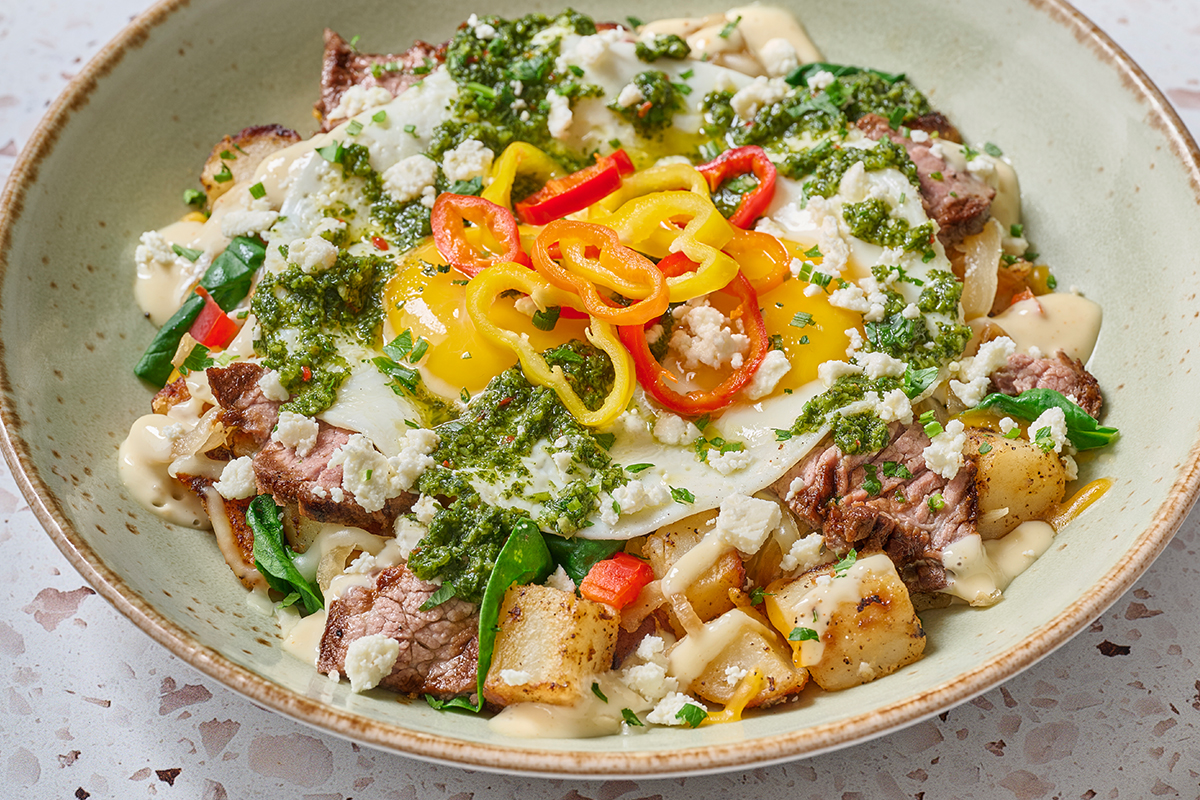
For proof of how The Culinary Edge helps brands innovate, evolve, and scale, look no further than First Watch. When the Florida-based breakfast, lunch, and brunch chain first consulted with The Culinary Edge 15 years ago, it had roughly 100 units. Today, First Watch boasts more than 630 locations in 32 states.
The Culinary Edge has helped spur that growth by shaping First Watch’s menu strategy, innovation pipeline, and seasonal LTO program, with a focus on the consistent delivery of fresh, differentiated offerings that help drive repeat visits.
“It’s an example of an emerging regional brand that approached us to help set them up for the future, by way of menu positioning and new product development,” Parlapiano said of First Watch. “And we’ve been fortunate to be along on their journey ever since.” 
“The Culinary Edge brings a unique lens on where food and beverage trends are heading and, more importantly, how to make them relevant for our guests. They’ve been a trusted innovation partner in helping us stay ahead of the market while remaining true to who we are as a brand,” said Shane Schaibly, Senior Vice President of Culinary Strategy, First Watch.
Working with First Watch continuously, The Culinary Edge has helped the restaurant chain refine elements like throughput and enhance the guest experience.
“Really diving under the hood of a client’s business – and when you can build upon those learnings year in and year out – it creates a better end product and delivers better results for our clients,” Parlapiano said.
The Innovation Process
The Culinary Edge has helped brands like First Watch grow by, for example, inspiring them to think about their menu differently. Brands always need to consider the “adoption curve,” Parlapiano said.
“One of the most effective ways we found to stay on top of trends is by spending time in the marketplace with our clients,” Parlapiano explained. “We put a big premium on what we call ‘market landscaping’ and going out into the markets where innovation is happening, like San Francisco, Los Angeles, Chicago, and New York.
“We find a ton of value in getting out there and seeing what some of the leading, independent operators are doing at the front end of the adoption curve.”
Just because an ingredient is hot at the moment doesn’t necessarily mean it’s right for your customers today, the restaurant expert added. “And that underscores the value of what a long-term consulting relationship can really afford a brand. It allows us to make a better determination about when we believe a given trend is right for our customer and when to deploy it in the market,” he explained.
“When you can see a trend coming from afar and you understand how it’s manifesting in other product formats, it allows you to then be diligent and disciplined about the right timing, the right format, to bring that trend to a menu in a manner that’s going to resonate with guests.”
Think about how Shake Shack sets itself apart from competitors with unique flavors that always seem to be well-received by customers, like the Korean-inspired K-Shack Fried Chicken Sandwich.
When a restaurant hits the adoption curve at just the right speed, it sends a message to consumers.
“It sends a message,” Parlapiano said, “that you’re on top of trends. It sends a message that this restaurant chain is a leader within the segment.”
Embracing the Industry’s Opportunities … and Challenges
By producing its proprietary Pulse Survey, The Culinary Edge is able to gauge how restaurant operators are faring. That feedback is especially valuable amid a challenging economic climate in 2026.
“The biggest shift we’re seeing is that restaurants, in many ways, are operating in two economies,” Parlapiano noted. “Performance is being driven more by income tier than by category itself. And, at the same time, old levers like price increases aren’t enough to protect margins. We’ve seen that for many years now; brands have maxed out on how much price they’re able to take at this point.
“It seems that operators are realizing that complexity is the real cost,” he added. “And they’re seeing that the opportunities (are to) simplify, focus, and execute better.”
It’s not that consumers have stopped spending altogether. They’ve simply gotten more selective as prices have risen.
“We see consumers demanding clearer value, more relevance, and, overall, better execution from the brands they’re patronizing,” Parlapiano said.
The Culinary Edge at the National Restaurant Association Show
Join Erica Holland-Toll, culinary director for The Culinary Edge, at the National Restaurant Association Show in Chicago, as she shares practical strategies to help operators protect their bottom line without compromising on quality or flavor. On Sunday, May 17, from 3 p.m. to 3:45 p.m., “10 Ways to Cut Food Costs Without Cutting Flavor” will be discussed.