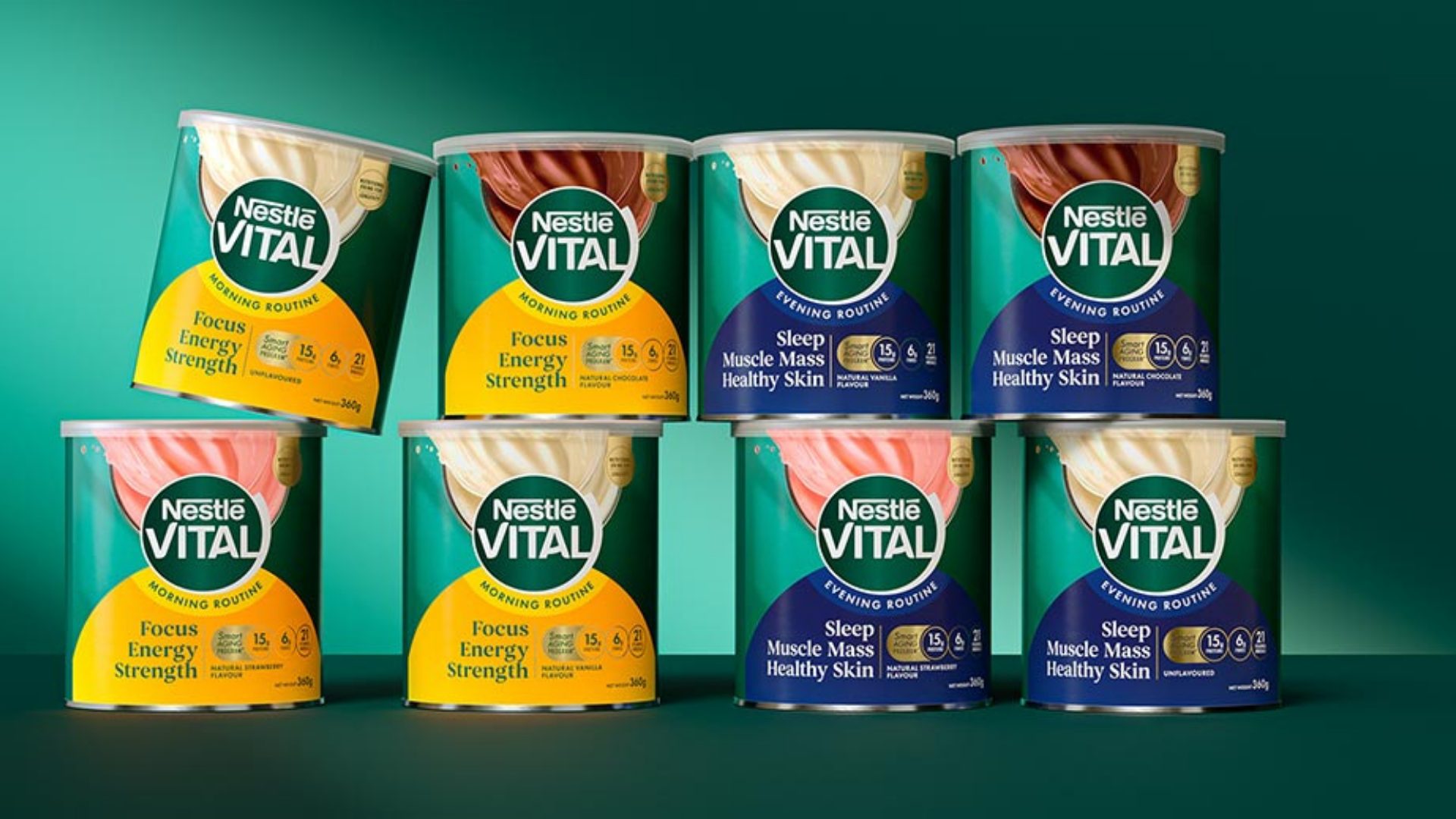
Protein shakes have been around in some form since the late 19th century, but brands like Nestlé are taking a new approach, targeting the aging process with launches like nutrient-dense powders for people who want to age well and maintain their health. Such products reflect rising interest in convenient, nutrient-dense drinks that support wellness – fueled in part by consumers’ growing use of GLP-1 weight-loss drugs.
“Consumers are increasingly seeking solutions that help them not only live longer but also enjoy healthier lives while maintaining their strength and vitality,” Serena Aboutboul, head of Nestlé’s nutrition business, said in a press release unveiling Nestlé Vital, the latest entry in Nestlé’s Smart Aging line.
Aboutboul said Nestlé Vital, which will be available first in Latin America, was created in response to a fast-growing trend in part sparked by the growing popularity of GLP-1s.
Protein supplements are a nearly $30 billion global market and likely to hit $63 billion by 2033. Americans spent $10 billion in 2024, with ready-to-drink pegged at nearly $2 billion and expected to grow at an annual growth rate of 7.7%.

Nestlé Vital is just the latest in a long line of nutritional products promising nutrition without the bother of cooking. The first, Plasmon, was introduced in Germany in the 1890s and geared toward athletes.
In the 1950s, bodybuilder and nutritionist Bob Hoffman revolutionized the industry with his chocolate-flavored Hi-Proteen supplements marketed to athletes, and in the 1970s, the weight-loss industry popularized protein shakes as meal replacements.
The industry grew rapidly in the 1990s and truly took off in the last 15 years.
Nestlé said its product is designed to meet specific nutritional needs brought on by aging. The powders, which come in strawberry, vanilla, chocolate and unflavored, contain added dairy and plant proteins, fiber, vitamins, minerals and “patented bioactive blends.”
“Our research looks across all aspects of aging, including how nutrition impacts metabolic health, digestion, mobility, brain health, sleep, and the menopausal transition. Emerging evidence also shows that nutrition can impact the pace of biological aging,” nutrition re3search-and-development head Isabelle Bureau-Franz said.
Good Housekeeping evaluated nutrient-dense shakes currently on the market while cautioning overuse could be dangerous.
“Heavily relying on meal replacement shakes may eventually lead to a disconnect with your body’s own natural hunger cues,” dietitian Stefani Sassos told the magazine.
Good Housekeeping rated OWYN High Protein Complete Nutrition Drink as its best over all pick and Orgain Vegan Nutritional Shake as the best value. K’Chava All-In-One Nutrition was rated best powder, and Kate Farms Nutrition Shake came in as best organic. The ratings focused on nutrition, ingredients and flavor.
Whey protein is the dominant ingredient in most protein supplements, commanding 60% of the market.
Emma Cahill, marketing director for sweeteners and fibers at Tate & Lyle, noted that dairy-based products have the most potential in this sector.
“Formats like yogurt, protein shakes, and frozen dairy offer an ideal balance: smaller portions that still feel indulgent, textures that satisfy with balanced sweetness, and nutrient density that supports metabolic wellness, all in a convenient package,” Cahill recently told The Food Institute.
“With smaller appetites, GLP-1 users are focused on optimizing nutrition in every bite and sip. This shift opens a meaningful growth opportunity for CPG manufacturers ready to reframe indulgence as functional.”
The Food Institute Podcast
At SIAL Canada 2026 in Montreal, Food Institute VP of Content and Insights Chris Campbell sat down with Mathieu Brisson, Global Sales Lead at Prestige Maple, to discuss how the company is transforming maple products for a rapidly evolving global food and beverage market.