The foodservice sector has typically evolved alongside society. However, in 2026 that evolution is happening faster and more deliberately than ever before. Accessibility, ease of use and guest experience now play a central role in long-term success. This is where inclusive dining technology comes in.
Once considered a nice-to-have, inclusive technology is rapidly becoming a core part of modern foodservice strategy.
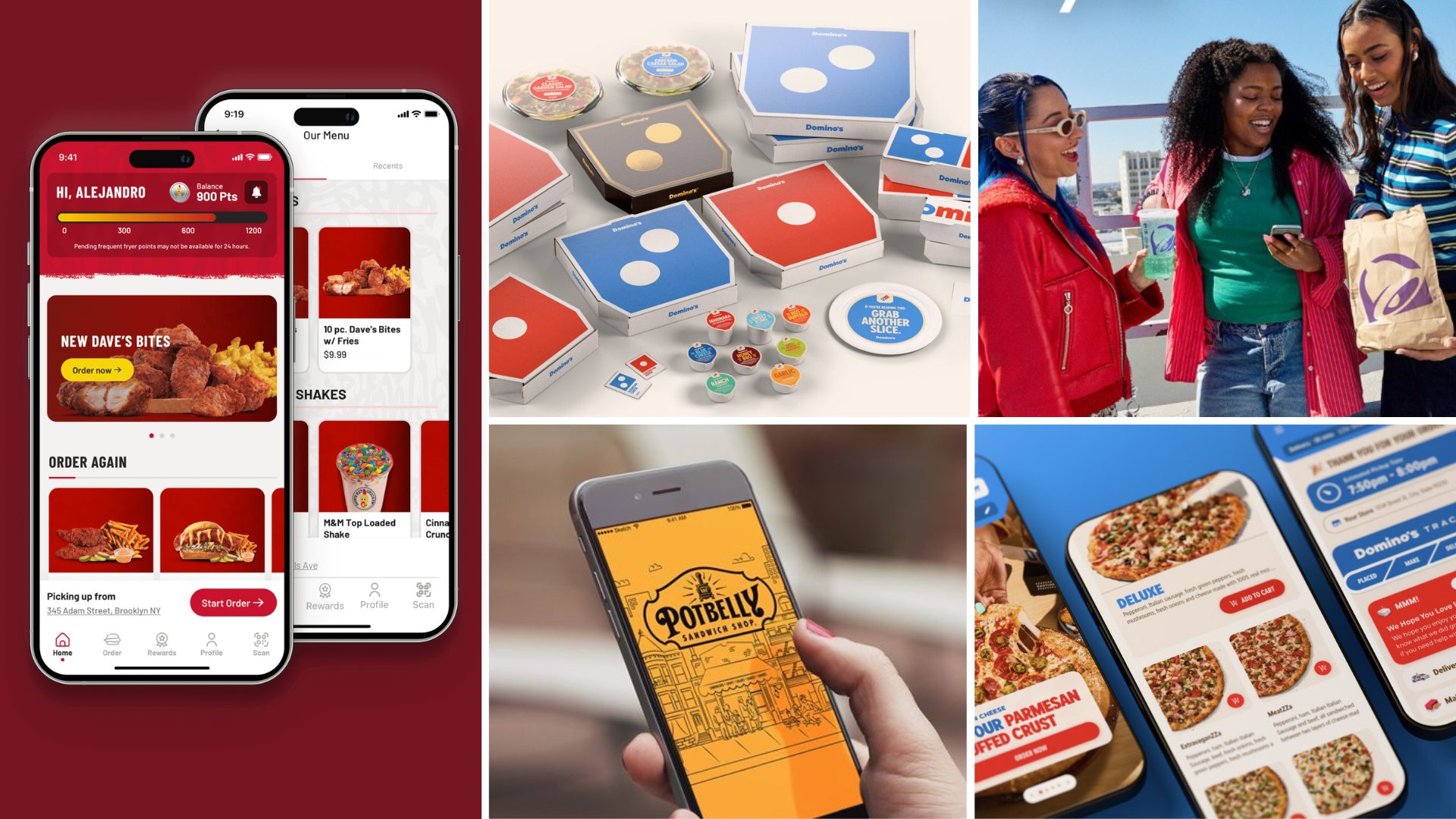
Technology has reshaped how customers discover restaurants, place orders, customize meals and pay for their food. Digital menus, mobile ordering, self-service kiosks, and delivery platforms are now, of course, standard.
But their most significant impact may be reducing friction for guests and staff. When technology is designed with accessibility in mind, it opens the door to a wider audience than some may realize. And inclusive dining isn’t limited to physical accessibility.
Defining ‘Inclusive Dining’
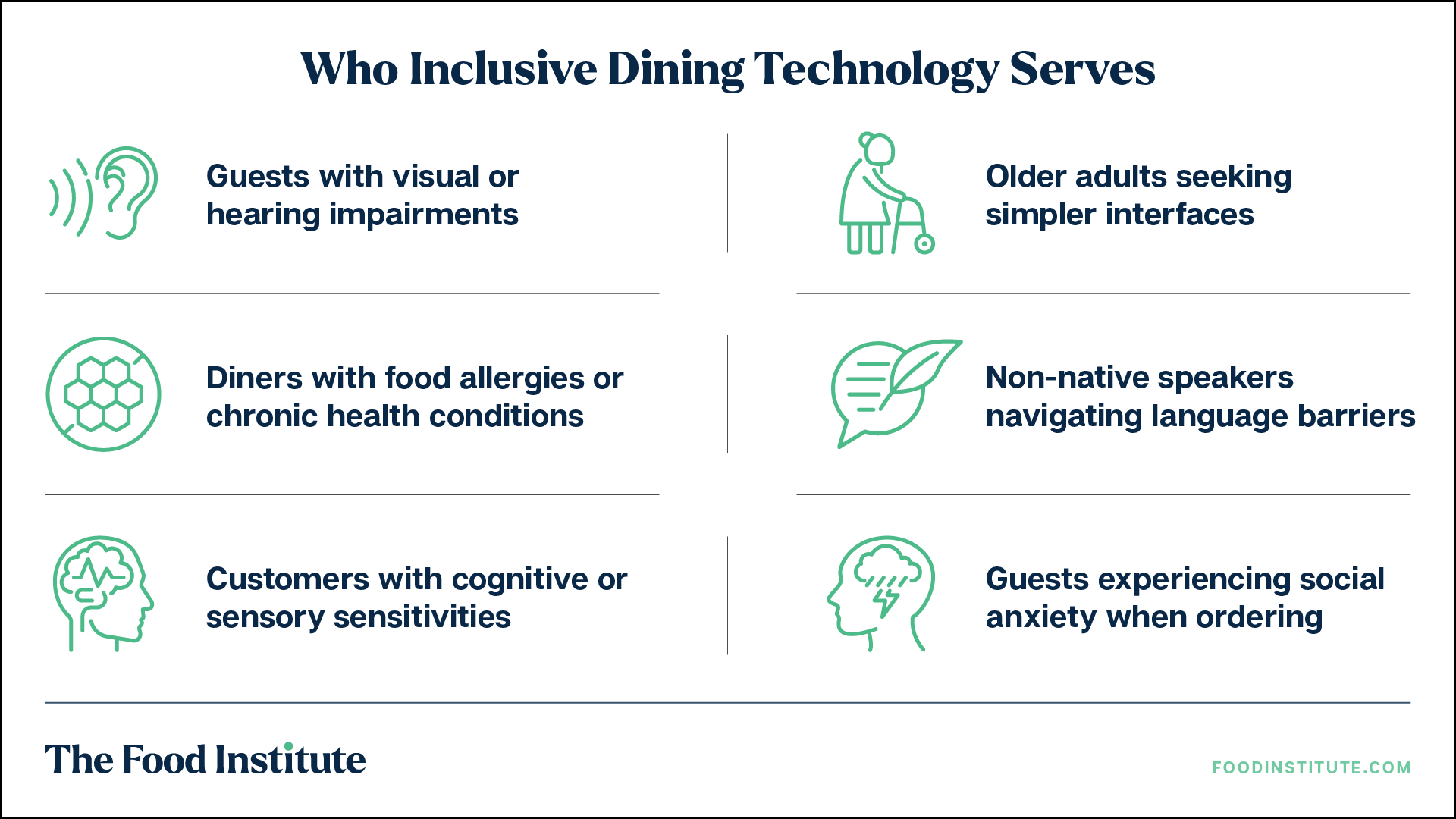
Inclusive dining entails creating an experience in which each guest can engage comfortably, regardless of ability, language, or dietary need.
This includes people with visual or hearing impairments, cognitive or sensory sensitivities, food allergies, chronic health conditions or limited mobility. It also includes older adults, non-native speakers and diners who may feel anxious in traditional ordering environments.
Digital menus are a prime example of inclusive dining technology. When built correctly, they offer adjustable text size, high-contrast displays, screen reader compatibility and multilingual options. For example, one restaurant saw a 23% increase in its average ticket size after utilizing digital menus to promote certain items.
For guests with low vision or reading difficulties, digital displays can make the difference between frustration and confidence.
Beyond improving readability and accessibility, digital display can also support sustainability goals. Energy Star-certified digital signage is estimated to be around 4% more efficient than non-certified alternatives, helping food service operators reduce energy consumption while maintaining clear, high-impact displays.

Empowerment Through Self-Service Technology
Food allergies affect nearly 33 million people in the U.S. Inclusive dining technology, including digital displays, enables foodservice operators to address these needs effectively.
Digital ordering systems can automatically flag allergens, prevent incompatible substitutions and ensure preparation instructions are communicated clearly to the kitchen. Trust is one of the most valuable currencies in foodservice and technology plays a growing role in earning it.
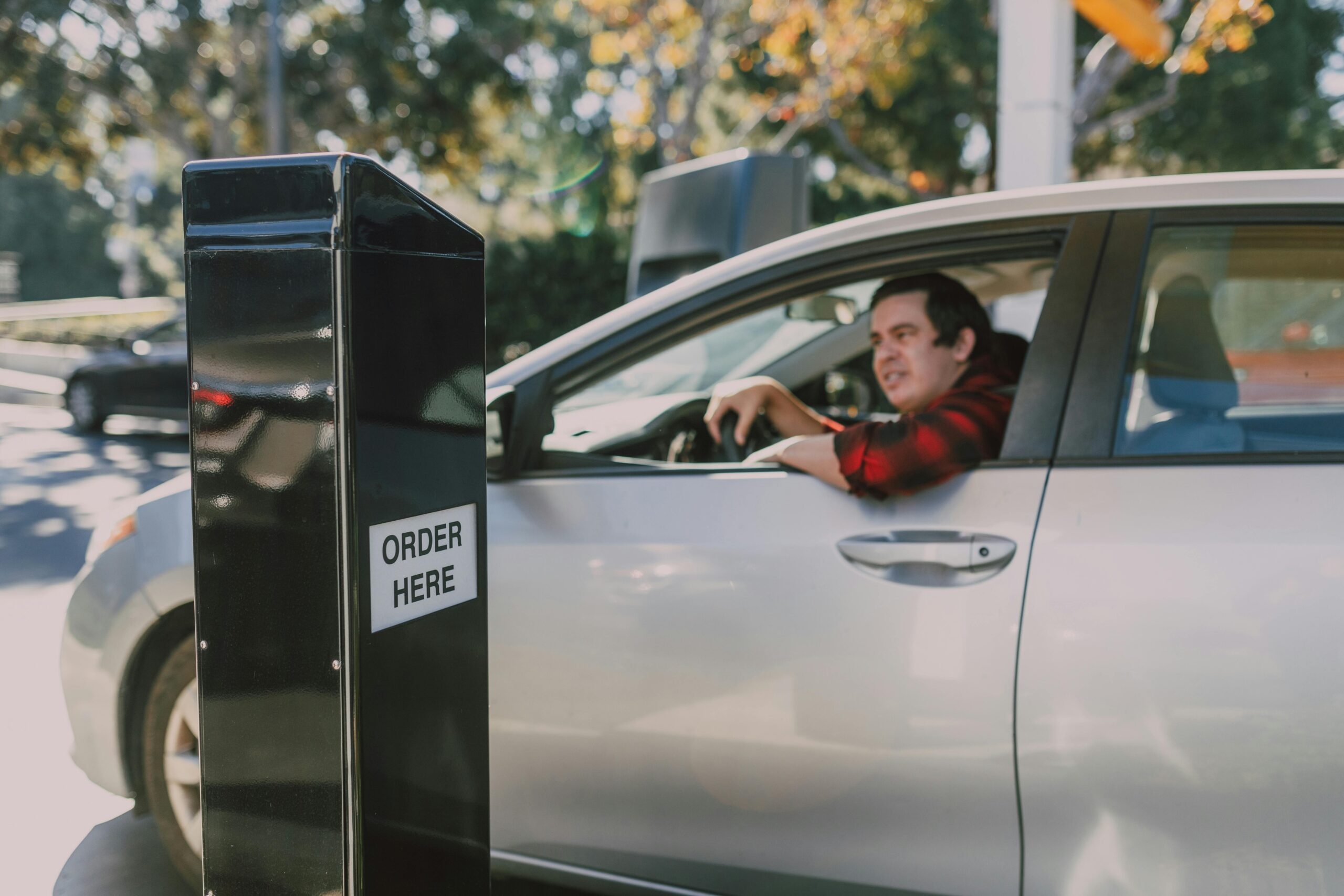
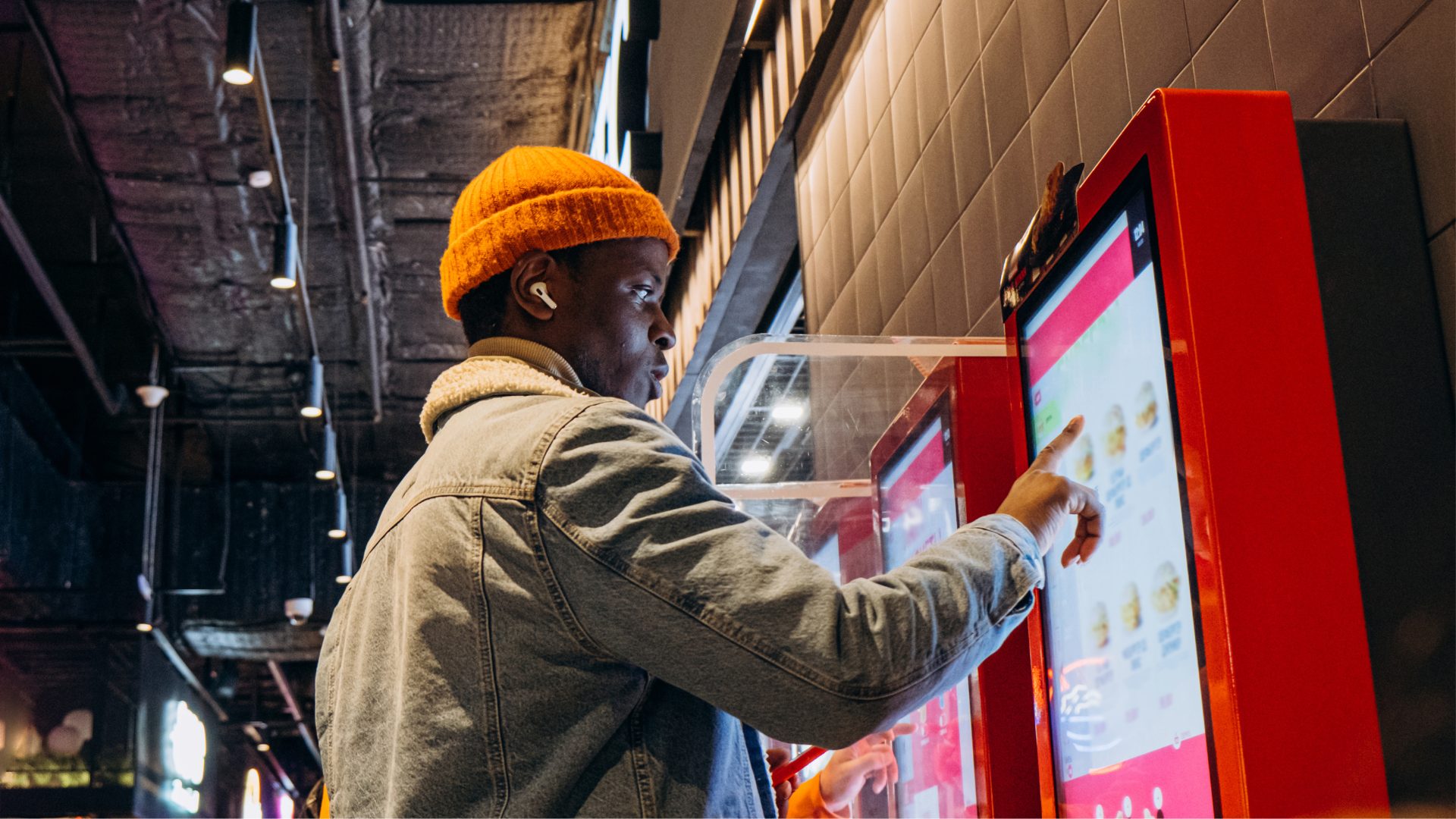
Many establishments implement self-service kiosks and mobile ordering apps to increase speed and efficiency. But their role in inclusive dining is just as significant.
For guests who struggle with verbal communication, hearing challenges or social anxiety, ordering independently can be empowering. It removes pressure, reduces miscommunication and also improves health literacy, giving guests more control over their experience. Staff also benefit from clearer orders and fewer interruptions during peak hours.
Supporting Staff While Enhancing Inclusion
An effective foodservice strategy must work for employees and guests. Introducing inclusive technology helps standardize processes, reduce human error and lower stress during busy periods.
When systems are intuitive and accessible, employees spend less time troubleshooting and more time delivering hospitality.
Inclusive dining has become an essential part of modern foodservice strategy because it reflects how modern consumers truly dine. As expectations around accessibility, personalization and ease of use continue to rise, technology is setting a higher standard for customer experience.