ROSEMONT, Ill. – The sold-out 2025 PLMA “Store Brands Marketplace” Private Label Trade Show, hosted by the Private Label Manufacturers Association, wrapped up on Nov. 18, showcasing product innovation from over 1,900 exhibitors from 63 countries.
PLMA President Peggy Davies shared during the event that store brands continue to outpace national brands, with dollar sales rising 3.6% while national brands grew 1.1% during the first 11 months of 2025, according to Circana. The PLMA projects that total store brand revenue across all U.S. retail outlets will approach $280 billion in 2025 – marking another record-setting year for private label momentum.
Keynote Insights: Private Brand as the Core Strategy
At the event’s keynote breakfast, Lidl U.S. CEO Joel Rampoldt outlined the retailer’s strategy for scalable, value-driven growth in the U.S. He traced Lidl’s evolution from a classic German discounter to the fourth-largest retailer in the world, operating more than 12,500 stores across 31 countries as part of the Schwarz Group.
Rampoldt emphasized that private brands are foundational to Lidl’s promise of delivering the best price, best quality, and a simple, convenient shopping experience. His framework centered on four pillars:
Lower Input Costs
Lidl maintains strict cost discipline through: electronic shelf labels to eliminate manual price changes; shelf-ready packaging (SRP) to streamline stocking; and high-volume purchasing to keep prices competitive.
Simple Operating System
Simplicity is non-negotiable: “Simple → Fast → Low Cost.” Lidl uses minimal in-store staffing and limited store-specific assortments to keep operations efficient and replicable at scale.
Curated Assortments
Rather than overwhelming choice, Lidl maintains a tightly edited assortment, including approximately 3,300 core items, 80% private label offerings, and 85% sourced in North America.
“We’re in the business of building brands,” Rampoldt said, citing Lidl’s global Alesto nuts-and-dried-fruit brand, now a $2 billion business worldwide.
Shelf-Ready Packaging (SRP) as a Growth Lever
Rampoldt repeatedly emphasized SRP execution: “Why stack one can at a time when you can put a flat of 12 on all at once? It’s easy, simple, easy to replicate, easy to execute.” Poor SRP execution, he cautioned, “means we can’t sell your product.”
Rampoldt urged manufacturers to think beyond Lidl’s roughly 200 U.S. stores, saying: “Please don’t just think about us as a 200-store retailer. We are an entrée into a massive retail company.”
He encouraged U.S. suppliers interested in European expansion to connect with Lidl’s global sourcing network.

Mindsets Driving Private-Label Growth
Also at the Chicago-area event, Hunter Thurman, president of Alpha-Diver, outlined three shopper mindsets – Simplifier, Explorer, and Harmonizer –that determine how consumers evaluate private-label brands.
The Simplifier
Simplifiers have a mindset that prioritizes efficiency, fairness, and low-hassle shopping. They tend to avoid price comparison “work,” as they seek quick, confident decisions.
For Simplifiers, recognition equals trust. Consistent iconography, clean sans-serif fonts, and high-contrast packaging support “perceptual fluency,” helping shoppers instantly identify products as their efficient default choice. They don’t want to stop and read the unit price tags on everything and create a spreadsheet, Thurman noted.
The Explorer
Explorers focus on discovery, novelty, and excitement. They have a fear of disappointment and wasting time.
Explorers over-index among Gen Z and Hispanic shoppers, who gravitate toward new flavors and limited-time offerings. Thurman emphasized the power of scarcity cues – “Only at Target,” seasonal LTOs, and elevated premium tiers.
A striking example: Switching from rounded to triangular shapes on a promo display increased sales 10% because pointier shapes signal “something new.”
The Harmonizer
Harmonizers seek social reassurance – “Will my household like this?” This group hopes to avoid disappointing others.
Harmonizers respond strongly to trust signals such as: product ratings, money-back guarantees (e.g., Aldi’s “Twice as Nice”), and endorsements like Trader Joe’s “Crew Member Favorites” They also prefer national brands today – but Thurman said this is a major opportunity for private label to build trust through design consistency, social proof, and quality.
Trend 1: Protein Plus
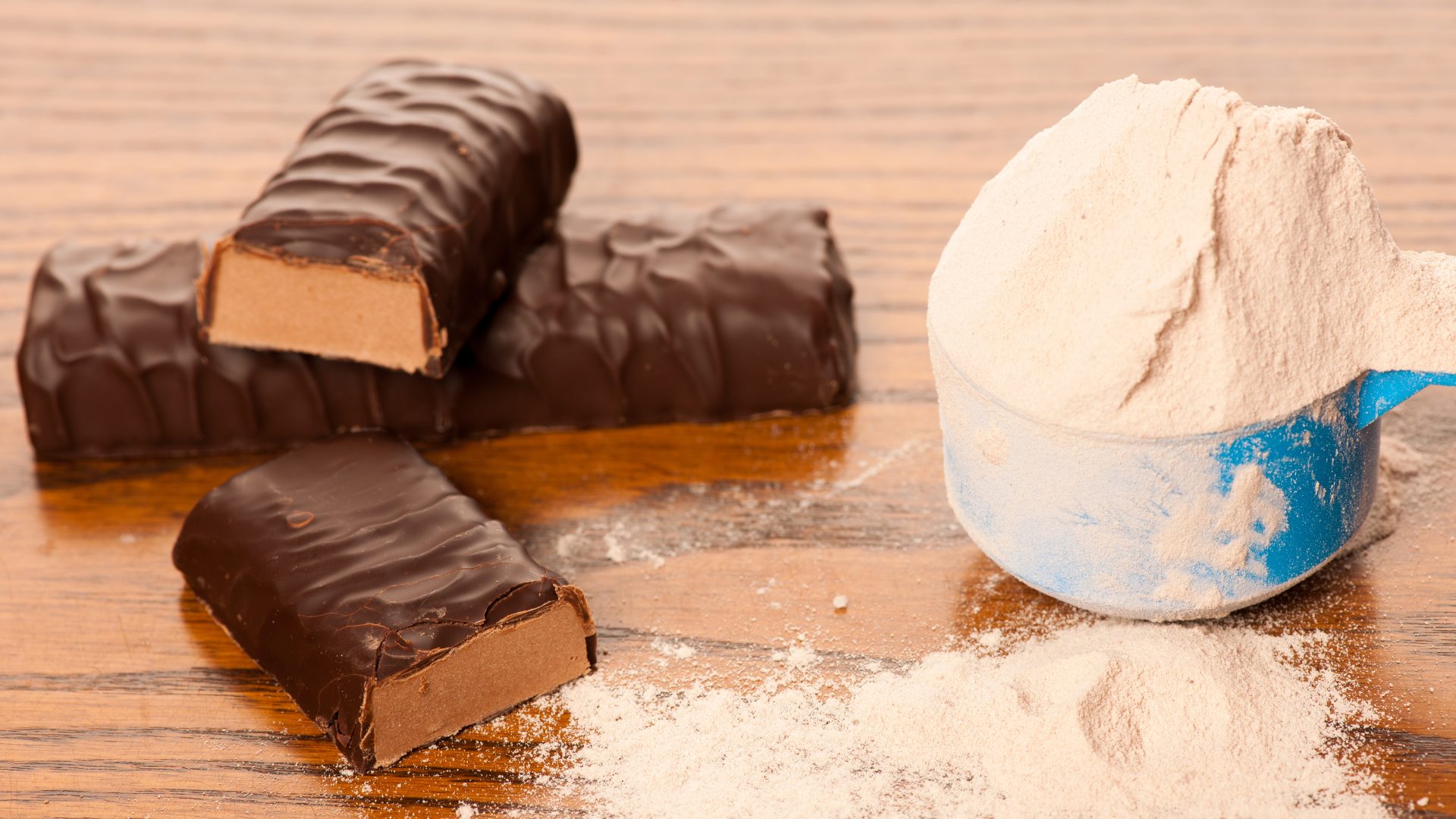
Protein was one of the most visible themes across the PLMA show floor – but what defined 2025 was how often protein was stacked with functional benefits. Exhibitors layered in collagen, fiber, creatine, and hyaluronic acid for added satiety, metabolic health, muscle retention, and performance recovery.
This shift aligns with rising GLP-1 usage, growing interest in nutrient-dense convenience, popular podcasters highlighting protein’s role in vitality and longevity, and the U.S. “Make America Healthy Again” (MAHA) movement.
Functional protein standouts on display in Rosemont included the likes of: HealthVerve Food Manufacturing –collagen protein latte, which features 18g of protein, plus 7,500 mg of collagen peptides; Evive protein smoothie cubes, which feature 15g of protein and 7g of fiber; JiMMYBAR creatine protein bars, packed with 20g of protein, 5g of creatine, and 4g of sugar.
Trend 2: Gut Health & Prebiotic Sodas
Gut health moved further into the mainstream in 2025, driven by digestive wellness, metabolic health, and the blockbuster rise of Poppi and Olipop, which established soda as a functional beverage platform.
The prebiotic soda effect was on display in Chicagoland, as private-label suppliers showcased innovations designed to mirror or extend the Poppi/Olipop playbook. For example, Prodalim Soda Pop feature low-sugar, fruit-forward prebiotic sodas made with functional fiber.
Fiber-forward functional snacking was on display as well, with brands like Taste of Nature displaying items such as Savory Snack Balls – cashew- and almond-based savory bites offering fiber with only 2-3g sugar.
Why does this trend matter? Because digestive wellness now spans beverages, snacks, and pantry staples – a high-opportunity space for private label heading into 2026.
Trend 3: Global Indulgence
One of the most eye-catching indulgence trends at the show was the rise of Dubai-style chocolate – inspired by the viral pistachio-and-kadayif (also known as kadaifi and kataifi) bar dominating TikTok.
Retailers and manufacturers extended Dubai-style flavor cues (pistachio cream, chocolate, crispy kadaifi shredded phyllo dough) across ice cream, bakery, confections, and snacks –reinforcing its role as a scalable premium indulgence platform.
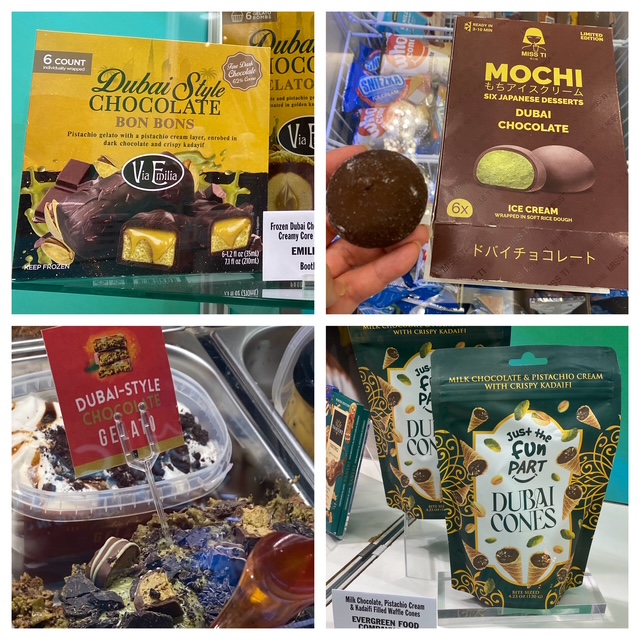
Standout Dubai-style items included Emilia Foods’ pistachio gelato bon bons and Dubai-style chocolate crepes. The multi-textured bon bons blended pistachio gelato, pistachio cream, dark chocolate, and crispy kadayif. Meanwhile, the frozen chocolate crepes were filled with pistachio cream and a kadayif heart, intriguing event attendees.
About the Author: Virginia Lee is a trendspotter and founder of The Curious Foodie LLC, helping CPG brands, research agencies, and global food companies understand what’s next — so they can make smarter decisions, faster. She has advised companies on innovation and market-entry opportunities in CPG at Euromonitor International, Innova Market Insights, and Brightfield Group.
Food for Thought Leadership
This Episode is Sponsored by: Performance Foodservice
How important is it as a food distributor to build a brand for foodservice – especially since consumers may never see or recognize it? Mike Seidel, vice president of procurement at Performance Foodservice Corporate, shares how the company views the development of its existing foodservice brands, including Roma and Contigo, and how they helped in the creation of its most recent Mediterranean concept Zebec.