Subscribe On Your Favorite Platform:




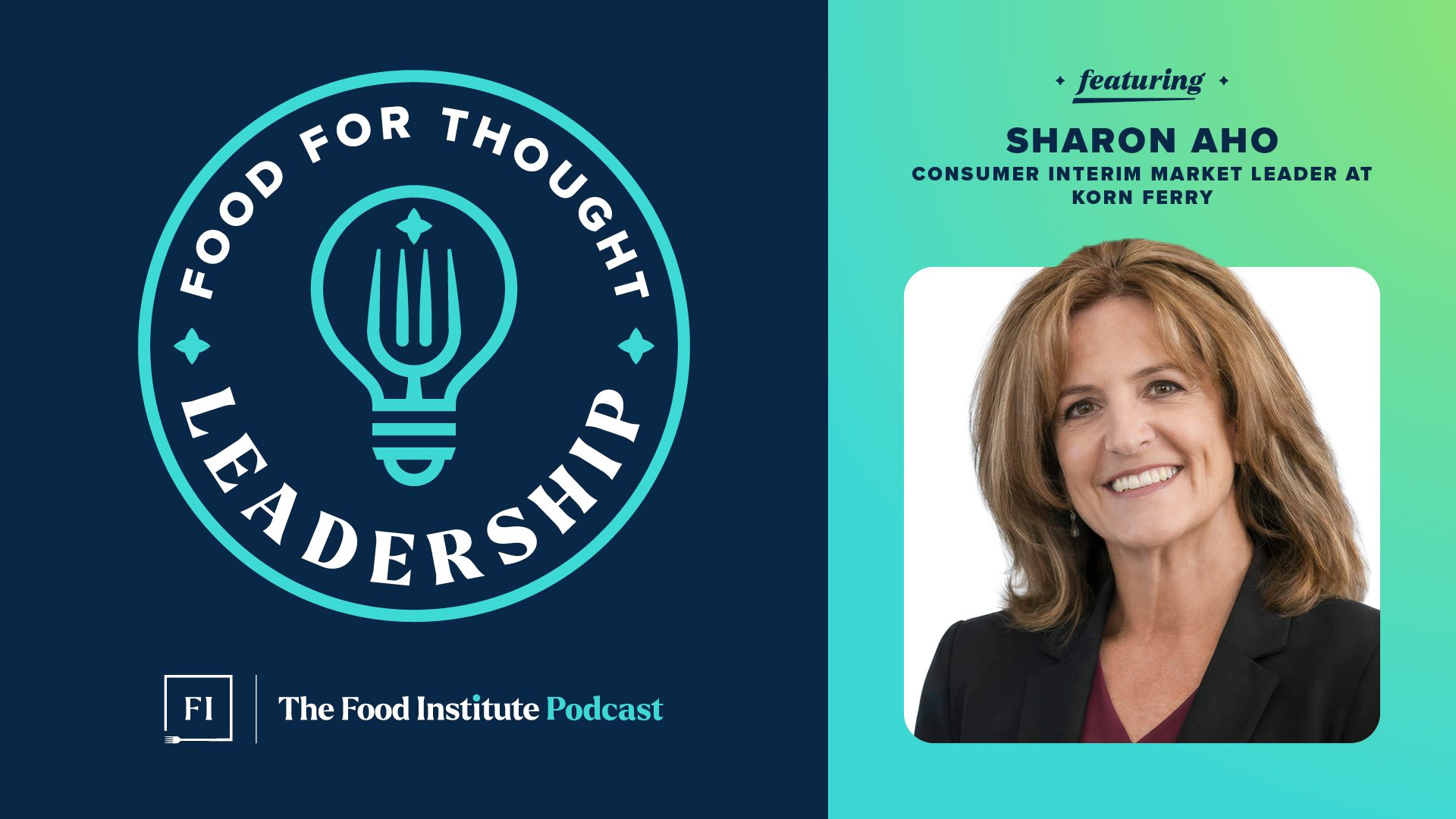
Food industry labor strategies, leadership, supply chain resilience, talent retention, and operational excellence take center stage in this episode of Food for Thought Leadership.
Chris Campbell sits down with Sharon Aho, Senior Managing Director at Korn Ferry, to discuss how food and beverage companies can navigate labor challenges, transformation initiatives, supply chain disruption, M&A activity, and the growing pressure to balance cost efficiency with talent excellence.
Transcript (Edited for Brevity/Clarity)
Aligning Around a North Star
Chris Campbell: “One of the things I want to start off with is … why these transformation initiatives kind of fail at the people level.” He noted that companies often announce “this big change,” but employees do not automatically “say, Hey, I’m on board.” That set up Sharon Aho’s core point: transformation usually breaks down when leaders are not steady or clear enough in how they communicate change.
Sharon Aho: “Senior leadership must be aligned around a North Star of any strategic initiative, transformation, growth or improvement initiative.” She said leaders need to keep “clearly articulating the roadmap and how we’re going to get there and speak about it every opportunity.” Too often, “leaders start changing the flavor of the month, and they get off track, and then the employees get confused.” For Aho, the fix is clarity and repetition: leaders must show employees “how do they fit in” and “what do they do every day that aligns with that North Star.”
Before Cutting Headcount
Chris Campbell: He shifted to cost pressure, observing that “a lot of companies are looking for ways to become more efficient, trying to trim costs.” With AI, robotics, and layoffs entering the picture, he asked what companies should consider “before they start making cuts,” especially when trying to preserve talent while managing expenses.
Sharon Aho: “That’s a very delicate situation.” She said the first question is strategic alignment: “What is the overall strategy? Are you aligned from the top down throughout the whole organization, on the strategy?” She also asked, “Do you have KPIs in place to create a lean organization?” Before reducing staff, Aho said companies should examine operations: “Is it breaking down? Is it at full capacity? Do we have a maintenance rigor?” In her view, “many organizations are more reactive than preventive,” and “there’s a lot of low hanging efficiency plays in operations.” If cuts are necessary, then “it’s all about clear messaging,” “being transparent,” and explaining “what we need to do as a whole, as a team to get to the next step.”
The Hidden Cost of Lost Experience
Chris Campbell: He followed up on “institutional knowledge,” noting that when companies cut employees, they often underestimate the value of people who know where things are, how systems work, and how the business actually runs. He asked whether that is a meaningful concern in conversations with clients.
Sharon Aho: “That is years, decades of experience and skills, that’s walking out the door.” She said companies must ask, “Do you have the right leadership in place?” and, if they make changes, “will you have the right leadership in place to do what you need to do, to fulfill on your strategies and objectives?” Her warning was blunt: “If you start cutting, there could be some major gaps.”
Resilience and Leadership in Food
Chris Campbell: He noted that food companies are trying to optimize for “resiliency and sustainability,” and asked what executive teams may still be missing as they respond to disruption in a post-pandemic environment.
Sharon Aho: “Covid woke everybody up,” she said. Executives now need to look at “long term risk and plan for disruption.” She described this as “a resilient supply chain design,” where companies are “always looking for alternative sources” and planning for instability caused by “political climate, natural disaster, etc.” Just as important, she said, organizations must “go down a couple levels” and make sure future leaders are “armed and they’re trained to do what’s needed when these disruptions happen.” At the same time, companies are pressured to remain innovative while facing “consumer ever changing needs” and “FDA pressures,” creating “a lot of pressure on the leader.”
Authenticity and Visibility
Chris Campbell: He asked how important authenticity is at the CEO and C-suite level, arguing that consumers can sense when a leader is merely trying to “hawk a product” instead of genuinely believing in it. He added that food tends to attract people who truly love the business.
Sharon Aho: “The food industry is unique. If you’re in the food industry, truly, it’s in your DNA.” She said consumers and employees can tell whether leaders genuinely want “to be the best” and “to be innovative.” The strongest leaders, in her view, are not distant executives: “They’re not in the corner office. They are out on the floor. They’re working alongside with the employees, occasionally rolling up their sleeves.” That leadership style, she said, “works the best.”
M&A, Change Management, and the Talent Edge
Chris Campbell: Turning to M&A, he said there is “a lot going on in the M and A space right now for food and beverage” and asked what leaders may overlook, especially when they are focused on getting the deal done. Later, he also asked whether the next competitive advantage would be operational excellence or talent excellence.
Sharon Aho: “The integration process itself is way more complex and challenging than anticipated.” Bringing together “systems,” “processes,” and “cultures” requires “a well thought out plan,” and, again, “it’s back to change management.” If leaders fail to explain what is happening, “they’re going to make it up in their mind. And that’s worse.” She also warned that top talent has options, especially during acquisitions. In the end, her conclusion was clear: “Talent excellence will drive operational excellence.” If companies have “the right leaders, the right people in place, you can get anywhere and you can reach that North Star.”