Subscribe On Your Favorite Platform:




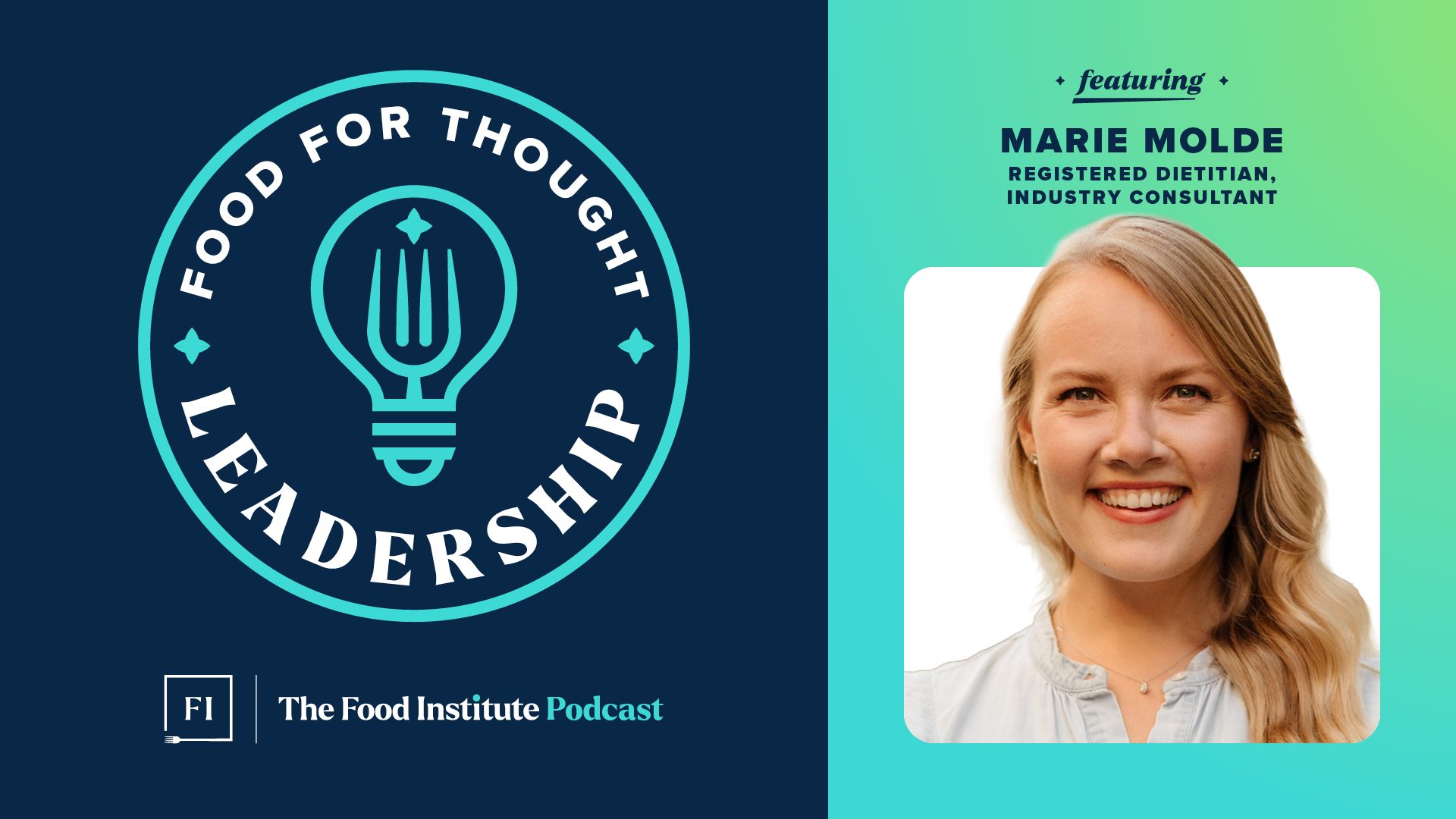
In this episode of Food for Thought Leadership, host Chris Campbell is joined by food and nutrition expert Marie Molde to explore how health and wellness trends are reshaping the food and beverage industry heading into 2026. Drawing on her background in consumer insights and nutrition, Molde unpacks why today’s wellness landscape feels overwhelming for consumers despite unprecedented access to information. Together, they discuss the need for simpler, more holistic health messaging that considers mental, emotional, and physical well-being as interconnected.
The conversation dives into the growing influence of GLP-1 medications, evolving protein and fiber priorities, and how brands are adapting to changing eating behaviors. Molde also highlights emerging areas like peptides, personalized nutrition, and the intersection of food, beauty, and functional benefits. Throughout the discussion, she emphasizes practical ways the industry can support healthier habits without adding complexity for consumers.
Transcript (Edited for Brevity/Clarity)
Health and Wellness Trends Impacting the U.S. Food Industry in 2026
Marie Molde: “I would call health and wellness in our country today a paradox, because we really have more information and more access to wellness culture and scientific research than ever before, and yet we hear from people that they’re really confused and stressed and oftentimes less healthy than they were years prior.”
“I do think we’re starting to see a shift toward more sustainable habits with health and wellness, and I also think consumers are starting to look at it more holistically. They don’t see health as just physical health and how we look, but also mental health, emotional health, and our nervous systems.”
“I think the task for those of us working in the food and beverage industry should probably be to simplify health for consumers as much as we can, rather than complicate it.”
GLP-1 Medications and Shifting Consumer Eating Behaviors
Marie Molde: “The most recent numbers I’ve seen are that about 10 to 14% of Americans are taking these drugs, and when you look at households, it’s about 23% today, projected even higher in the coming years.”
“If you think of a household with a GLP-1 user, that could be a parent with a teenager who’s seeing that behavior and eating to suit those needs, with a smaller appetite and different nutritional goals.”
“The food industry has seen this as a significant and growing market. We’re seeing frozen meals developed to be lower calorie, higher protein, and higher fiber, and they call out GLP-1 users right on the front of pack.”
Protein’s Role in 2026 Nutrition Trends
Marie Molde: “Protein is certainly going to maintain this beloved status that it has. The new food pyramid recommends protein at all three meals, and visually it’s right at the top.”
“The recommended daily allowance has increased from 0.8 grams per kilogram to 1.2 to 1.6 grams, which is quite a hefty leap.”
“I would have loved to see more plant-based proteins represented. There’s certainly a place for meat and dairy and eggs, but foods like lentils and beans are high in both protein and fiber.”
“About a third of the population has trouble with lactose intolerance, so I think we do need to continue elevating plant-based options, especially whole-food sources.”
Why Fiber Is Becoming a Priority for Consumer Health
Marie Molde: “Fiber hasn’t really had its moment yet, because it almost feels like a bathroom topic, but it’s such an important piece of the diet.”
“Fiber is only found in plant foods. Soluble fiber dissolves in water and slows digestion, and insoluble fiber adds bulk and helps move digestion along.”
“Fiber feeds the good bacteria in our gut, and when 70% of our immunity lives in the gut, that’s a really big deal.”
“It helps with hormone health, insulin regulation, weight management, and longevity. Every Blue Zone diet is high in fiber, and yet people are not eating enough of it.”
Personalized Nutrition and Emerging Functional Ingredients
Marie Molde: “There are apps now where you can snap a photo of your meal and instantly get a nutritional breakdown. You can see if you’re hitting your protein or fiber targets without typing anything in.”
“I do think sometimes too much information is not a good thing, and it can lead to disordered eating behaviors.”
“We’re also seeing more interest in peptides, like collagen and creatine, which are smaller than proteins and easier to absorb.”
“One ingredient I’m really excited about is Manuka honey. It comes from one place in the world, New Zealand, and it has over 2,300 bioactive compounds.”
“All consumers need to look for is UMF on the label, and they can be confident they’re getting the real thing with all of those health benefits.”