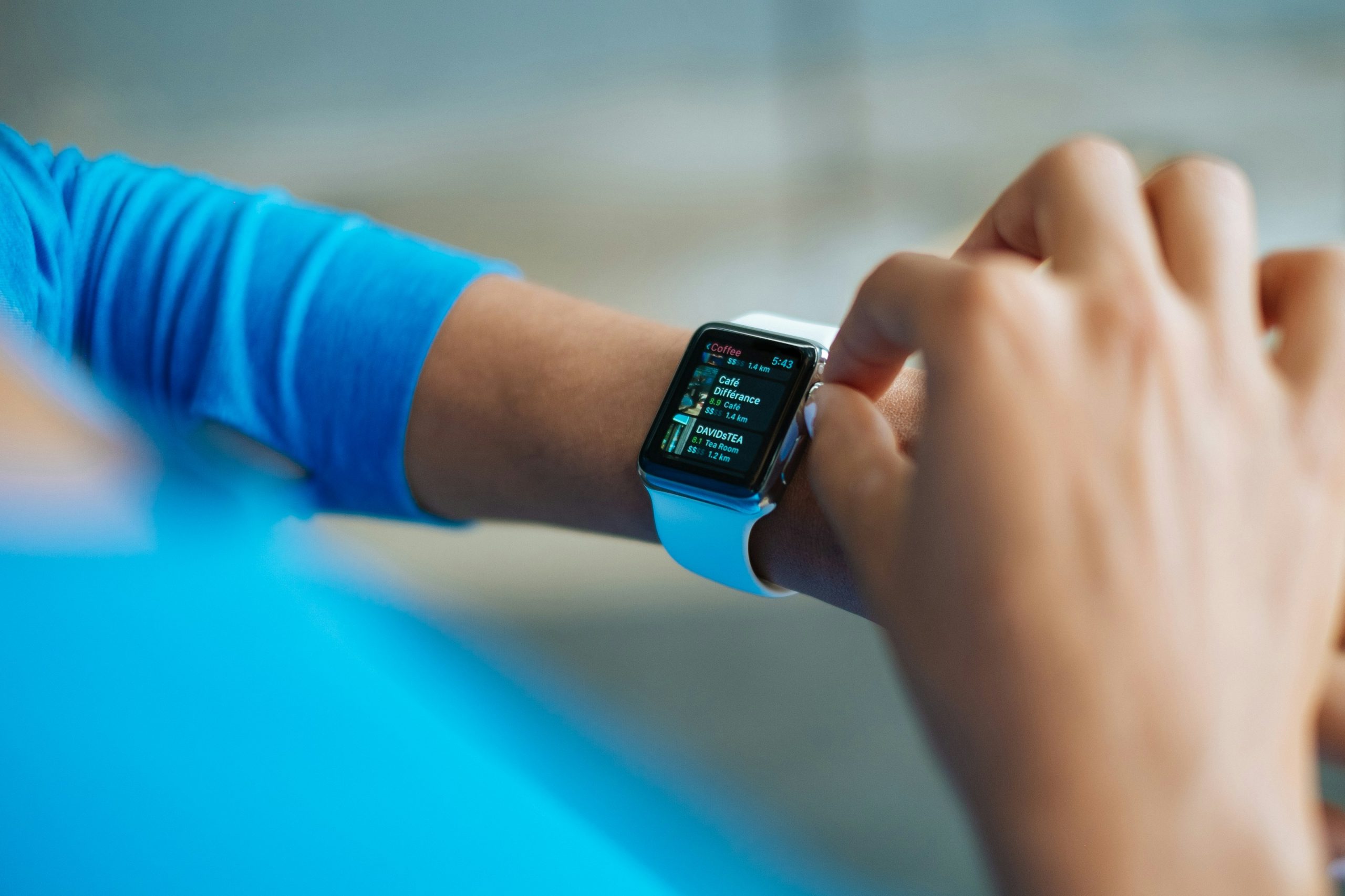
In early January, the FDA said that it will limit its regulation of wearable devices and software that’s designed to support healthy lifestyles and issued new guidance clarifying its regulatory approach, as Reuters reported.
The guidance builds on existing policy classifying low-risk wellness tools like fitness apps and activity trackers as non-medical devices that are exempt from stringent regulation – as long as they avoid making claims tied to disease diagnosis or treatment.
“The only stipulation is if they make claims of something being medical grade … like blood pressure measurement. We don’t want people changing their medicines based on something that’s just a screening tool or an estimate of a physiologic parameter.” said FDA Commissioner Marty Makary.
Although some devices are excluded, the regulatory change has opened the door for further innovation in wearable health and fitness technology.
Let’s take a look at some of the most intriguing recent developments happening in the space.

Wearable Tech Innovations
When most people think about wearable tech, they think of fitness watches or blood pressure cuffs.
However, Dr. Brantley Hall and the team at the University of Maryland recently developed Smart Underwear, the first wearable device designed to measure human flatulence.
By tracking hydrogen in flatus, the device helps scientists revisit long-standing assumptions about how often people actually “fart” and opens a new window for measuring gut microbial metabolism in everyday life.
“Think of it like a continuous glucose monitor, but for intestinal gas,” said Dr. Hall in a statement on the UMD Department of Cell Biology & Molecular Genetics website, which also noted that the device successfully detected increased hydrogen production following consumption of inulin, a prebiotic fiber, with 94.7% sensitivity.
Artificial intelligence has also significantly broadened the horizons of wearable tech.
“AI is revolutionizing everything. You have a completely new experience leveraging the data that’s coming in, and how AI can take that data and provide new experiences to people free of charge,” said Winston Zin, founder and CEO of Impakt, a nutrition and fitness app that pairs AI with GPS and computer vision.
Noosheen Hashemi, CEO and co-founder of January AI, another AI-powered health platform, echoed this sentiment, noting that AI and machine learning have “fundamentally shifted health from generalized advice to true personalization at scale.”
“At January AI, we pioneered the use of artificial intelligence to predict blood sugar responses to food before you eat it, without the need for invasive devices like continuous glucose monitors,” Hashemi told FI.
“Our models are trained on millions of real-world data points collected over seven years from wearables and sensors. Today, a user can simply snap a photo of a meal and receive a prediction of its metabolic impact based on their own physiology, preferences, and goals,” Hashemi added, noting that AI is replacing “one-size-fits-all guidelines with data-driven, personalized approaches that reach people where they are.”
Hashemi says his company has already seen 200,000-plus users engage with January AI, and more importantly, that this engagement has translated into measurable behavior changes, such as:
- Reducing carbohydrate and caloric intake
- Increasing consumption of fiber and protein
- Losing weight
Ethical Dilemmas
However, while knowledge is power, sometimes it comes at the cost of users’ privacy, which can pose ethical concerns.
“I think we probably need to put stops in place and really protect user data in all ways. Every company has a moral and ethical obligation to do that. As far as user data, you have to take a look at how data is read ethically, and so I think that that’s a real can of worms for different people,” Zin told FI.
Zin noted that Impakt protects its users in this regard by blacking out their real names and personal data when staff interact with it on the back end.
“Also, because we play on the computer vision side of the technology, people don’t want to share their videos. We don’t collect any of that data, so all of that data never goes into our server,” Zin added.
The Future of Wearable Tech
So, where is wearable tech headed?
“Many outlets say that at-home digital fitness digital fitness is growing at breakneck pace. Some say it’s at a compounded annual growth rate of 30% – I’ve seen figures from 25% to 37%, so it’s a high-growth market right now,” Zin told FI.
“I also believe that one day we will see a super health app where all your health metrics will be tracked in one place to give you a really comprehensive understanding of all your health data and activity,” Zin added.