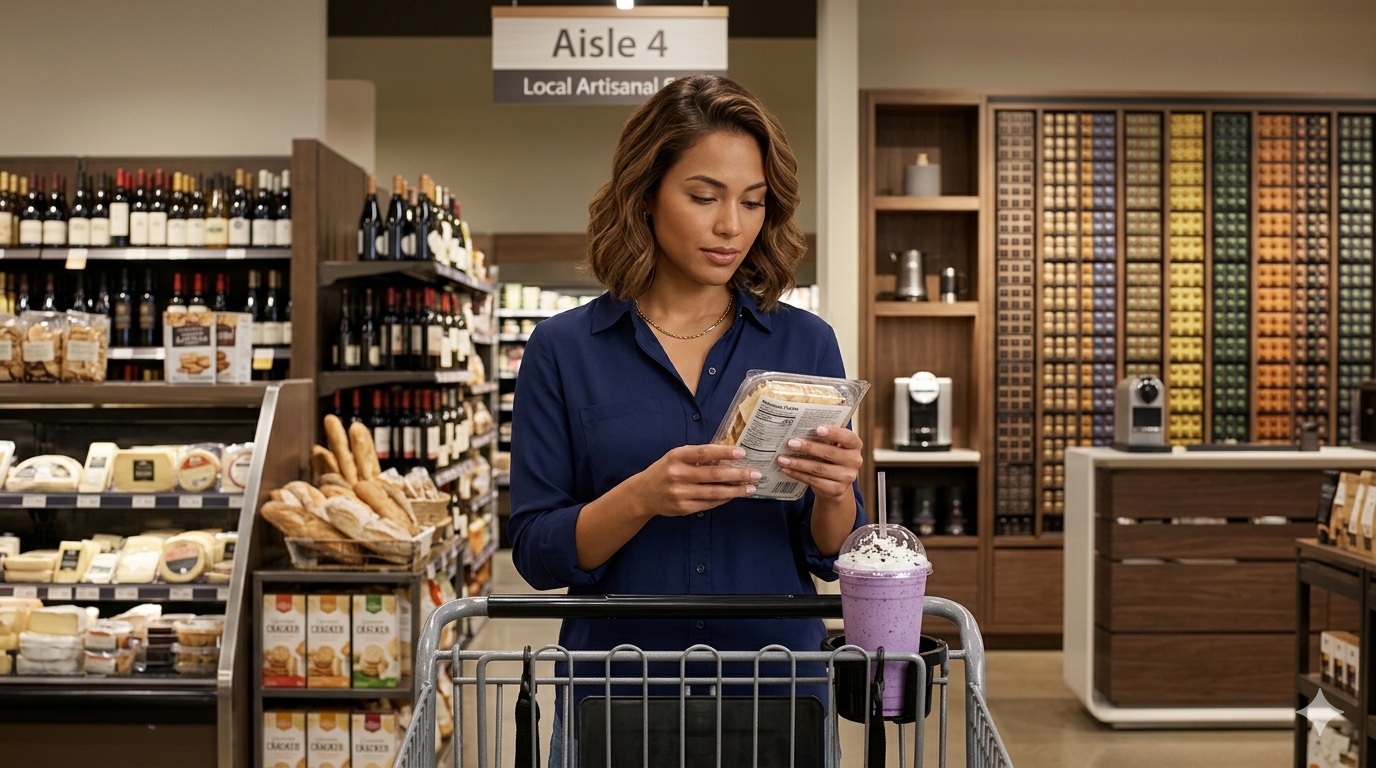
The modern, Accessible Consumer doesn’t live in your segmentation model. She picks up value-brand pasta and a $40 finishing salt in the same trip; she books a tasting menu on Saturday and brings KFC to a tailgate on Sunday. Your data has flattened her into a “value column.” And she’s not there.
We’re at a point in history where renting luxury for a brief moment costs less than the success markers our parents chased. Why own a car when ordering an Uber Black runs cheaper than a Honda Civic payment? The math on ownership stopped working, so the modern, Accessible Consumer stopped doing that math. Owning a house is on hold, her timeline for children has shifted, and her budget got rearranged. She can now spend more on the olive oil, book the tasting menu, reserve a table at Le Bernardin on a Saturday night.
She’s not a value consumer. She’s not a luxury consumer. She’s both, in the same cart, on the same night out.
And most brand managers have no idea what to do with the Accessible Consumer because their segmentation doesn’t have a bucket for her. So, they flatten her into the value column, marketing to her floor, and wonder why she keeps reaching past their shelves and dining rooms for the ones that fit the occasion.
For the Accessible Consumer, value is within reach. Luxury is within reach. Not across every category, but in the ones that align with what she truly values on any given day. She’s specific, intentional, and your data is compressing her.
The Federal Reserve Bank of New York’s recent Quarterly Report on Household Debt and Credit put total U.S. household debt at $18.8 trillion at the close of 2025, with credit card balances alone reaching $1.28 trillion. This pressure makes people more deliberate in feeling good about their choices. The house, the car, the vacation are increasingly out of reach, so that budget has largely moved to dinner, and to the grocery shelf.
Value: Not a Synonym for Cheap
The industry has been sloppy with the word “value” for years, and that sloppiness is costing companies more than they realize. Value is not low price.
Value pertains to the relationship between what a consumer pays, what the purchase delivers, and whether the experience feels intelligent, fair, and worth repeating. A $300 tasting menu can feel like a great spend, while a mediocre $45 bottle of Cab Franc can feel like a waste. Private labels understand this.
For years, private label carried a specific cultural meaning; they were the knock-off, the backup, the bottom shelf, last resort. Costco’s Kirkland brand, for example, reversed that entirely, not by lowering expectations but by meeting them so consistently that the label stopped mattering and the product started speaking for itself.
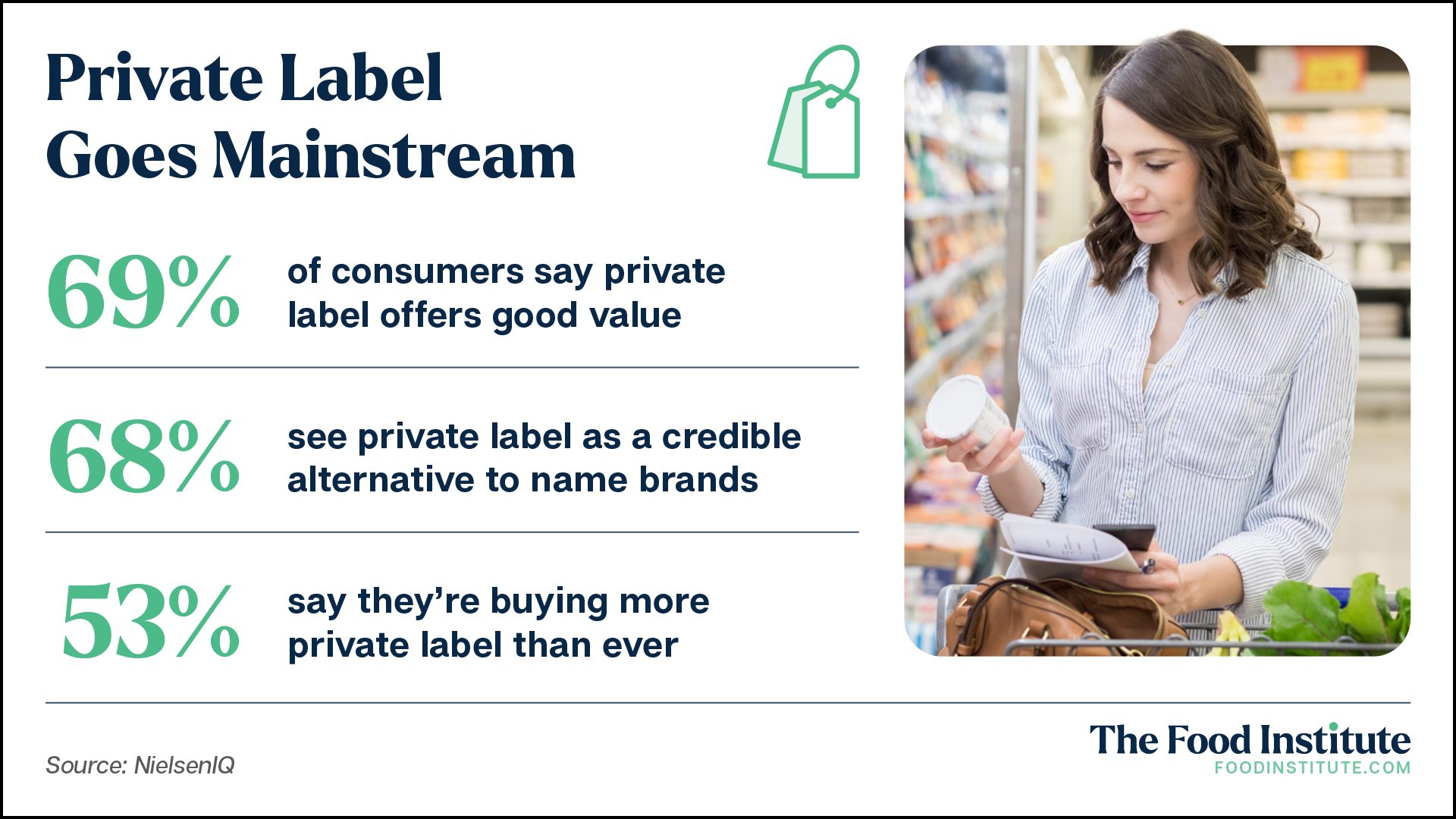
NielsenIQ in 2025 surveyed more than 17,000 consumers across 25 countries, found that 69% of respondents consider private-label products good value for the money, and 68% view them as credible alternatives to name brands. More than half, 53%, say they are buying more private label than ever before. These are not the coupon-clipping bargain-hunters of the 1990s. This is the Accessible Consumer, searching for products at prices that fit the occasion.
The segmentation model missed this entirely, because it reads income and geography, assuming consumers are tightening, budgets are shrinking, people are trading down. That reading is incomplete. The Accessible Consumer is not trading down to private label. She is trading in it, because the product earned her trust.
Which raises a question every brand manager should be sitting with right now: if you removed the logo from your product, your storefront, or your advertisements, would anyone still reach for it?
What Brands are Getting Wrong
The gap between where brands communicate and how consumers shop has widened significantly, and the gap starts in the data.
Most consumer segmentation models are still built around geography and income, segmenting markets in three clean channels: Value consumer, Mass-market consumer, and Luxury consumer. The Accessible Consumer doesn’t live in one tier. She picks up the value-brand pasta and a $40 finishing salt in the same trip. Census data doesn’t see her, she’s been miscategorized, underestimated, and ignored. Beyond her zip code and salary, the Accessible Consumer is shaped by inflation, and by social media.
Brands are optimizing for reach and recall while she’s optimizing for something more personal: the feeling that a purchase reflects well on her. Food and beverage carry that weight now in a way blue jeans did a generation ago.
When it comes to food and beverage, a consumer’s status is layered across the sourcing, the presentation, the occasion, and the story behind the product, and still, sometimes the label, but never only the label.
The most powerful thing about the Accessible Consumer is that she moves between price points flexibly, and without apology. Brands that understand this can build touchpoints around that emotional logic.
The Opportunity
Whether the context is a Michelin kitchen, a regional grocery chain, a spirits portfolio, or a fast-casual concept, the consumer arriving at that experience is carrying the same underlying need: to make a choice that feels good, reflects something true about her, and holds up when she thinks about it later. The category is different. The need is the same.
The operators with the clearest advantage right now treat every touchpoint, the menu, the shelf, the bottle, the presentation, the price, as an answer to a question the consumer is quietly asking: is this worth it?
There are three key places to start.
First, look at which occasions are actually driving your repeat visits and repeat purchases. Before you can earn her loyalty, you need to know where she is spending freely and where she pulls back, because those aren’t the same category and they aren’t driven by the same logic.
Understand why private label is winning. It’s not because she can’t afford you. She isn’t asking whether it saves her money. She’s asking whether it fits the moment she’s looking for. She saw your offering, weighed it, and moved past it. That’s a marketing failure, not a price problem. Fix the right thing.
Ask honestly whether you are meeting her where she actually is, not where your corporate brand guidelines imagine her to be.
About the author: Ella Parlor is a commercial operations and distribution consultant in the adult beverage industry, with over 15 years of experience across beer, wine, and spirits. She’s the author of High Tolerance: The Intoxicating World of Alcohol Marketing and a contributor to The Food Institute