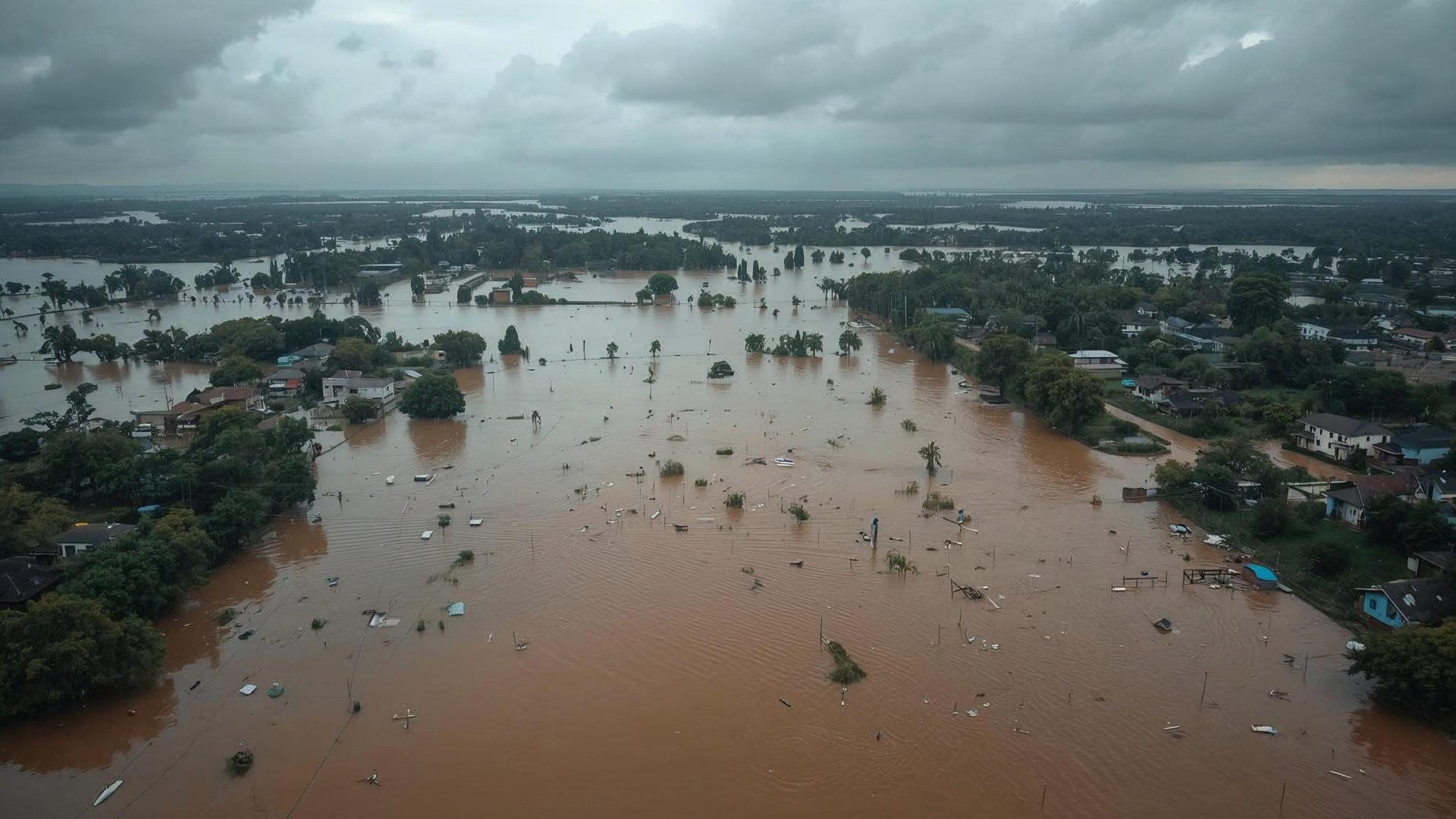
Worries are mounting about the formation of a so-called Super El Niño that could threaten the world’s food supply, already threatened by oil, gas and fertilizer shortages caused by the U.S.-Israeli bombing of Iran.
“Global consequences are inevitable and unpredictable, bringing extremes like drought or flooding, and indirectly spanning across the planet ecosystems,” Professor Elena Popkova of Tashkent State University of Economics told The Food Institute.
“Current scientific progress shows ineffectiveness of forecasting methods and poor strategic response capacity.”
Chris Jaccarini, senior analyst, food and farming at the Energy and Climate Intelligence Unit, told CNBC that pressure from an El Niño and the Iran war could send food prices soaring.
“Food prices are being squeezed from both sides: by climate extremes disrupting production in major growing regions, and by a food system still hooked on fossil fuels and therefore exposed to spikes in gas, fertilizer, transport and packaging costs,” Jaccarini told CNBC.
“That is why the prospect of a strong El Niño matters. It can turbocharge weather risks in a climate already destabilized by human emissions, compounding inflation driven by high fossil fuel prices.”

Super El Niño Could Hit Key Growing Regions
An El Niño – Spanish for little boy – builds up warm water in the western Pacific and disrupts the upward flow of cold, nutrient-rich waters. This, in turn, affects fish and disrupts cyclical weather patterns.
“A potential Super El Niño highlights how exposed global food manufacturers are to climate-driven disruption across key sourcing regions and agricultural areas throughout the U.S.,” Dan Veldman, senior VP and U.S. national property manager at Sedgwick, told FI.
“The risk to [food] manufacturers is two-fold: direct physical damage from weather events such as hail, high winds, excessive rainfall, and flooding [that] affect complex manufacturing operations in vulnerable locations, as well as upstream supply chain disruption driven by variable weather patterns.”
Veldman added such events can disrupt business, “particularly when crop impacts reduce yields or create quality issues in key growing regions. In turn, this drives complex, multilayered claims, as secondary disruptions, combined with physical damage to production facilities often located near those same regions, ripple through processing and distribution networks and make it more difficult to meet customer demand.”
The last Super El Niño was a decade ago and triggered severe drought in Ethiopia and devastating wildfires in Indonesia. Globally, it is estimated the weather pattern caused tens of billions of dollars in direct losses and $3.9 trillion to $5.7 trillion in estimated economic growth in subsequent years. Agriculture losses alone were pegged at $327 million.
Ethiopia again is likely in the crosshairs, along with Sudan and South Sudan.
Pricing Uncertainty Builds
Matt Makens, an atmospheric scientist at Makens Weather, noted though the Super El Niño will undoubtedly affect agriculture, impacts will vary widely.
“For U.S. row crops, the risk isn’t always outright drought: It’s timing. A wet, active pattern during planting or harvest can be just as disruptive as dryness, and a Super El Niño tilts the odds toward those kinds of delays and yield variability, although that may turn into a boost for grass and forage growth for livestock producers,” Makens said.
Makens said California likely will feel the most impact.
“Increased storm activity can improve water supply in the long run, but in the short term it raises the risk of flooding, crop damage, and disruptions to high-value specialty crops,” he said.
No matter whether a regular El Niño develops or whether a more intense event will materialize, the uncertainty will affect pricing – even if U.S. output is near normal, Makens said.
Dawid Heyl, a co-portfolio manager for the global natural resources strategy at Ninety One, told CNBC the combination of a Super El Niño with the Iran war could deliver a severe blow.
“If you get two negative factors like that combining then it could really be tough going,” Heyl said.
The Food Institute Podcast
In this episode of Food for Thought Leadership, Food Institute Chief Content Officer Kelly Beaton steps in as guest host to interview Fransmart CEO Dan Rowe on the evolving restaurant labor market. Rowe challenges operators to view labor not as a cost to minimize but as a strategic investment, noting that the most successful brands are those that “staff for the sales they want” and prioritize retention, engagement, and culture amid ongoing workforce constraints.