The Food Institute The Food Institute Logo Menu Main Food Institute Menu Login Login or Logout from your account News News stories Digital Media Video and Audio content Digital Media Video and Audio content Play Play Video Play Play Video Play Play Video Play Play Video Play Play Video Play Play Podcast Play Play Podcast Play Play Podcast Play Play Podcast Calendar Events Calendar Publications Food Institute Publications and various products Envelope Icon Subscribe to Food Institute Newsletters X/Twitter Icon Food Institute X/Twitter Email Icon Food Institute Email YouTube Icon Food Institute YouTube Instagram Icon Food Institute Instagram LinkedIn Icon Food Institute LinkedIn Faceboook Icon Food Institute Faceboook Search Icon Search Button Icon Next Next Items Arrow Previous Previous Items Arrow Next Next Items Arrow
Search
Generic filters
  • News
    • Focus Articles
    • Agriculture/Commodities
    • Food Manufacturing
    • Food Retail
    • Foodservice
    • Finance
    • Company Earnings
    • Mergers
    • — column break —
    • Top Trends
    • COVID-19
    • ESG
    • Food Tech
    • Health & Wellness
    • Investments
    • Labor
    • Plant-Based
    • Supply Chain
    • Inflation
  • Podcast
  • Video
    • FI Live
    • FI Newscast
  • Member Content
    • Food Institute Report
    • Today in Food
    • Earnings and Sales
    • Member Profile
  • Data Insights
    • Consumer Price Index (CPI)
    • Producer Price Index (PPI)
    • Current Employment Statistics (CES)
    • Grocery/Retail
  • Webinar
  • My Account
  • Newsletter Sign Up
  • Advertise
  • Advisory Services
  • Shop
Menu
  • News
    • Focus Articles
    • Agriculture/Commodities
    • Food Manufacturing
    • Food Retail
    • Foodservice
    • Finance
    • Company Earnings
    • Mergers
    • — column break —
    • Top Trends
    • COVID-19
    • ESG
    • Food Tech
    • Health & Wellness
    • Investments
    • Labor
    • Plant-Based
    • Supply Chain
    • Inflation
  • Podcast
  • Video
    • FI Live
    • FI Newscast
  • Member Content
    • Food Institute Report
    • Today in Food
    • Earnings and Sales
    • Member Profile
  • Data Insights
    • Consumer Price Index (CPI)
    • Producer Price Index (PPI)
    • Current Employment Statistics (CES)
    • Grocery/Retail
  • Webinar
  • My Account
  • Newsletter Sign Up
  • Advertise
  • Advisory Services
  • Shop
Search
Generic filters
The Food Institute
Log In
Sign Up for Newsletters
Your Single Source for Food Industry
News, Data and Trends Since 1928
  • Trending
  • Podcasts
  • Membership
  • Advertise
  • Inflation
  • Reports
  • Home
  • >
  • Innovation
  • Lessons Learned From 7 Restaurant Chains Winning the Mobile App Game

Lessons Learned From 7 Restaurant Chains Winning the Mobile App Game

Anna Kinder | February 12, 2026

Anna Kinder | February 12, 2026

In early February, Reuters reported that Yum! China surpassed 590 million memberships in its digital loyalty programs, which translates to a whopping 40% of the nation.  

Yum! China CEO Joey Wat told investors that the KFC loyalty program is “really helping our long-term and short-term business,” highlighting the growth of its KPRO brand, which is essentially a premium, better-for-you iteration of KFC. Wat says 80-90% of KPRO’s sales come from KFC loyalty members. 

Consultants have attributed some of the success of Yum! China’s KFC app to the unique structure of its membership program involving paid and invitation-only tiers that provide free deliveries and prioritization options in delivery queues – unlike most U.S. restaurant brands, which tend to rely on third-party platforms more than they’d like. 

Reclaiming Online Orders 

Steve Morris, CEO of NEWMEDIA.COM and creator of RankOS, a new operating system designed to enhance brand visibility across AI-driven and traditional search environments, says many operators are tired of giving up “their share of the margin to third-party aggregators,” citing Uber Eats as an example, which takes 15-30% commissions on orders.  

“That $50 meal suddenly loses up to $15 in margin before you’ve flipped a burger,” Morris told FI. 

And the perks extend beyond dollars, as gaining more control of customer data is also an invaluable asset for restaurants.  

“You own the data. Third-party aggregators hold your customer relationships, and so you hold an illegible version of your data. Brands that switched to apps using this approach transitioned to data-driven where they can micro-target users with AI upselling,” Morris explained.  

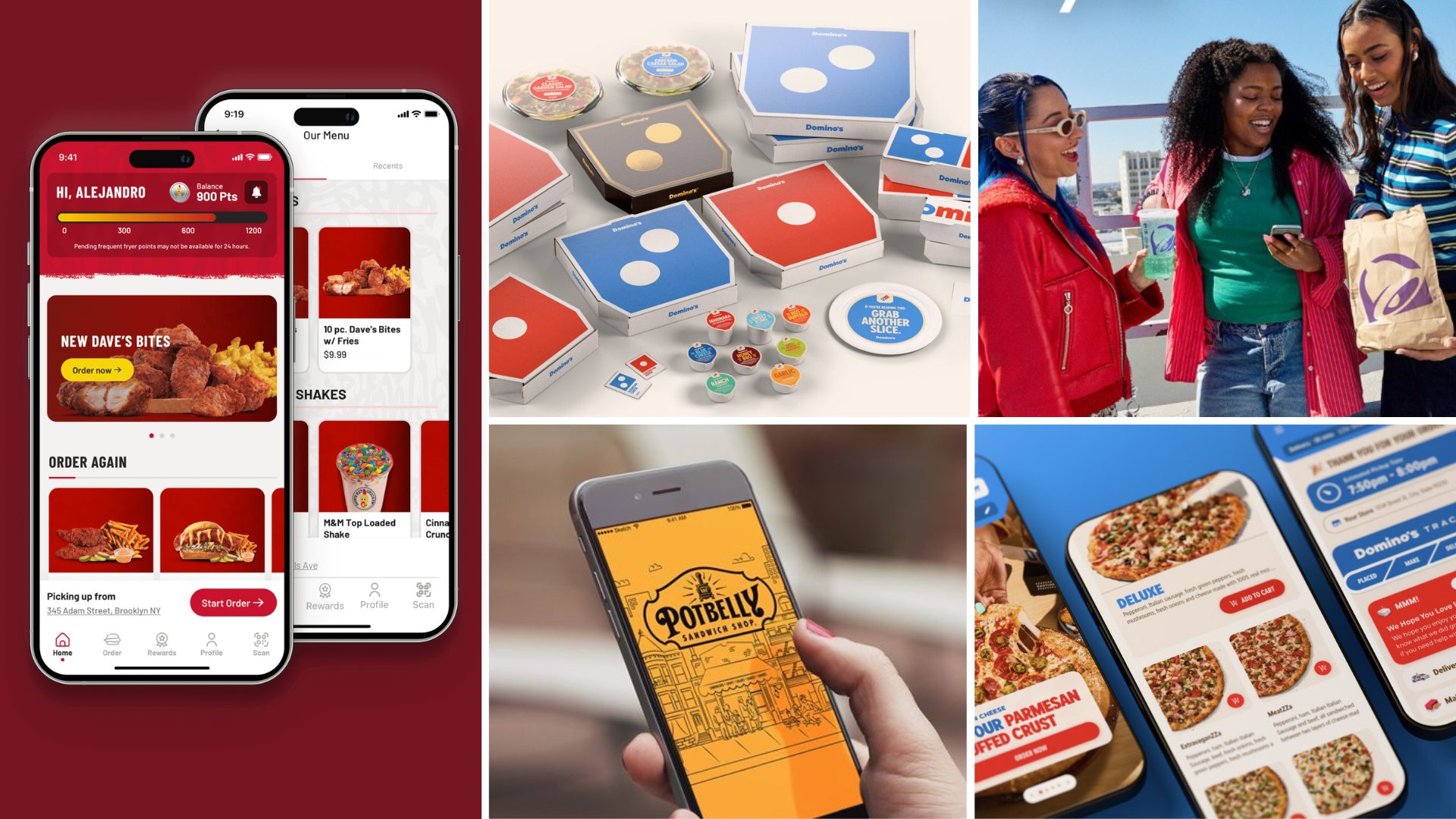
He highlighted Potbelly’s recent integration of Flybuy’s AI location engine, which “delivers context and proximity-based in-app messages the moment the customer is in range” and “turns first presence into an instant conversion” while allowing brands to “maintain control of the preparation and customer experience.” 

However, launching your own app is only an effective strategy when it functions properly. 

Before launching the website He Cooks, Kyle Taylor worked in tech-focused marketing for several years and said that restaurant concepts often lose online orders to third-party platforms because their apps are rife with technical difficulties. 

“It’s usually not a lack of features. It’s a lack of trust. The app is unreliable at peak hours, pickup is chaotic, the UI adds steps instead of removing them, or loyalty starts to feel like a claw-back instead of a thank you,” Taylor told FI.  

“When the experience breaks, customers do not complain for long. They just revert to the old habit, or they open DoorDash… because that’s what these mobile experiences are ultimately designed to compete with.”  

Modern consumers are busy, and they’re only willing to incorporate apps into their routines if they make their lives easier. 

Habit and Anticipation 

“The strongest players are using mobile to create habit and anticipation, not just transactions,” said Jessica Wagner, SVP of Product & Design at Fueled, a digital agency that has built apps, websites, AI integrations, gamified experiences, and more for the likes of Apple, Google, and The New York Times. 

“In our experience, the highest-performing restaurant apps focus less on one-off offers and more on reducing friction, rewarding consistency, and giving customers a reason to open the app even when they are not hungry yet. Starbucks remains the gold standard here,” Wagner told FI. 

Bob Vergidis, founder and Chief Vision Officer of Point of Sale Cloud, also noted Starbucks’ mobile app prowess, as well as Chipotle’s. 

“Starbucks continues to lead because their app has become part of people’s daily routine. Ordering, rewards, and pickup all work smoothly together, and that consistency builds trust over time,” Vergidis told FI. 

“Chipotle has also done a great job using mobile to let customers customize their experience and feel more connected to the brand, which shows up in repeat usage and loyalty.” 

While fostering connections with users is one way to increase app usage, engendering a sense of exclusivity within that tight-knit community can take it to the next level. 

Exclusivity Meets Inclusivity  

“Taco Bell is another standout, especially in how it uses exclusivity. App-only drops, early access to LTOs, and playful naming turn ordering into a moment of fandom,” Wagner told FI. 

“The app feels fun and self-aware, which matters for a younger audience that’s already skeptical of traditional loyalty programs. It is not just about saving money. It is about feeling like you are in on something,” Wagner added. 

“Sweetgreen shows a more modern version of this strategy. Its app leans into transparency, customization, and lifestyle alignment,” Wagner told FI.  

“Loyalty is earned through consistency and values, not gimmicks. Together, these brands show that the most effective restaurant apps do three things well: they reduce friction, create moments worth opening the app for, and use first-party data to make loyalty feel personal instead of transactional,” Wagner added. 

“The strongest restaurant apps are the ones that feel genuinely useful to the customer. Dave’s Hot Chicken is a good example. Their app gained traction because it gave people a clear reason to download it and keep using it, and it fit naturally into how their customers already order and interact with the brand,” Vergidis said.  
Share this article
Like this?
Subscribe to The Food Institute Newsletters to enjoy more quality content like this delivered to your inbox.

Popular Posts

  • Top 5 Healthiest Ice Creams June 13, 2025
  • Beyond Meat Fights for Survival March 5, 2025
  • The 10 Best Snacks for Brain Health August 6, 2025
  • Crops Rotting in Fields With Undocumented Farmworkers Gone July 7, 2025
  • Big Deal Down South: C&S Acquires 170 Grocery Stores from Aldi February 12, 2025
Related Articles
Baby Boomer eating breakfast

Why Baby Boomers, Not Gen Z, Present the Food Industry’s Biggest Opportunity

February 12, 2026

Chipotle Storefront

Chipotle’s Turnaround Toolkit: Innovation, Expansion, Lots of Protein

February 10, 2026

cooked food on white ceramic bowl

10 Foods & Beverages Gen Z Keeps Asking For, According to Chartwells

February 9, 2026

Budweiser, Delivery Brands Among Super Bowl 60 Ad Winners

February 8, 2026

Pizza Hut Storefront

Pizza Hut to Shed 250-Location Dead Weight

February 5, 2026

a plate of food

How Restaurants Are Scoring Big with Super Bowl LTOs and Occasion-Based Pricing

February 4, 2026

woman in white jacket holding smartphone

AI, Gen Z, and Gamification: The Engagement Trifecta Defining 2026

January 29, 2026

Two women talking and drinking coffee at a cafe.

Coffee Chains Offer Tips for F&B Success in 2026

January 28, 2026

Become a Member

For over 90 years, The Food Institute has been the best “single source” for food industry executives, delivering actionable information daily via email updates, weekly through The Food Institute Report and via a comprehensive web research library. Our information gathering method is not just a “keyword search.”

Contact Us

201 791 5570

questions@foodinstitute.com

330 Changebridge Road Suite 101

Pine Brook, NJ 07058

Privacy Policy
About Us
Terms and Conditions

© 2026 The Food Institute.

Food Institute Logo Mark
The Food Institute
We use cookies on our website to give you the most relevant experience by remembering your preferences and repeat visits. By clicking “Accept”, you consent to the use of ALL the cookies. Do not sell my personal information.
Cookie SettingsAccept
Manage consent

Privacy Overview

This website uses cookies to improve your experience while you navigate through the website. Out of these, the cookies that are categorized as necessary are stored on your browser as they are essential for the working of basic functionalities of the website. We also use third-party cookies that help us analyze and understand how you use this website. These cookies will be stored in your browser only with your consent. You also have the option to opt-out of these cookies. But opting out of some of these cookies may affect your browsing experience.
Necessary
Always Enabled
Necessary cookies are absolutely essential for the website to function properly. These cookies ensure basic functionalities and security features of the website, anonymously.
CookieDurationDescription
cookielawinfo-checkbox-analytics11 monthsThis cookie is set by GDPR Cookie Consent plugin. The cookie is used to store the user consent for the cookies in the category "Analytics".
cookielawinfo-checkbox-functional11 monthsThe cookie is set by GDPR cookie consent to record the user consent for the cookies in the category "Functional".
cookielawinfo-checkbox-necessary11 monthsThis cookie is set by GDPR Cookie Consent plugin. The cookies is used to store the user consent for the cookies in the category "Necessary".
cookielawinfo-checkbox-others11 monthsThis cookie is set by GDPR Cookie Consent plugin. The cookie is used to store the user consent for the cookies in the category "Other.
cookielawinfo-checkbox-performance11 monthsThis cookie is set by GDPR Cookie Consent plugin. The cookie is used to store the user consent for the cookies in the category "Performance".
viewed_cookie_policy11 monthsThe cookie is set by the GDPR Cookie Consent plugin and is used to store whether or not user has consented to the use of cookies. It does not store any personal data.
Functional
Functional cookies help to perform certain functionalities like sharing the content of the website on social media platforms, collect feedbacks, and other third-party features.
Performance
Performance cookies are used to understand and analyze the key performance indexes of the website which helps in delivering a better user experience for the visitors.
Analytics
Analytical cookies are used to understand how visitors interact with the website. These cookies help provide information on metrics the number of visitors, bounce rate, traffic source, etc.
Advertisement
Advertisement cookies are used to provide visitors with relevant ads and marketing campaigns. These cookies track visitors across websites and collect information to provide customized ads.
Others
Other uncategorized cookies are those that are being analyzed and have not been classified into a category as yet.
SAVE & ACCEPT