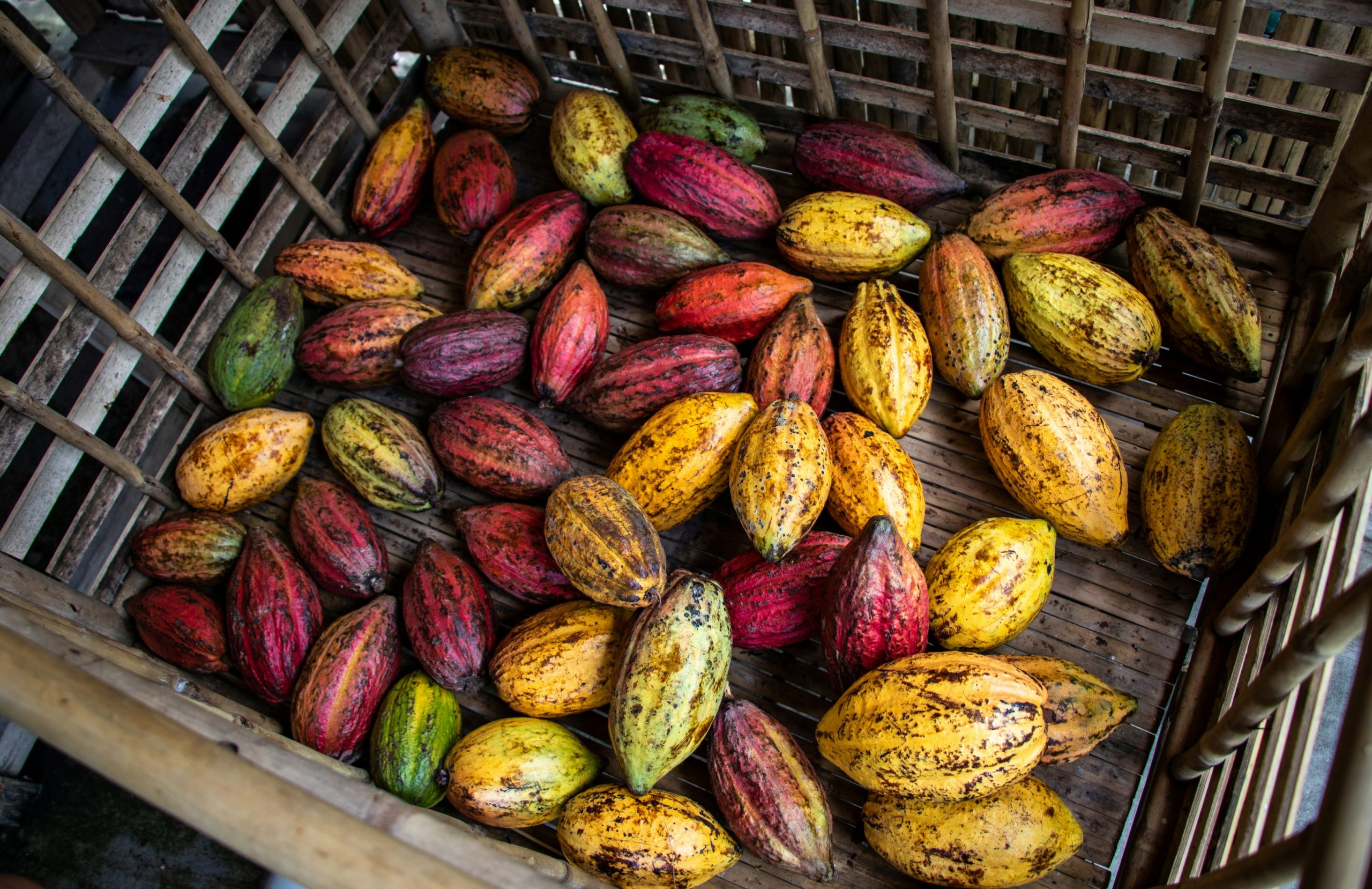
The Ivory Coast produces roughly 40% of the global supply of cocoa, so problems in its cocoa crops and supply chains trickle down to the entire industry. Right now, unsold crops are rotting, threatening farmers’ livelihoods, and the supply of cocoa to come.
The local government recently announced it would buy the unsold cocoa stocks to support exports and keep farmers paid. Since October, price drops affecting the region have shifted demand, causing an estimated 700,000 tons of unsold stocks to accumulate.
To protect farmers from price swings, the Ivory Coast’s government controls cocoa sales, with roughly 85% of the harvest sold at a fixed price before crops are ready, according to AP News.

FI spoke with Jonathan Horn, CEO of supply chain visibility firm Treefera, about the evolving situation. He noted that, although the government’s move to buy unsold stocks will support farmer liquidity and stabilize near-term payments, the root causes remain.
“Real stability requires buyers to re-engage with the market and targeted investment on the ground to restore productivity and stem disease and loss,” he said.
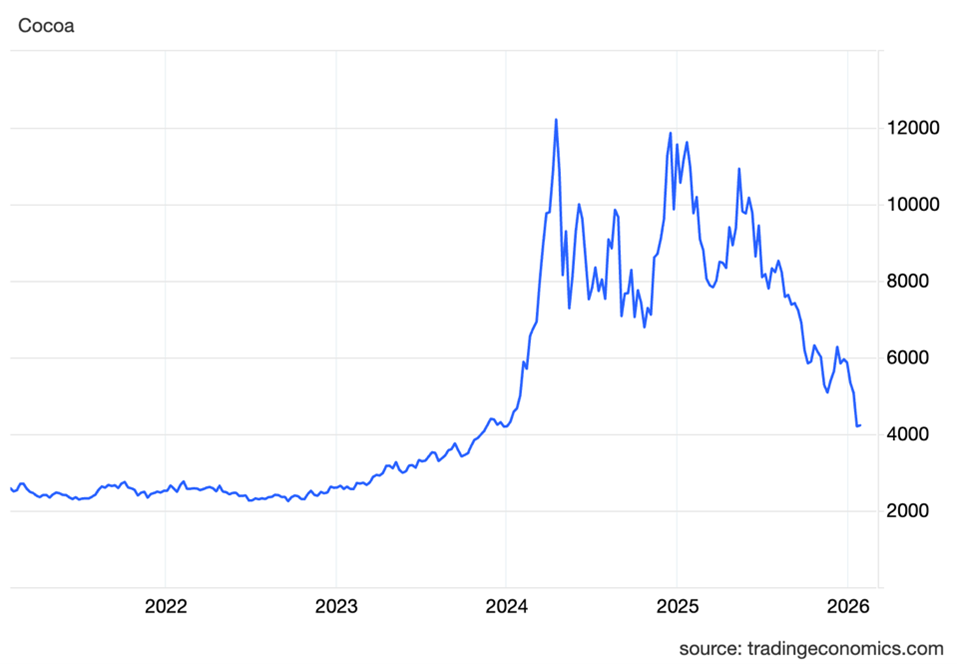
In October, despite falling cocoa futures, the government’s Coffee and Cocoa Council set the price at a record high – $5,000 per metric ton – leading to the demand drop. Since then, prices have fallen to just above $4,600 per metric ton.
The second largest cocoa exporter, Ghana, is also facing a similar issue to its fellow producer. Ghana’s cocoa industry regulator, as well as the finance ministry are debating whether to lower pay for farmers or subsidize them as global prices continue to fall.
Until a decision is reached, an estimated 150,000 tons remain with farmers as the cocoa board paused purchases. Similar to the Ivory Coast, the Ghanaian organizations control cocoa’s movement internationally.
Bloomberg notes that the development has induced short-term price volatility, citing a 3.5% increase in cocoa futures on Monday.
The Future of Cocoa
But don’t expect chocolate prices to fall soon, just because crops went unsold at the higher price, as the supply still shrank from spoilage in that time. Historic issues continue to be a concern, contributing to the oscillating future prices.
Horn’s company has seen first-hand the “persistent, location-level yield and resilience problems driven by aging trees, disease pressure, and weather and climate volatility,” he explained.
“Those problems make the crop unusually fragile at the point of origin, and that fragility is what has driven the extreme price moves we saw in 2024 and 2025.”
He anticipates a few possible paths ahead in the next year, with varying levels of positive outcomes.
First, price stabilization can remain near current levels, assuming normal purchasing behaviors following government action. Because the prices for this commodity are set by the government on a periodic basis, if the new purchase price for the mid-crop season falls as expected on April 1, it can further contribute to relative peace among cocoa purchasers.
However, if buyers continue to exercise caution, further spoilage and production issues can push prices even higher. At the most extreme, these headwinds could return the supply to the 2024 and 2025 peaks outlined in the above graph.
In the meantime, chocolate brands are looking to minimize their reliance on costly cocoa imports by reformulating products and reducing pack sizes to maintain margins.