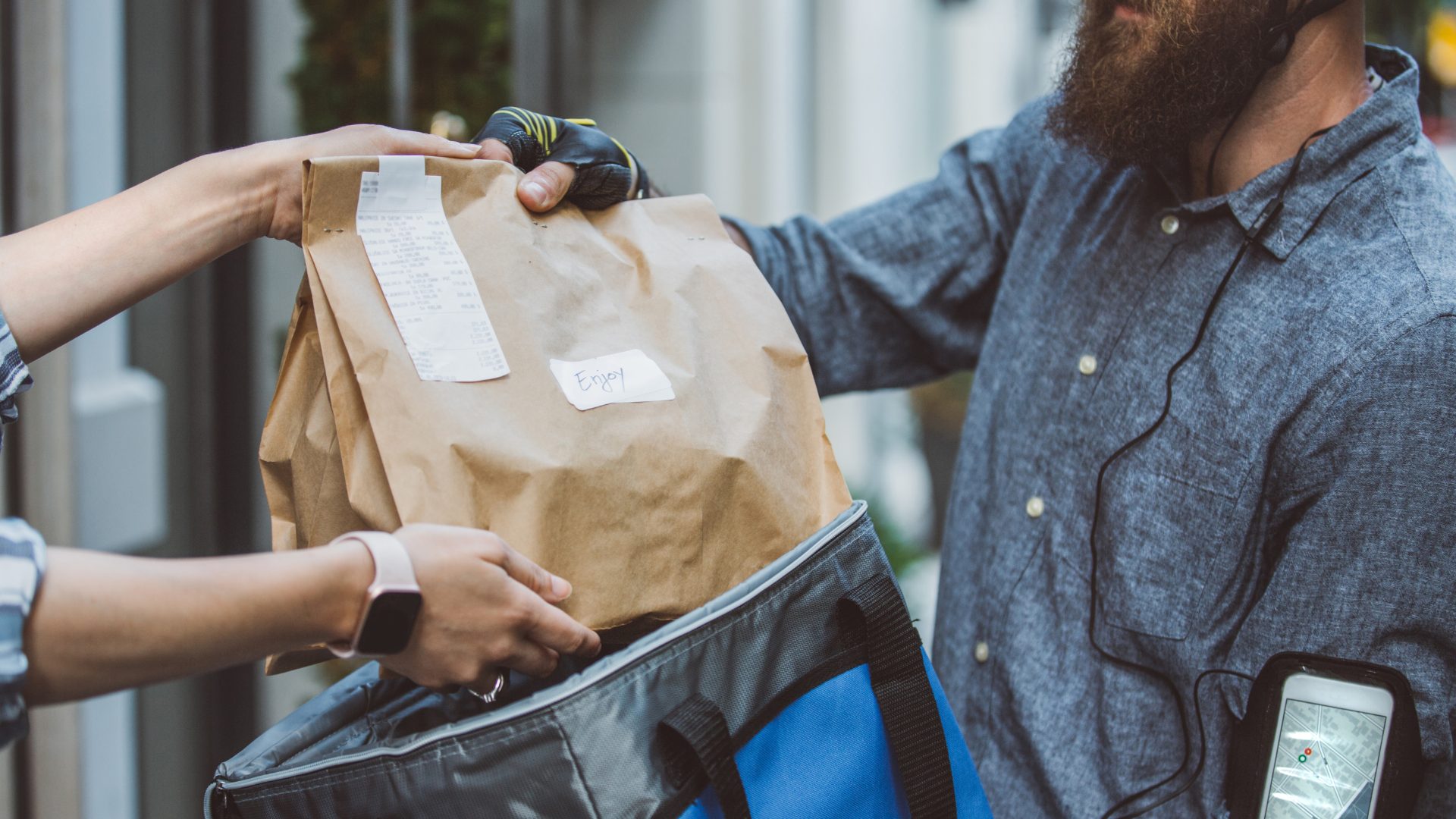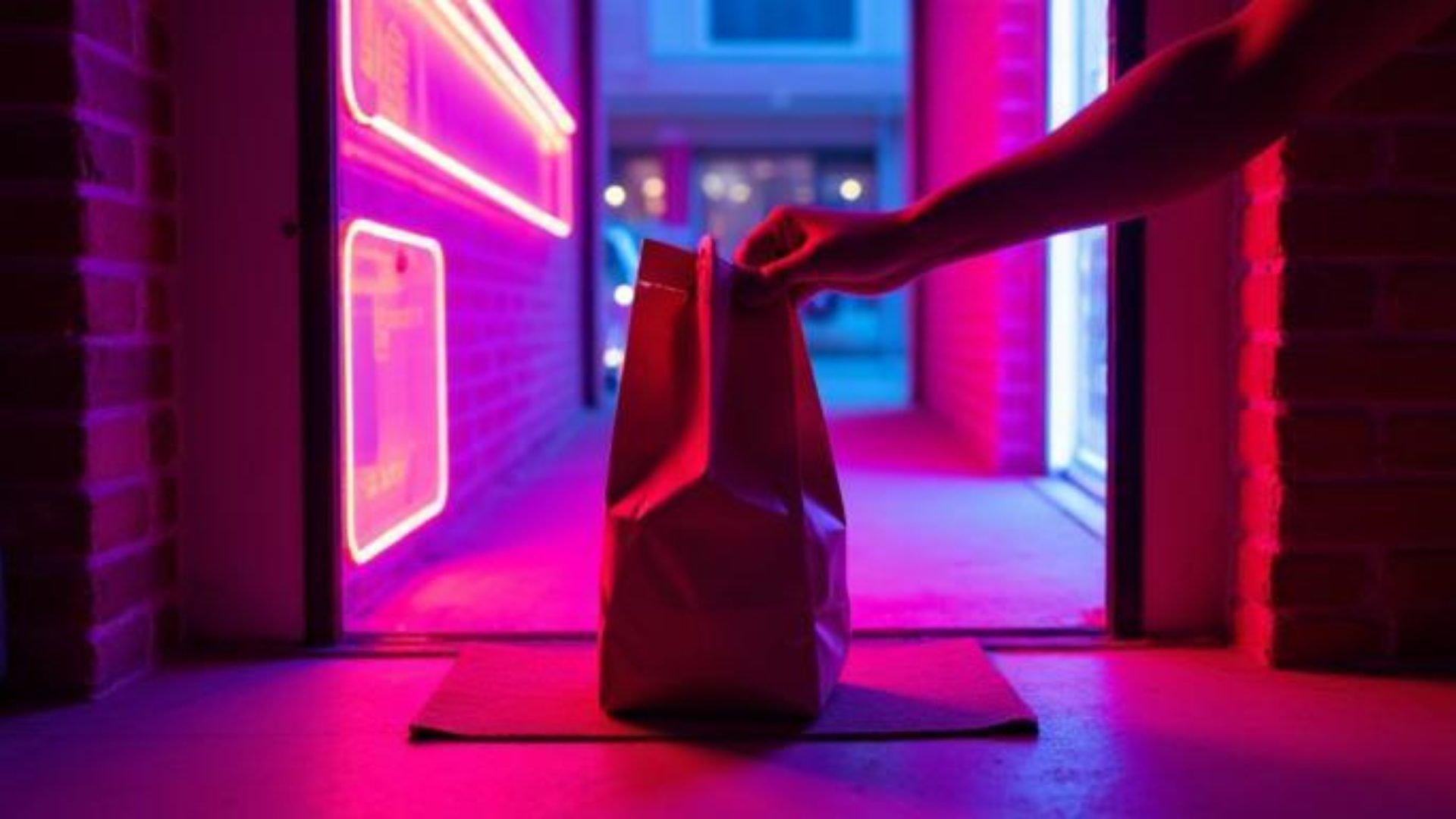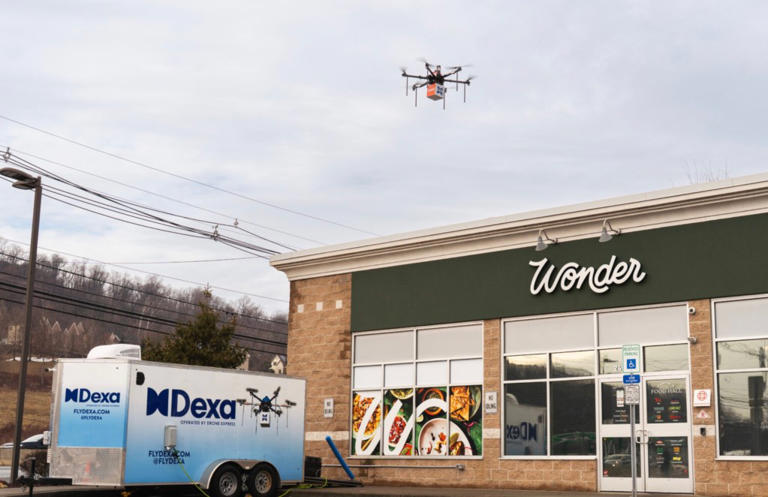
Last week, Grubhub launched a test program in collaboration with Dexa to offer drone delivery service to customers who place orders within a 2.5-mile radius of Wonder’s location in Green Brook, New Jersey.
The launch happened just weeks after the Iran conflict began to unfold, which involved drone usage by all parties in at least some capacity, but especially by Iran and Israel.
As Operation Epic Fury neared the end of its first week, a survey by PBS, NPR, and Marist revealed that most Americans oppose U.S. military action in Iran (56%), which is relevant because the poll was conducted in the immediate aftermath of an Iranian drone strike on a command center in Kuwait that killed six U.S. soldiers.
Prior to the conflict, I’d already begun noticing that discourse about drones had been ramping up on social media platforms like Threads, which primarily revolved around privacy concerns, at least from my view.
This piqued my curiosity, as I’d seen reports of multiple crashes involving Amazon Prime Air MK30 delivery drones in recent weeks, including one that had been caught on film near a Texas apartment complex last month.
I wondered how these developments may have influenced the public’s opinion of drone usage in general, so I spoke with a couple of experts to get their take.
Should Drones Be Making Deliveries?
Greg Zakowicz, an e-commerce and retail advisor for the marketing automation platform Omnisend, opened up about his personal experiences with the technology as a customer.
“I’ve had restaurants make drone deliveries to my home several times. One time, I ordered four meals, which were too heavy for the drone to deliver on its own, so the company needed someone to drive the rest of the delivery to my house,” Zakowicz told FI.
While he acknowledges that the company was still testing and validating the process, he couldn’t help but question the effectiveness of drone delivery if a human needed to be that heavily involved in the process to complete the order.
“If the radius is only a few miles and someone needs to package the delivery, how much time is it really saving? Traveling three miles via car or drone is negligible,” he added.
As a result, he believes that drone delivery is essentially “forcing a square peg in a round hole” and “trying to find a solution to something that’s not a problem,” as he feels that consumers don’t really care about the delivery method as long as their orders are correct and arrive in a timely fashion.
Beyond their return on investment (or lack thereof), Zakowicz said that safety is one of the primary reasons he’s always doubted the ability of drone delivery to scale.
“Malfunctioning drones will happen, and falling drones can cause both property damage and personal injury. Companies are one lawsuit away from ending their drone ambitions.”
Consumer Trust: Hard to Gain, Easy to Lose
James McDanolds, program chair for the School of Uncrewed Technology at the Sonoran Desert Institute, believes that skepticism toward drones is valid given the current backdrop.
“The Grubhub-Dexa launch in New Jersey is part of a much bigger push by a multitude of other companies in the industry like Wing, Zipline, and Flytrex, but it’s happening at a time when public skepticism makes sense,” McDanolds told FI.
“Amazon has had some recent incidents, and as drone traffic increases, it’s reasonable to expect that the total number of accidents or close calls could rise too, even if companies argue the technology is getting safer overall,” he added.
McDanolds explained that the FAA recently proposed Part 108, a regulatory framework aimed at standardizing the Beyond Visual Line of Sight (BVLOS) operations of commercial drones, with one of its primary objectives being to “increase the safety measures required by the companies operating these aircraft” with the ultimate goal of “reducing the possibility of incidents.”
McDanolds noted that consumer concerns regarding drones tend to pertain to their safety and noise level, as well as the threat they may pose to American privacy.
He also acknowledged that the rapid pace of recent advancements in technologies like AI and robotics has made it challenging for brands that use drones to build – and maintain – the public’s trust.
McDanolds also believes that much of the consumer sentiment regarding drones will be shaped by factors that extend beyond the food delivery ecosystem.
“Drones are now so tied to surveillance fears and wartime use that a lot of people are going to bring those fears to the forefront,” McDanolds noted, adding that he expects this trend will continue until the industry can prove that drones are safe through “repeatable operations.”
“The future of drone delivery probably depends less on whether the technology works and more on whether companies and regulators can make it feel safe, quiet, respectful, and accountable,” McDanolds told FI, pointing to similar challenges faced by the auto industry as driving evolved from a novel activity into a full-fledged social norm.
“There are probably hundreds of crashes on roadways every day, yet people drive to go where they need to go. They take the risk.”
While it’s true that acceptance of large-scale changes simply doesn’t happen overnight, as humans are resistant to change in general, perceptions of emerging technologies tend to evolve as adoption grows – and in this case, as companies prove their drones are safe for widespread use, especially at a high volume.
The Food Institute Podcast
How does a trip to Brazil, a stint in the music industry, and an apprenticeship at a pizzeria all come together to form a new style of condiment that would take the world by storm? Mike Kurtz, founder of Mike’s Hot Honey, shares the story of his company’s founding, how the swicy trend is propelling his business, and how CPG partnerships continue to inspire the brand’s fans.