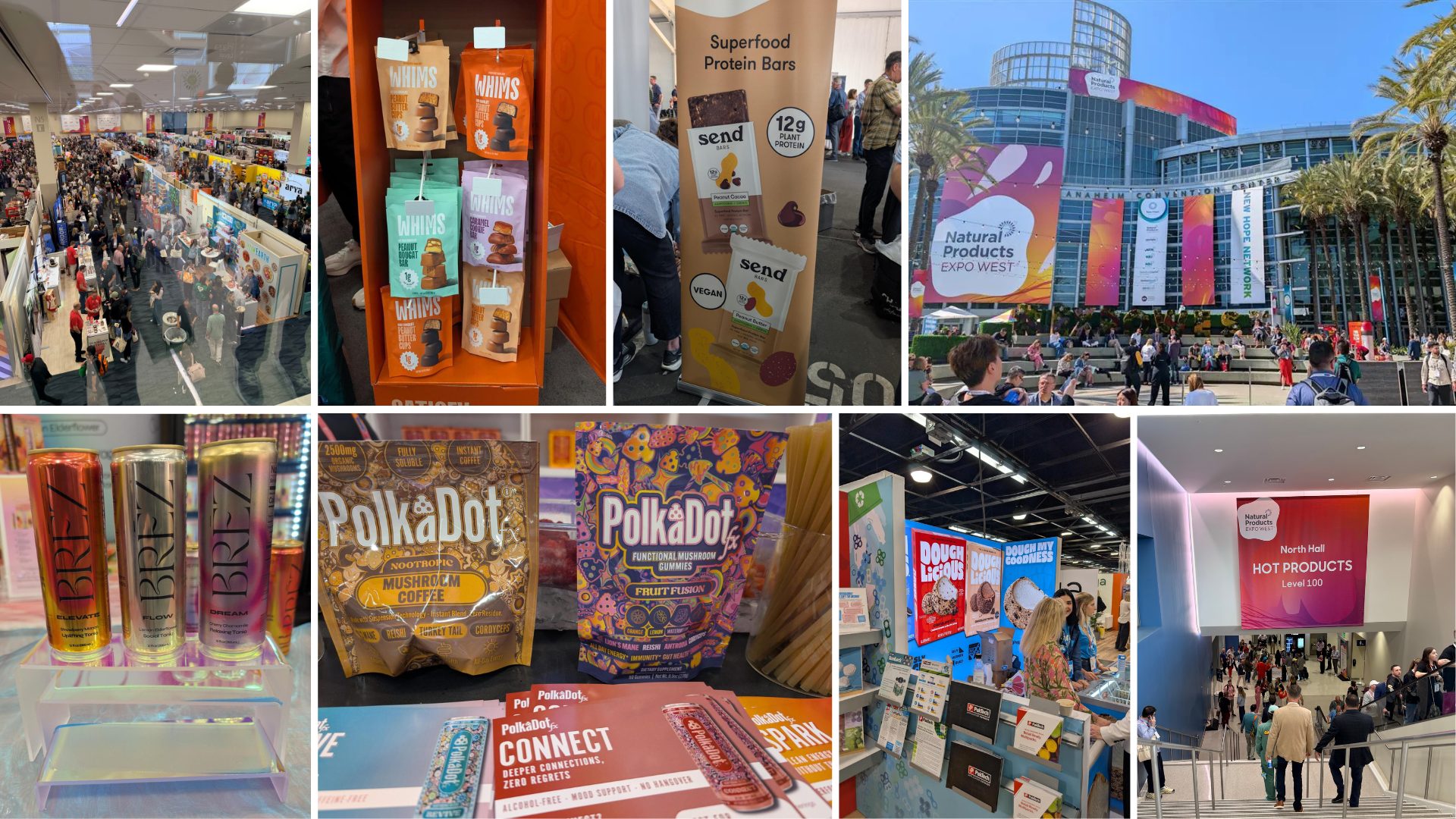
SAN DIEGO, Calif. – If the dead of winter and the news of a disrupted CPG industry get you down, there’s a good cure for it: the 2026 Winter FancyFaire*, hosted by the Specialty Food Association. The annual event took place in sunny southern California, January 11-13.
Here’s a look at the most eye-opening trends that were on display at this year’s exhibition.
Genre-Benders Make Waves
This year brought many category-blending brands to the show floor. Look no further than Oakland-based bone-broth brand, Butcher’s. Offering 3 fresh products – organic beef, organic chicken, ginger & turmeric with organic chicken, Butcher’s bone broths are gelatinous liquids. Offering rich collagen, 11-13g of protein per serving, and an excellent source of calcium, magnesium, omega-3 and more, Butcher’s products are as much for sipping as they are for cooking and sharing.
The broths’ taste was clean and rich, when served warm and with a little sea salt. Though priced at a premium ($6.99 – $9.99), I wouldn’t be surprised if the product gains traction for health-conscious consumers who already incorporate collagen in their daily nutrition routines.
The Gobbi brand also intrigued. The San Francisco-based startup offers savory energy drinks, packaged in slim packets. There are five flavors: tomato harvest, classic chick’n, power up greens, bold beet, and mighty mushroom. Are they soup (since the box mentions “just add hot water”)? Or, are they energy drinks, though with a recommendation to be consumed hot? The founder, Roma Desai, mentioned her desire to create a functional energy drink for “higher performers and go-getters”.
With ingredients such as L-theanine and caffeine, and a lower sodium amount than traditional hydration packets, Gobbi is challenging the energy beverage category with a new format of consumption.
OKO is another category-defying brand. It’s a series of vegetable blends – beet ginger, carrot turmeric, and cauliflower lemon – with vibrant colors. Don’t call it a dip, because you can use it as a sandwich spread, or a burger topping, or a pasta sauce. Or you can simply “dip it in”, as the website suggested. The story behind the brand is also intriguing: Chef Jane, once Diane von Furstenberg’s private chef, created the blends for both the taste and healing. “What started as something she made just for me – a personal solution – has now become part of my daily life. And I hope it becomes part of yours, too,” says Furstenberg.
“Drink your skincare” is a bold statement from Skinergy, a zero-sugar sparkling energy drink. With 105mg of caffeine, 6.5g of collagen, 18 amino acids and 6g of protein, is this a beauty drink? Or an energy drink? Or maybe both? The can promises “collagen peptides… that go through your stomach lining and into your skin & joints.” Only after I drank the sample did the company rep tell me that the marine collagen peptides were from bass, cod, and perch. “It’s like drinking a ton of fish skin. Does your face feel tingly yet?”
Finally, we need to talk about Otoki’s Cheesy Ramen. Not only because it had the longest sampling line of people, but also because it has developed a devoted following of Gen Alpha consumers. Blending packets of cheddar or mascarpone with chewy instant noodles, Cheesy Ramen brands itself as “the Asian Mac-n-Cheese”. Company reps mentioned the desire to create something for “American mainstream consumers” that gave birth to the idea of blending two products.

Comfort Foods Get Yoked
Can comfort food be good for your wellbeing? That’s what Kanzen Meal aims to offer, with a suite of complete-nutrition meals. Kanzen means “to complete” in Japanese. Kanzen Meal offers “complete meal solutions” with up to 24g of protein, 10g of fiber and 27 essential vitamins and minerals. Ranging from Spaghetti Bolognese, Fettuccine Alfredo, Spaghetti Carbonara, to Spicy Dan Dan and Shrimp Teriyaki, these refrigerated meals are both craveable and highly nutritious.
Arya is a set of beautifully packaged Roti products: whole wheat, chia multigrain, cumin spinach and golden curry. These Rotis “balance authentic homestyle taste with approachable, health-forward ingredients.” Each Roti offers 4g of protein and 3-4g of fiber. Sold fresh in the refrigerated or deli sections, these Rotis are a great source of fiber with other good-for-you ingredients such as avocado oil, cumin seeds, and spinach. On a cold winter evening, Roti with curry and Netflix sound like an ideal way to wind down.
Beverages Cling on Old News
The beverage aisles felt somewhat predictable this year: lots of matcha, Hōjicha (is it the next matcha?), and glass-bottled pomegranate juice. Brands are simply trying to deliver more. POJU’s cold-pressed pomegranate juice, for example, promises 2x the antioxidant than a POM Wonderful.
OOSO offers sparkling tea with adaptogens and essential vitamins. The brand offers two flavors: green team, mint and lime, and hibiscus, ginger and currant. One is bright and uplifting. The other is bold and calming.
Brutine is a line of zero-sugar iced tea of exotic flavors such as passionfruit orange guava and strawberry kiwi. With 5 calories in a bottle, it reminded me of the early days of Bai. Bolero is an “advanced hydration” brand with sugar-free drink mix. But it’s hard to see how these flavors with not-much health benefits can compete with Vitamin Water, Liquid IV or nuun Sports.
Meanwhile, Sol-ti offers a series of vegan shots. These nutrient-dense organic, cold-pressed wellness drinks have the highest velocity among wellness shot brands in the U.S.
Chocolate Gets Erotic, Again
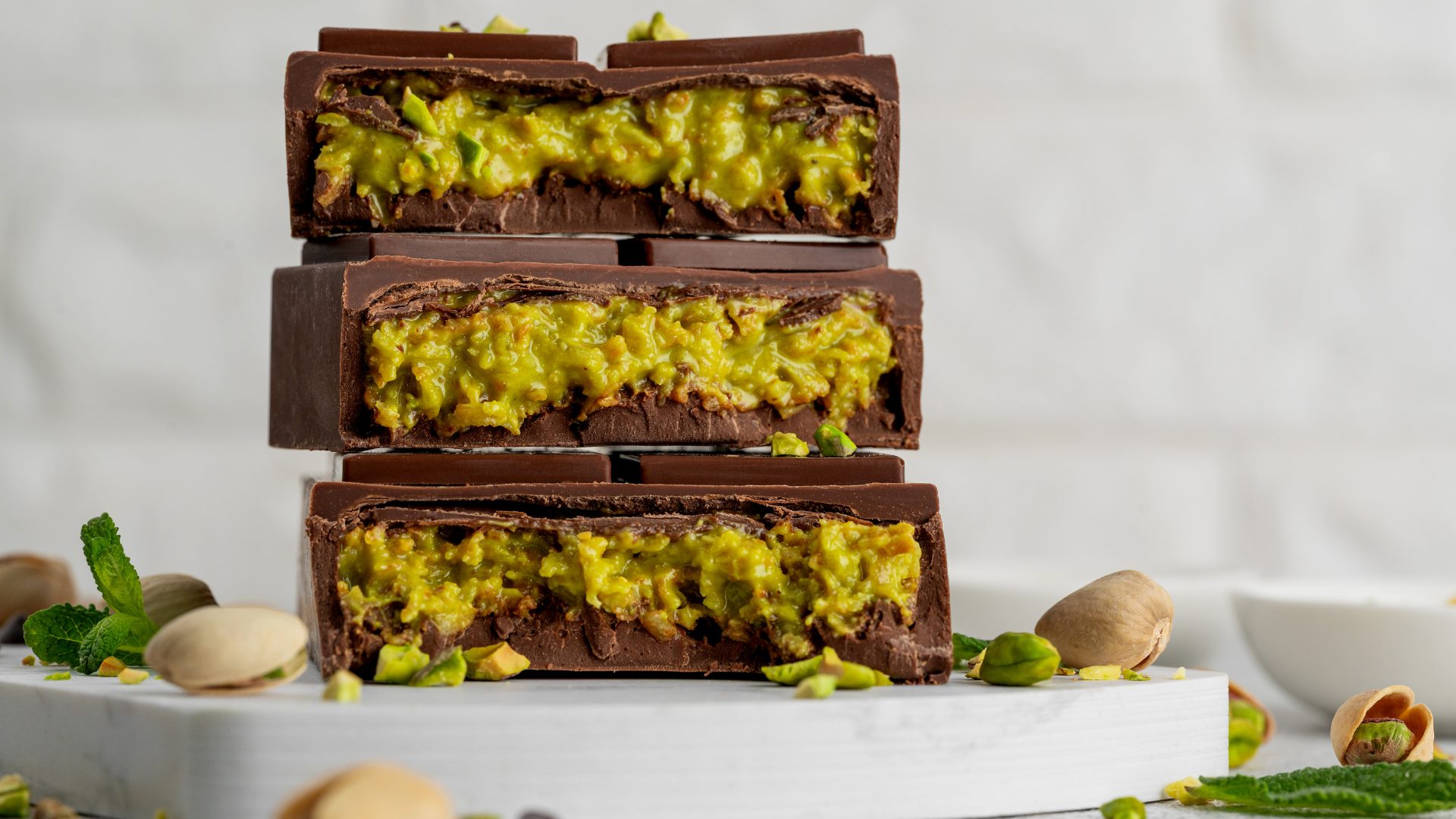
Besides offering vast displays of Dubai chocolate, many chocolate brands on display at the event got playful. Alice is a mushroom chocolate brand with bold focus areas, including for concentration, calm, party, desire and sleep. Packaged in mint-like tin boxes, Alice wants you to “eat chocolate everyday”. The brand offers a subscription model to encourage habits. Happy Ending contains “horny goat weed, mucuna prurien extract, macca root” for “sexual wellness”. Party Trick contains organic cordyceps extract, mucuna prurien extract, and Kanna extract.
The lack of confectionary innovation displayed in San Diego was otherwise disappointing to see. The candy aisle still has bright colors and Hello Kitty licensing, and marshmallows with jelly inside. But it’s easy to see why consumers are walking away from sugar with little exciting news.
International Brands Get Better-for-You
Brands with a strong ethnic background are unapologetically entering the better-for-you category. Thai Coco, for example, offers vegan coconut crispy rolls, cold-brew Thai tea, and frozen treats like coconut fruit pops with only 2 ingredients (“Pure mango and coconut. Nothing else”). With distribution at Kroger, the brand is hoping to reach more consumers with its flavorful offerings.
You might’ve seen Chi Forest, a “feel-good refreshment with a vibrant Asian splash”, at Costco. With flavors like lychee fizz, white peach and grape delight, it plays in a similar lane to Sanzo, another sparkling water brand with Asian flavors, made with real fruit. Both are tasty with low-calories, with bold packaging that appeal to adventurous Gen Z and Millennial consumers.
Artisanal Brands Fight for Relevancy
José Andrés Foods boasted a prominent booth in San Diego. With displays featuring Spanish Olive Oil, paella, vinegar, cooking broths, frozen ice cream, and black truffle potato chips, you can see the care and attention from a Michelin-star chef in the details of these products. However, the natural vegetable or seafood broth has an SRP of $13.99, and a bag of large Extra Virgin Olive Oil Potato Chips costs $7.99. As a result, it’s hard to imagine consumers flocking to them.
Ishimaru Udon handed out museum brochure-like pamphlets. A brand with 120 years of heritage from Japan, the brand takes pride in the art of the craft, from kneading, cutting, drying, and packing. “We never compromise on quality. That is the spirit of Ishimaru Udon,” the brochure noted. “Every noodle is cut with purpose.” Tasty and exquisite as the udons are, it’s hard to imagine such udon outside of a fine-dining environment.
Finally, Jamie’s Farm, was an intriguing granola brand, founded by Cornell graduate Jamie Kim. inspired by her time working at a three-star Michelin restaurant, Kim crafted the granola with hand-selected ingredients. The flavors and price points are accessible: vanilla bean with sour cherries, rosemary with currants, maple pecan with sea salt and chai streusel with honey, priced at $12. “Baked with Ghee” is a prominent claim on pack. “Our granola is designed to inspire everyday moments of delight,” the website noted. This, perhaps, is a winning formula for artisanal brands: high-quality, yet accessible.
About the author: This opinion piece was written by Jinghuan Liu Tervalon, an insights, analytics and growth strategy professional with deep food and beverage industry expertise. She is a writer and runner based in Los Angeles.
Food for Thought Leadership
It’s undeniable that restaurants were challenged heavily in 2025, but what does that mean for 2026? Foodservice industry veteran John Inwright discusses the prospects for a new year, what’s working for successful operators, and the headwinds and tailwinds that could define the year.