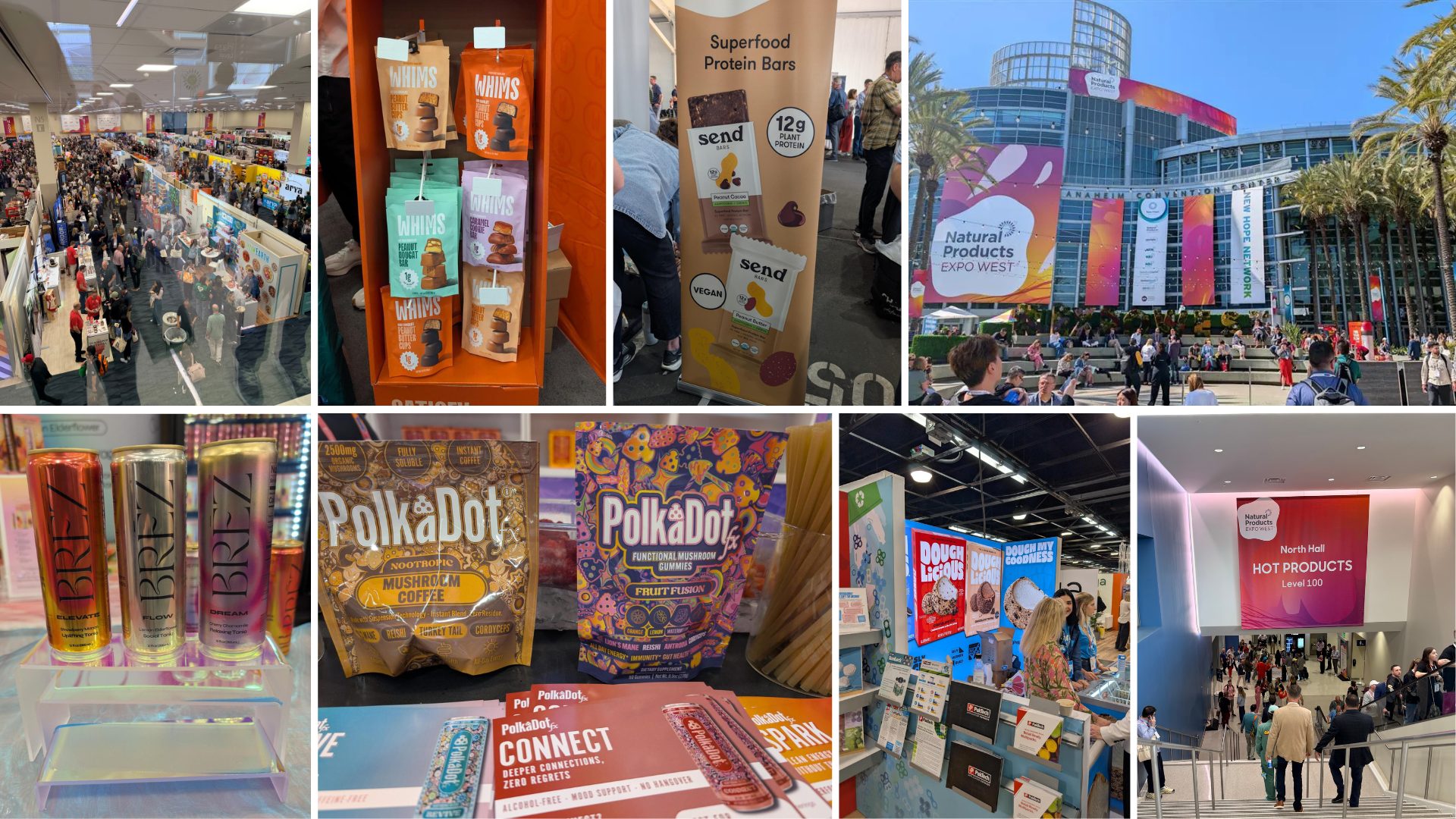
ANAHEIM, Calif. – Natural Products Expo West 2026 returned to the scene with innovations around hydration, better-for-you indulgence, and thoughtful snacking. Emerging and legacy brands continue to innovate with GLP-1 consumers in mind and those seeking functional approaches to their weekly food runs.
The event brought together more than tens of thousands of food industry stakeholders representing 130 countries to experience the latest developments from more than 3,000 food and beverage brands and ancillary businesses that support their development.
The natural and organic industry hit $342.1 billion in sales, according to the Wednesday keynote session, with 72.3% driven explicitly through food and beverage (opposed to dietary supplements and personal care). Moreover, SPINS data found that, since the pandemic, natural products have outpaced total store, further ramping up in 2025.
Because of this, natural and organic food sales are expected to grow by 24%, reaching $179 billion by 2029. Leading the charge is meat, dairy, and fruits and vegetables categories.
Consumers are in the midst of a cultural reset, and, across income levels, shoppers are looking for foods that support their personal health and well-being goals. The larger Make America Healthy Again movement and interest in GLP-1 drugs will make 2026 a pivotal year for the natural foods space, and CPGs are rising to the occasion.
Let’s dive into some of the trends on display at Expo West 2026 that will soon hit shelves.

Snackable Function
Mondelēz Snack Futures Ventures called this year “The Disruptive Era of Snacking” in an education session on the topic, citing supply chain issues, TikTok Shop and digital commerce’s recent boom, and GLP-1 drugs’ prevalence as key levers brands must leverage to stay afloat and ahead in the ensuing landscape.
Panelists advocated that brands embrace the disruption and, while innovating for their consumers, ensure their brand identity remains crystal clear and that each innovation remains true to the brand.
“it’s really easy to distract yourself and go with what’s new and shiny, but how long-term will that be new and shiny?” noted Whitney Herrara, category merchant for functional snacks at Whole Foods. She noted how, although brands are eager to hop on the latest trends and fads transforming the space, they don’t always make sense for a brand.
“As a buyer, I’m pushing brands to stay with what they do well, and guiding them towards what their next SKU should be.”
Macronutrient goals became a key touchpoint for cutting-edge innovations in food and beverages. These snacks boast high protein and fiber in small serving sizes.
Legacy brand Lifeway Kefir is one clear example of innovating on protein while remaining true to its brand. The brand’s Muscle Mates boast 20 grams of protein and 5 grams of creatine in an 8-ounce shake that leverages its existing kefir flavor and ingredient platform.
Other small-but-mighty functional contenders include Behave’s functional gummy bears, boasting high fiber across its portfolio. The brand’s gummy bears do not spike blood-glucose levels and contain 19 grams of fiber in a single-serve 1.8-ounce pouch. That’s more than half of one’s daily fiber intake for most American adults.
Froobies also recently developed a playful fruit snack made without added sugar, offering 3 grams of fiber and 4 grams of protein. Although geared towards children with its flavoring and branding, customer comments call the offering a companion to GLP-1 diets.
Magos also showcased high-protein clean-label snacking with its Whole Egg Chips, made by drying egg slices into chip form. Protein bar brand Send Bars also recently reformulated its Lemon Cherry Superfood Protein Bar, with an increase to 12 grams of plant-based protein, and the addition of lion’s mane and reishi mushrooms to support focus.
Healthier Hydration
During the opening-day keynote, Kevin Liebrock noted a 10x growth in hydration SKUs in anticipation of the show.
Liquid intake is known as a key measure to combat various side effects of GLP-1 drugs. Beyond these shoppers, however, brands continue to take a “food as medicine” approach to innovation, with even more functional-first beverages that support gut health, macronutrient goals (protein, fiber), and mental wellbeing (i.e., “calm,” “focus,” or “recovery.”)
Beverage is growing at a rate of 2% year over year, according to SPINS data presented by Ben Lerman, VP of brand growth consulting for SPINS, in an education session on the topic.
Modern soda, and functional beverages, however, are outpacing this growth by two percentage points, thanks to a 16% dollar sales growth in drinks that promote digestive health, a 42% boost to mood support beverages, and a 15% uptick in protein support sips.
This insight translated into dominating representation for functional beverages across the show floor.
As in previous years, mushroom beverages made a scene for mental goals such as focus and stress management.
Brio’s line of “Lift” elixirs that blend lion’s mane and cordyceps, and “drift” drinks that incorporate reishi and chaga showcase how mushrooms are leveraged in a natural beverage context. Polka Dot FX, similarly, leverages cordyceps and reishi in its “Connect” social “adaptogenic seltzer, offering a functional non-alcoholic spin to support “social ease” for social curious lifestyles.
Another adaptogenic tonic includes Brēz’ Elevate, Flow, and Dream SKUs that blend functional flavors with botanicals; the lattermost incorporates reishi, passionflower, chamomile, tart cherry, and magnesium to support sleep.
More traditional protein-added beverages also abounded. Protein Pop Plus, for example, recently launched a line of clear protein-enhanced beverages, boasting 30 grams in a 12-ounce serving. Representing health-smoothies, Gutzy Organic recently refreshed the branding of its protein line, offering 7 grams of protein and 7-8 grams of fiber per serving.
Indulgent Rebels: Functional Fatigue
Then, there were brands at Expo West 2026 that identified consumers were tired of each item having a health and wellness value proposition dependent on macronutrients or functional ingredients.
“I want our function to be that we taste amazing and we’re non-alcoholic,” Nic Trapani told FI, adding that the brand specifically distances itself from functional call-outs in favor of offering guilt-free indulgence.
In the beverages education session, Lerman noted how 52% of drinks have a health and wellness spin. It’s clear that consumers aren’t necessarily looking for these characteristics, especially when they want to consume a natural or organic product.
Later in the conversation, Charlie New, worldwide grocery principal category manager for Amazon/Whole Foods, noted that brands today also tend to overestimate the knowledge or time that consumers have when shopping in-store. Often they’re looking for something quick, easy-to-understand, and tasty.
Beyond beverages, snack brands on the show floor rejecting explicit function included Whims’ low-sugar Peanut Butter Cups, Doughlicious’ 100 calorie cookie dough gelato bites, Muddy Bites’ bite-sized waffle cones, and Mojave Mallows’ USDA Organic marshmallows.
Food for Thought Leadership
This Episode is Sponsored By: Tibersoft
Foodservice manufacturers might develop option paralysis with all the data available in the current day, but what kind of focus can really help drive marketing returns? Suzanne Cwik of Tibersoft and Eric Anderson of Conagra help break down data best practices to develop a foodservice marketing engine for food away from home manufacturers.