As economic uncertainty, geopolitical tension, and social fragmentation drive consumers toward familiar foods, brands have been leveraging the emotional, social, and premium power of nostalgia in the form of retro-inspired eating and drinking experiences to captivate consumers who are craving simpler times.
The Psychology of Nostalgia
Childhood favorites, in particular, have a unique ability to offer safe, predictable sensory experiences that provide emotional grounding in unstable times. And many consumers are willing to pay a premium for such products as long as they are executed well, positioning nostalgia as an “affordable luxury,” as Sunny Khamkar, CEO and co-founder of the AI-powered insights platform MenuData, shared in his portion of the “What’s Ahead in 2026?” webinar hosted by The Food Institute.
Retro products can also spark conversation and generate shareable content. Aesthetic packaging, unboxing moments, and viral-ready visuals on TikTok, Instagram, and YouTube have turned nostalgia into a form of social currency that enhances expression and deepens community connection.
In addition, messaging around limited-time availability and scarcity is known to drive urgency, encouraging immediate trials and repeat purchases.
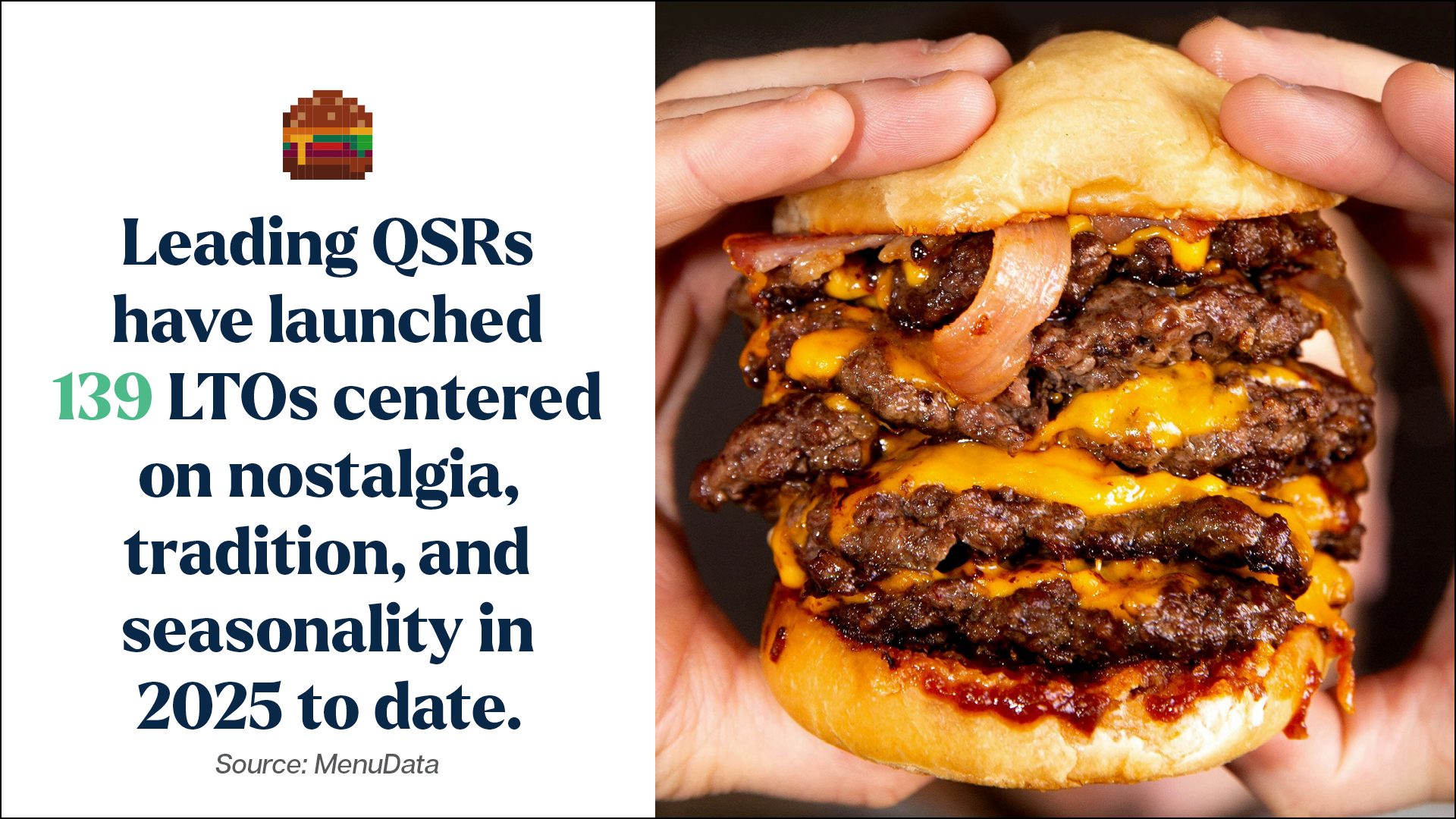
“Leading QSRs launched 139 LTOs this year centered on nostalgia, tradition, and seasonality, with Starbucks emerging as the category leader. Among these, Burger King Cheesy Tots, Taco Bell’s Y2K 7L Burrito and Doritos, and McDonald’s Snack Wraps were the top-performing items, registering the highest consumer affinity scores,” said Khamkar.
McDonald’s holiday LTO, McShaker Fries x Grinch Meal, which features ‘90s DIY fries with pickle “Grinch Salt” is another example of a well-executed nostalgic menu item that taps into several trends simultaneously, including hyper-nostalgia and pickle-flavored everything.
However, some brands take the nostalgia a step further by attempting to recreate actual flavors from the past, but this isn’t always easy, which is where neurogastronomy comes in.

Neurogastronomy 101
Neurogastronomy refers to the study of how the brain creates flavor by integrating taste, smell, texture, temperature, and memory.
When F&B brands attempt to bring back nostalgic flavors, they often view the pursuit as a technical challenge that involves finding the right compounds, matching aromas, adjusting sweetness levels, etc. under the assumption that, if the chemistry checks out, the memory will agree.
However, that approach tends to be as faulty as human memory itself – and therein lies the reason for its failure.
The problem isn’t the flavor science itself; it’s that the human memory plays by a totally different set of rules, as saying that something “tastes like childhood” isn’t exactly a stable or reliable flavor target for brands to hit. In reality, it’s more of an internal reference point that’s created by the brain using factors like emotion, context, and time.
Neurogastronomy, on the other hand, offers a more accurate explanation for why nostalgic products are so hit or miss.
“Flavor is a multisensory memory system,” said Dr. Bryan Quoc Le, a food scientist, food industry consultant, and author. “The brain fuses aroma, taste, texture, temperature, and even context into a single ‘flavor memory,’ which is why a smell can bring back a moment from childhood more vividly than a photograph.”
This fusion of sorts happens automatically, as the brain doesn’t separate taste from experience but stores them together, which is part of why nostalgia feels so convincing – and personal.
“Nostalgic flavors hit so hard because they’re tied to the limbic system, the part of the brain that processes both emotion and long-term memory. What feels ‘authentic’ is personal, because each person’s sensory experiences and associations are different,” Le told FI.
When you look at it from a product development standpoint, this level of subjectivity can be quite inconvenient.
It’s a bit like poetry in that there’s no singular “correct” way to interpret a poem – or to determine if a particular nostalgic flavor has hit the mark, as two consumers may describe the very same memory using sensory details that are incompatible with one another.
This tension becomes even more obvious when brands attempt to bring back legacy products or recreate familiar flavor profiles in new formulations, as even small changes impacting texture or mouthfeel can engender disappointment among consumers – not because the flavor is objectively “wrong” but because it tastes different from how they remember it with their adult brains.
“Recreating a childhood flavor is surprisingly difficult because people remember emotions rather than chemical compositions,” Le explained. “A product developer is essentially trying to match a feeling, not a list of volatile compounds.”