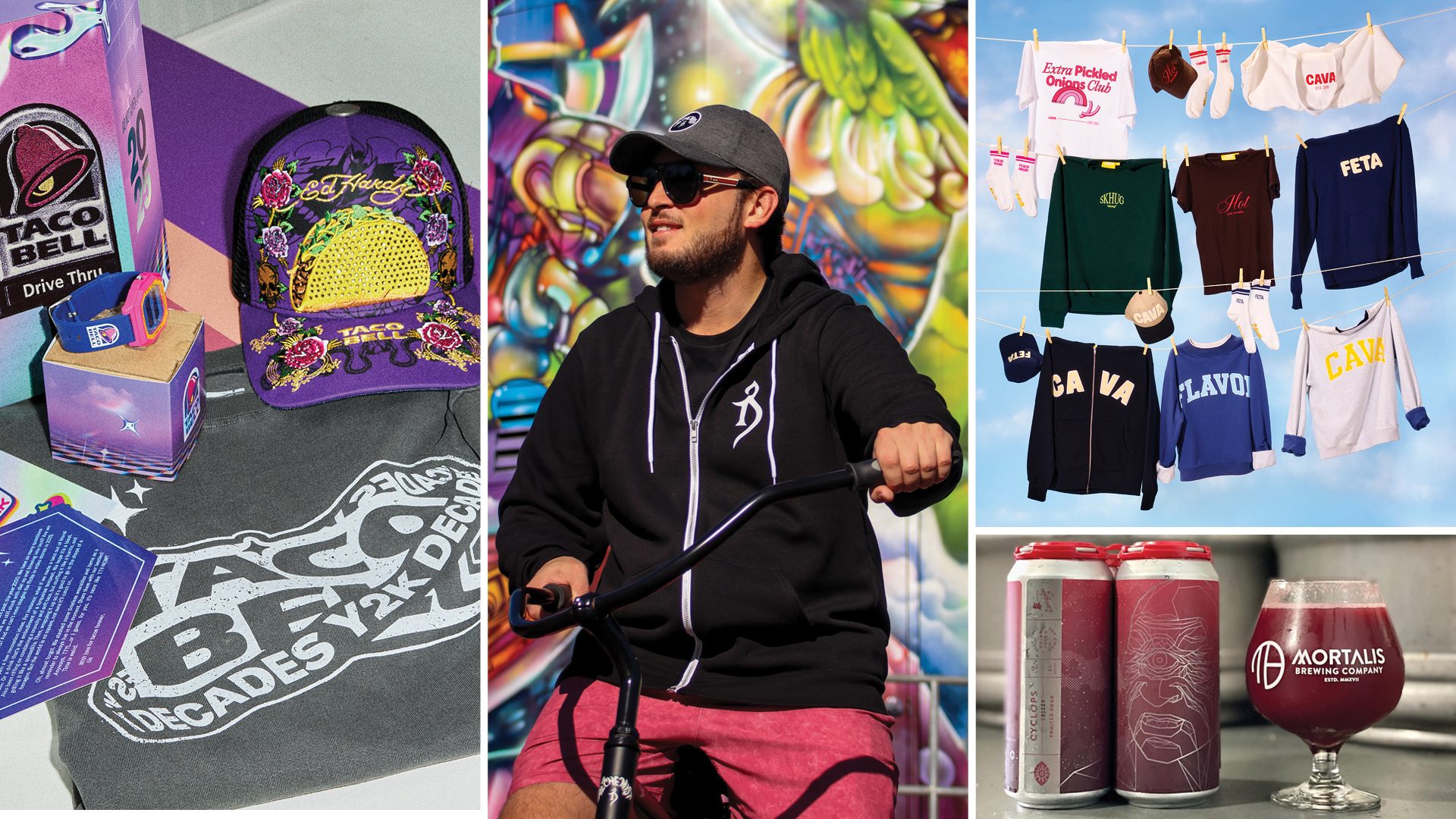
New data from Square shows that bars, breweries, and restaurants have been increasingly cashing in on branded merchandise to capitalize on the holiday shopping season and generate additional revenue.
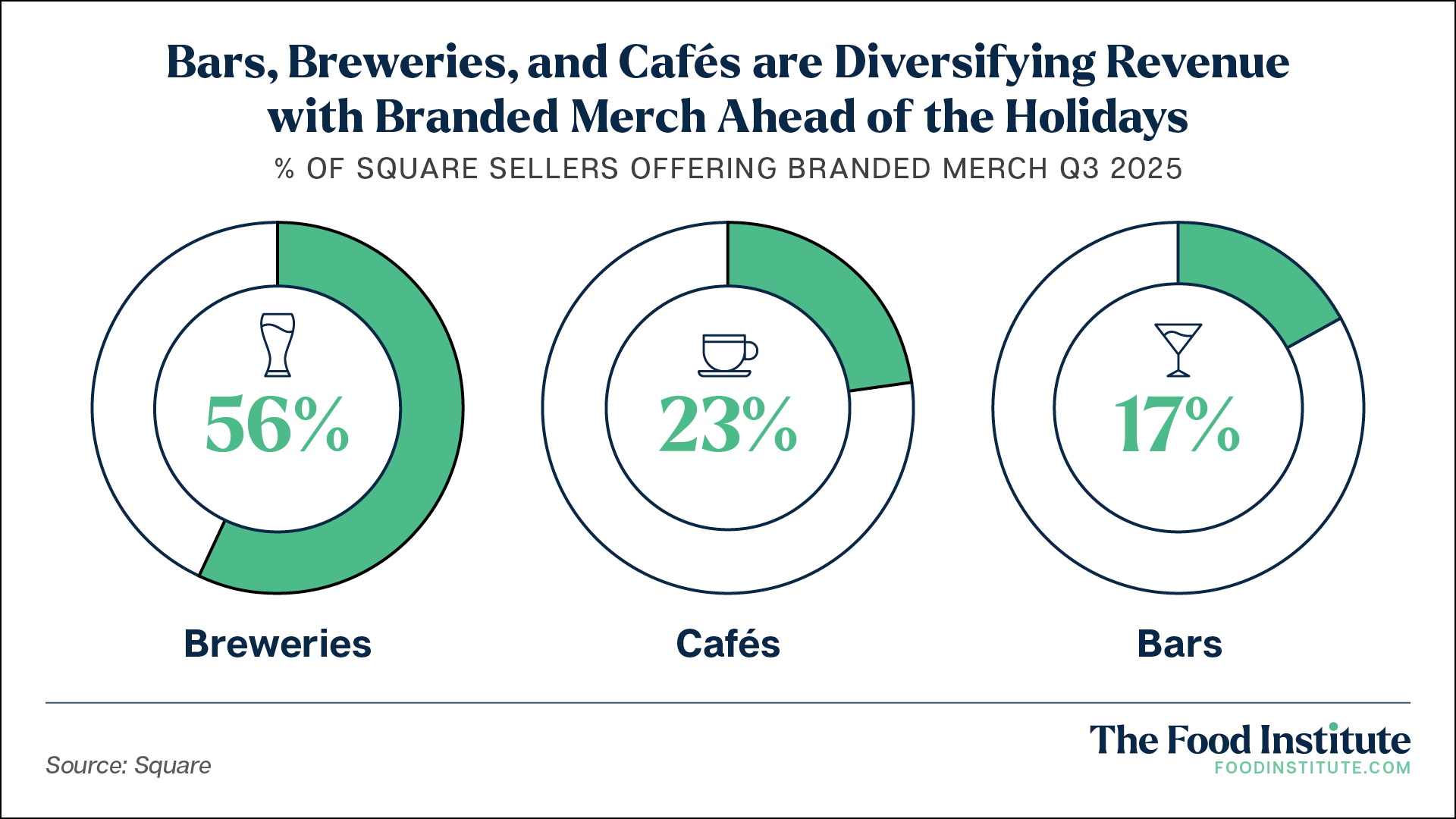
As of Q3 2025, 56.5% of breweries, 22.9% of cafés, and 17% of bars using Square’s payment software are offering merch like T-shirts, hoodies, and hats.
“Resilient restaurant operators are smartly looking beyond traditional revenue streams, and branded merchandise offers an opportunity with typically higher margins than foodservice – and with marketing built-in,” said Ming-Tai Huh, head of food and beverage at Square.
As for which items are the most popular with customers, T-shirts are the most purchased (58.2%), followed by hats (22.8%), hoodies (11.5%), and totes (7.5%).
So, which foodservice establishments stand to benefit the most from branded merch?
“I believe merchandise makes sense for edgy, cool restaurants, cafes, breweries, and coffeehouses. It also makes sense if the business is located in a tourism destination,” said Deborah Smith, the owner of Foxtrot Media, LLC. “I live at the Jersey Shore, and every seafood restaurant has its line of T-shirts, totes, and more. Even cookbooks. It’s essential to consider merchandising potential when designing your brand.”
“On the flip side, I have a steakhouse client that is selling novelty Christmas glasses as part of their Christmas pop-up this year. No branding involved, just a fun souvenir from the experience. One of my clients also partnered with a local brewery to create a special edition beer, which they sell in six-packs at the restaurant,” Smith told FI, noting that gift cards are another common way that foodservice establishments generate additional revenue around the holidays.
The Food Institute spoke with various foodservice professionals who shared advice on how to make branded merchandise work in your favor.

How to Get the Most Out of Branded Merch
“You should see the merchandise as not a side hustle, but a tool for brand engagement. When customers leave with a T-shirt from a restaurant, they actually bring a piece of the experience that meant something to them,” said Milos Eric, co-founder and general manager at OysterLink.
“Merchandise also works only when it is in alignment with your staff values. If they wouldn’t wear it, it won’t sell. It can develop pride and connection to the brand or it can impose pressure, especially when sales expectations compete with stress from workload or core responsibilities. When done well, merchandise will generate revenue and raise morale,” Milos told FI.
In addition to ensuring your branded merch aligns with your staff’s goals and values, Steve Morris, founder and CEO at NEWMEDIA.COM, also recommends offering incentives for selling it, which can increase their buy-in:
“Staff incentives can launch merchandise attachment rates into the stratosphere. Another interesting phenomenon we’ve noticed in our best restaurant clients is how much the attachment rates increase when a small corresponding incentive is added for the staff.”
“When a restaurant gives as little as $2 per server on merchandise add-ons, we see attachment rates jump 40%,” Morris said. “And it only works if the server is empowered to insert the add on seamlessly into conversation: ‘Do you want to take home some of our chili oil?’ ‘Would you like to order tonight’s cocktail glass as well, so you can make the drinks at home?’
“What works disproportionately well, if the staff already uses the merchandise, is that the server-driven add-on can happen at the table, not just at checkout,” Morris noted.