Today’s consumers perceive food inflation to be nearly eight times higher than its actual rate, according to a recent study from dunnhumby — a perception gap reshaping shopping behavior and motivating aggressive cost-saving strategies.
“We are seeing that U.S. households are realigning where they shop based on affordability,” said Matt O’Grady, president of the Americas for dunnhumby, in a statement.
“What makes this different from the 2023 inflation spike is that consumer concern persists even as actual inflation moderates.”
As a result, discounters and retailers with cost-saving value propositions are increasing their customer penetration.
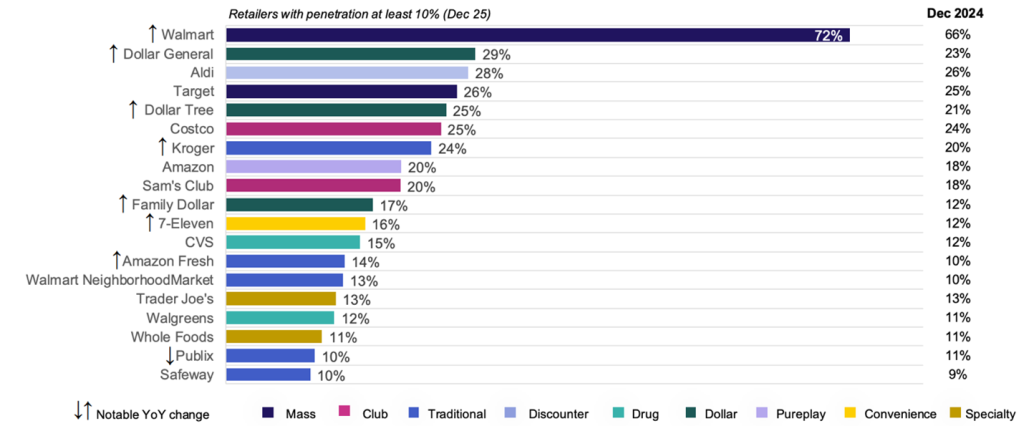
The top six retailers listed above are known for their extreme cost-saving value propositions, bolstered by private label and premium private label portfolios, and their market position (i.e., club store, discounter, etc.)
Further, dunnhumby found that behaviors and needs related to private labels are relatively unchanged between Dec. 2025 and the same period the year before: quality (67%), competitive (58%) values, and consumers’ trading into the category (43%) all held steady. In the context of rising penetration, these factors become clear motivations for an increased share of wallet at cost-saving chains.
Savings behaviors continue to intensify.
Nearly half of shoppers (47%) are leveraging coupon offers from third-party loyalty programs, up 2.5 percentage points from the year before, while 68% seek discounts on regularly purchased items. A separate shopper study from XCCommerce found that as many as 70% of shoppers are leveraging AI tools to find better deals, signaling a growing role for digital savings tools in grocery shopping.
An additional 62% expect stores to offer “abundant promotions,” according to dunnhumby.
Simultaneously, trust in retail channels is strengthening. At Groceryshop 2025, Sonya Gafsi Oblisk, a marketing executive with Whole Foods, shared that sales were a top priority for the grocer to shift its perception as a store where shoppers across income levels can find relevant, healthier products. On the shopper end, the Food Industry Association reports that 70% of consumers feel that grocers have their back by offering opportunities to stay on budget.
Walmart Emerges a Winner
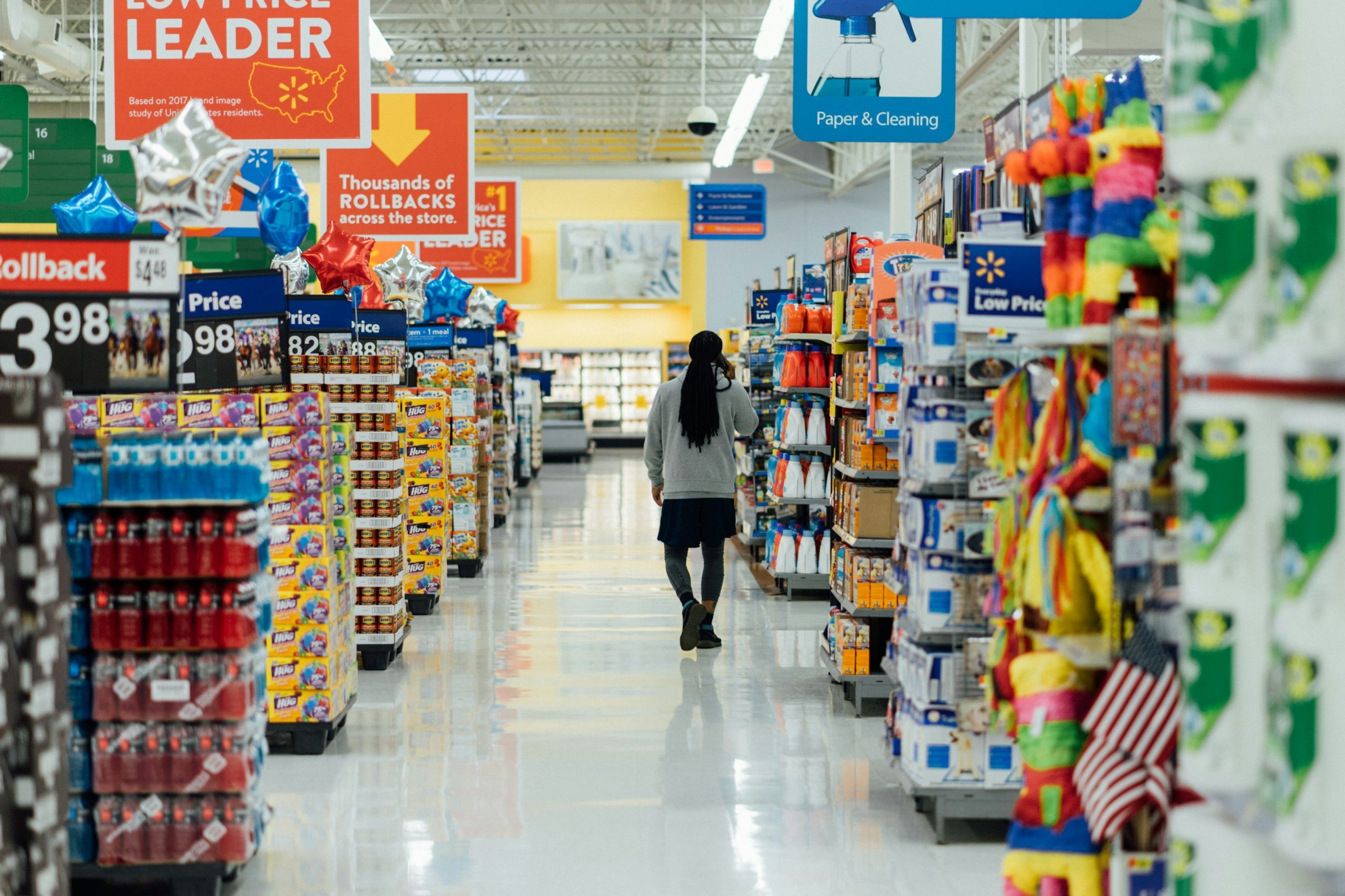
Walmart’s grocery penetration reached a milestone 72% in Dec. 2025, rising six percentage points year-over-year. This is part of a larger shift of mass-channel retailers rivaling traditional supermarkets, with around 79% penetration for both.
Walmart’s scale is unmatched. Its network exceeds 190 million monthly U.S. visits, and its penetration is nearly 2.5 times that of Dollar General, the next largest by reach.
The hypermarket’s recent Q4 financials support its momentum: revenue is up 5.6%, and e-commerce sales grew 24%. The latter result is a feat considering the already large market share it had in the online grocery channel.
Ahead of the announcement, Placer.ai found that foot traffic is up 2.3% for the retailer during the quarter. It also sustained four consecutive quarters of foot traffic growth over the period.
As Walmart CEO John Furner takes the helm, he has noted that he will leverage emerging technologies and unique positioning.
“This next era will unlock new ways to bring our people-led, tech-powered vision to life,” said Furner in an internal memo.
“By leveraging our global scale, we can better serve customers and members with speed, reliability, and greater experiences, wherever they choose to shop with us.”
Food for Thought Leadership
In this episode, The Food Institute sits down with William Grand, founder and CEO of NutriFusion, to examine the growing health crisis tied to ultra-processed foods—and what it will take to fix it.