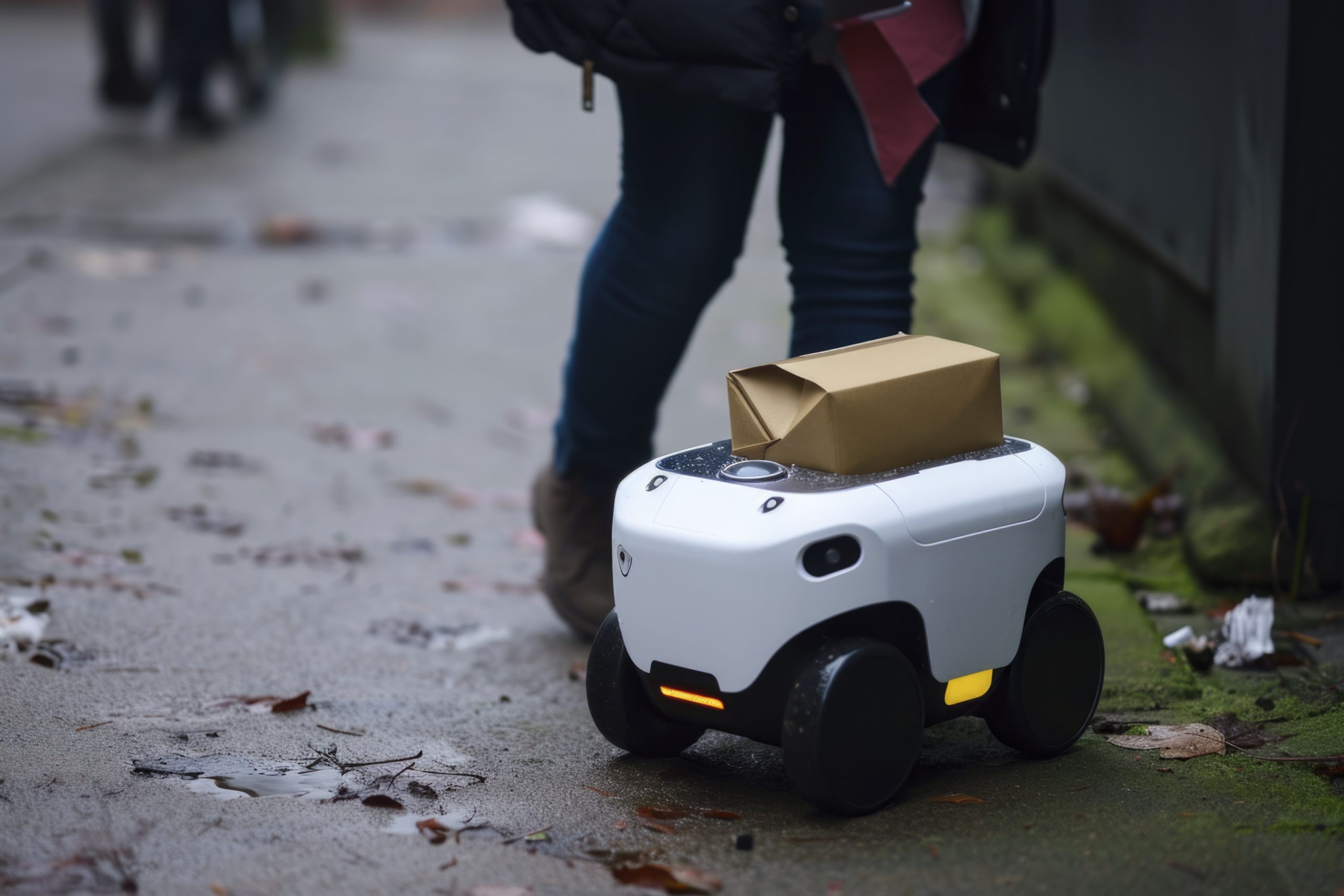
Food delivery robots from two companies – Serve Robotics and Coco Robotics – recently made unexpected stops within hours of each other, shattering two Chicago bus shelters. Oh, R2. Where are you when we need you?
News reports from multiple outlets said units from Serve and Coco rammed the shelters, sending shards of glass cascading all over them and the sidewalk. Witnesses said the Serve unit was halfway across the shelter before suddenly veering into it. Video then showed it backing away from the carnage. The Coco unit also swerved into a shelter and then just stopped after the accident.

Ashish Deelip Ghatge, a senior robotics engineer at Zupt LLC, said the system these units use to navigate has a lot of trouble with glass.
“LiDAR either passes through it or gets a specular reflection and sees nothing. Stereo cameras need surface texture to compute depth and clear glass has none. Moreover, the glass might result in a flimsy threshold,” Ghatge told The Food Institute.
Statistics on the number of such delivery accidents are hard to come by. Late last year, there were reports three Serve robots flipped over, and one Coco robot was found in a canal. There also have been reports of robots bumping into people.
There are numerous technological issues involved in navigating busy city streets crowded with traffic and sidewalks clogged with pedestrians.
“Many of the current companies offering delivery robots require partial or full remote control by humans to resolve complex navigation issues,” said Alfredo Weitzenfeld, professor of computer science at the University of South Florida.
“Like many other technologies, such as self-driving cars and robots in general, delivery robots will need to further mature and be regulated, in order to be more successful and acceptable in our day-to-day living.”
These delivery robots, however, are filling a real need now for struggling restaurants looking for a way to get take-out orders delivered, despite the technology’s shortcomings.
Although she said she won’t be investing in delivery robots any time soon, Sarah White of Westover Taco acknowledged these robots fill a need amid a shortage of delivery drivers.
“I have been running restaurants for nearly 20 years and never thought I would see the day we were talking about delivery robots crashing,” White said.
“With a lack of drivers, these robots are necessary to keep up with demand. I do think they will end up with more regulation the more failures they have,” White added.
Like any new technology, these robots are being embraced by innovators and early adopters.
“While these groups are famously tolerant to glitches and bugs from emerging technology, the rest of the market isn’t,” said Alfred Goldberg, chief brand strategist at Absolute Marketing Solutions.
“The rest of the market isn’t using the services, and by the time the bugs have been worked out, they will likely have forgotten these mishaps. This pattern has repeated itself throughout history,” Goldberg noted.
In a statement for 404 Media, a Serve spokesperson said the company is reviewing the incident and that a support crew was sent to the scene to clean up. Coco Robotics VP and head of government relations Carl Hansen told Popular Science the incident was a first of its kind.
“Our robots operate at a top speed of about 5 miles per hour, and safety is a top priority in how we design and monitor our systems,” Hansen said.
Image Via Freepik
The Food Institute Podcast
How does a trip to Brazil, a stint in the music industry, and an apprenticeship at a pizzeria all come together to form a new style of condiment that would take the world by storm? Mike Kurtz, founder of Mike’s Hot Honey, shares the story of his company’s founding, how the swicy trend is propelling his business, and how CPG partnerships continue to inspire the brand’s fans.