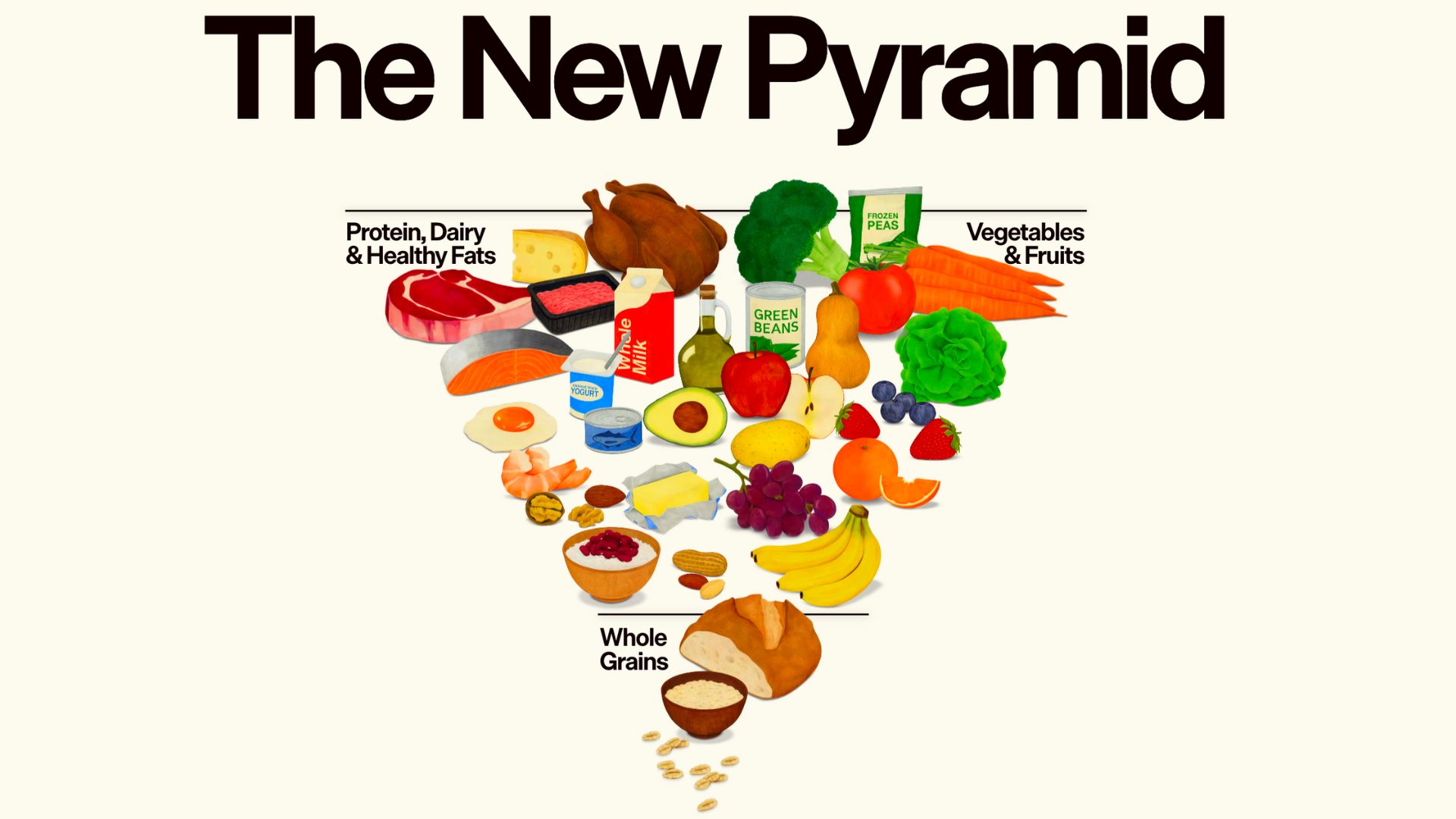
The USDA and HHS’s Dietary Guidelines for Americans, 2025-2030, (DGA) features serving size updates that equate to a $1,012 bump per household in annual grocery spending, per a Numerator report.
As a result, affordability is cited as a top barrier to program adherence, according to the 2,000 U.S. consumer survey.
The largest chunk of grocery budget spending bump comes from the 91% increase in recommended protein intake and the 20% growth in vegetable servings. Both categories represent the larger ticket items in a standard basket. Meat-based proteins especially have been subjected to inflation spikes. Therefore, guideline adherence would increase monthly grocery spending by 32%.
Conversely, lower-cost staples are de-emphasized in the guidelines, with serving sizes down 50% for grains and 25% for fats.
Price, however, isn’t the only barrier to DGA adherence; consumers don’t really know what they even are.
Most Americans have a less-than working knowledge of the guidelines, with nearly 48% either having only heard about it, not aware of it, or are overall unsure, according to data L.E.K. Consulting provided to FI’s recent report on the topic.

Moreover, Numerator found that as many as 18% still follow the USDA MyPlate from 2011, and 19% follow the USDA MyPyramid from 2005.
Still, the guidelines can shape the food industry even if consumers don’t follow them, Manny Picciola, F&B partner and managing director at L.E.K. Consulting, told FI.
“The [DGA] won’t suddenly change what Americans eat, but they will force CPGs to make harder choices – fewer SKUs, cleaner labels, and products that deliver real nutrition per calorie in a peak-calorie world,” Picciola said.
F&B Industry Implication
Consumers are trending towards health and wellness, irrespective of government action. This macro-trend explains a decades-long prioritization of better-for-you behaviors.
In fact, Numerator found that consumer demand for perimeter foods (i.e. fresh, deli, and bakery departments), largely outpaced center store and frozen departments before Robert F. Kennedy Jr. was appointed Secretary of Health and Human Services and the “MAHA” movement entered public discourse.
“Although the recommendations for a balanced, healthful diet haven’t changed much in nearly 50 years, the public perception of “healthy” eating certainly has,” Cara Harbstreet, MS RD LD, director of nutrition for Oatly North America told FI.
To today’s consumer, “health” means fresher, “real foods” with cleaner labels. Although the DGA doesn’t offer radically new advice for a balanced lifestyle, it can affect CPG innovation and reformulation.
An Acosta Group report found that 58% of shoppers check ingredients before buying, raising to 87% for consumers described as health-focused. Ingredient scrutiny is intense, and compounds with DGA’s position on processing.
Moreover, Piccola added that, rather than prescribe, the DGA synthesizes modern trends.
“The updated pyramid largely codifies long-running trends: protein-forward eating, fewer highly processed foods, tighter scrutiny on added sugars and sweeteners, and a re-legitimization of full-fat dairy alongside higher protein targets,” he said.
This assertion is supported by Numerator data showing that, after consumers learn about the latest DGA, 53% consider themselves at least somewhat aligned; conversely, only 14% are somewhat misaligned or unaligned. Much of this ambivalence or misalignment comes from headwinds not associated with the health and wellness claims.
Instead, affordability, time, convenience, availability, and “conflicting health guidance” prevent shoppers from aligning their basket to the guidelines.
Consumers want grocers to help them eat healthier by offering lower prices and promotions, clearer labeling and product guidance, better assortments, and convenient formats, reported Numerator.
The Food Institute Podcast
This Episode is Sponsored by: City National Bank
John Linehan, president of Irresistible Foods Group, explains how organizational charts are being supplanted in the Capability Era and how a new vision of leadership is growing within the food and beverage industry in this episode guest hosted by City National Bank’s Shahe Kassardjian.