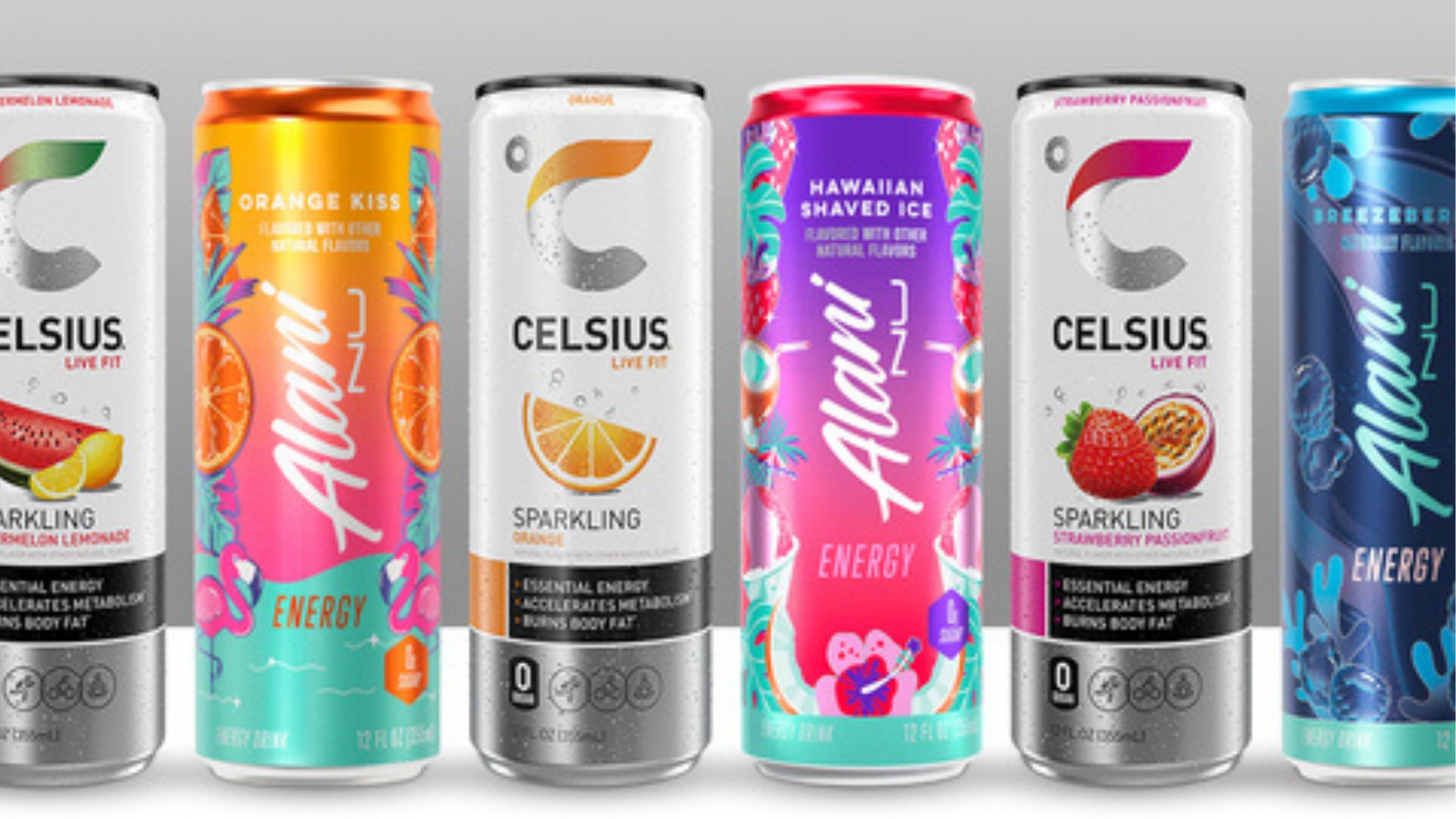
As of this writing, Celsius stock trades about 1% below where it did on August 6, the day before its second quarter earnings report. That flat performance over seven months, however, has come amid an absolute roller-coaster ride.
After the Q2 release, investors cheered: Celsius stock jumped 17% the first day, and nearly 50% in total over two weeks. The third quarter report, however, led the stock down 25% in a single session. Shares kept falling, reversed to regain nearly all of those losses, fell, jumped into last month’s fourth quarter (and full-year) numbers, spiked 7% on that news, and then posted six straight days of declines, losing over 20% of its value in the process.
That volatility is somewhat surprising given that Celsius is nowhere near what it used to be, either as a business or a stock.
Celsius first traded publicly as an over-the-counter ‘penny stock’, a profile which quite often includes companies with essentially zero chance of success (and more than a few outright scams). It got its public listing by executing a reverse merger with a shell company whose previous focus had been on owning mining claims in the Canadian province of British Columbia. (That kind of merger almost always involves companies with zero chance of success and/or outright scams.)
But Celsius proved to be very much the exception to the rule.
The energy drink brand grew into a legitimate potential rival to category leaders Monster and Red Bull, and now has at the very least established itself as a permanent player in the energy drink category. The company acquired Alani Nu for $1.65 billion last year, generated over $300 million in free cash flow in 2025, and now holds market share of about 20%. (That figure includes Alani and Rockstar, the latter of which was also acquired last year in a deal with Pepsi.)

Celsius Still Battles for Investor Confidence
In other words, for most of its history, Celsius stock has been the kind of name that should see wild trading. Questions swirled around the company’s ability to take market share, whether it might be an acquisition target (the likes of Pepsi and Monster as buyers have been mooted for years), and just how well-managed a company that started from almost nothing would be. Yet at this point, many of the core questions have been answered.
This quite obviously is a real business in a category that investors are fond of. (Monster, for instance, often has been one of the best-performing stocks in the entire market over multi-year timeframes.) In that context, it’s somewhat surprising that Celsius is trading as if it’s still a highly speculative play with a considerably uncertain outlook; one would think the stock would settle down.
Obviously, it hasn’t. And for the most part, it’s not sentiment toward the category that is knocking Celsius stock all around, as sometimes has been the case in the past. With the exception of its own recent fade, Monster stock has had a steady, gentle climb since August. Trading in Celsius, in contrast, has been neither steady nor gentle.
Why Celsius’ Next Chapter Matters for Energy‑Drinks
Yet despite Celsius’s impressive growth to a $10 billion-plus valuation, the uncertainty in the market does make some sense. Significant questions remain even with Celsius seemingly entrenched behind Monster and Red Bull in the industry.
Is the legacy brand starting to lose some of its luster? Celsius brand retail sales have bounced back in the last two quarters after a soft start last year. The efforts by distributor PepsiCo to “optimize” its inventory have been worked through.
But clearly investors worry that Red Bull and Monster still have enough marketing power and brand recognition to muscle Celsius out of some of the share it has gained.
Where are profit margins going? Celsius saw margins slip in 2024, albeit in part due to the disruption around the new distribution agreement with PepsiCo. But rising steel prices (including the effects of tariffs) are a factor, and the category has on occasion seen waves of discounting. (Celsius itself noted across late 2024 and early 2025 that promotional intensity had picked up markedly.) The combination of slowing revenue and thinner margins means overall profit stagnates.
Even after recent declines, Celsius stock still is pricing in better growth than that.
And, finally, there’s likely some skepticism toward Alani, and perhaps Rockstar as well. Energy drink upstarts have been able to drive explosive growth, as Alani has before (and after) its purchase by Celsius. But a number of brands (Ghost, Amp, and Bang come to mind) have seen early growth fizzle out. Bringing Alani into the Pepsi network should help the brand avoid a similar fate, but Red Bull and Monster remain, at least in the eyes of investors, the only two energy drink brands that have stood the test of time.
Celsius and Alani still can prove they belong on that list – and if they do, Celsius stock will get back to being a long-term winner. (At 2024 highs, the stock was up more than 50x from the end of 2019; it’s now more than 50% below that peak.) In the meantime, more peaks and valleys are likely to come.
Vince Martin is an analyst and author whose work has appeared on multiple financial industry websites for more than a decade; he’s currently the lead writer for Wall Street & Main. As of this writing, he has no positions in any companies mentioned.
The Food Institute Podcast
his Episode is Sponsored by: CBIZ
While many food industry professionals were hoping that the Supreme Court ruling on tariffs would elucidate the current global trade environment, it appears that it may have added more uncertainty than before. CBIZ’s Lou Biscotti and Mark Baran, and former Customs expert Michael Contino, all join The Food Institute Podcast to provide clarity and actionable insights.