This year, those planning to join Peter Cottontail on a journey down the bunny trail will need to dig deep. Because Easter will be rather costly for consumers in 2026.
Ventures to Grandma’s house won’t come cheap, considering rising gas prices ($3.98 for a gallon of regular). Easter basket costs have increased by nearly 60% since 2021. M&Ms Easter Bags now cost north of $5, and Lindt Chocolate Bunnies have surpassed $6. All told, shoppers will spend $195.59 this season on a per-person basis, according to the National Retail Federation.
According to findings from FinanceBuzz, an Easter candy basket will cost approximately $15.32 this year – up nearly 10% from 2025.
89% of those who make Easter baskets incorporate chocolate and candy, including jelly beans, candy-coated eggs, and marshmallow candy, per the National Confectioners Association.
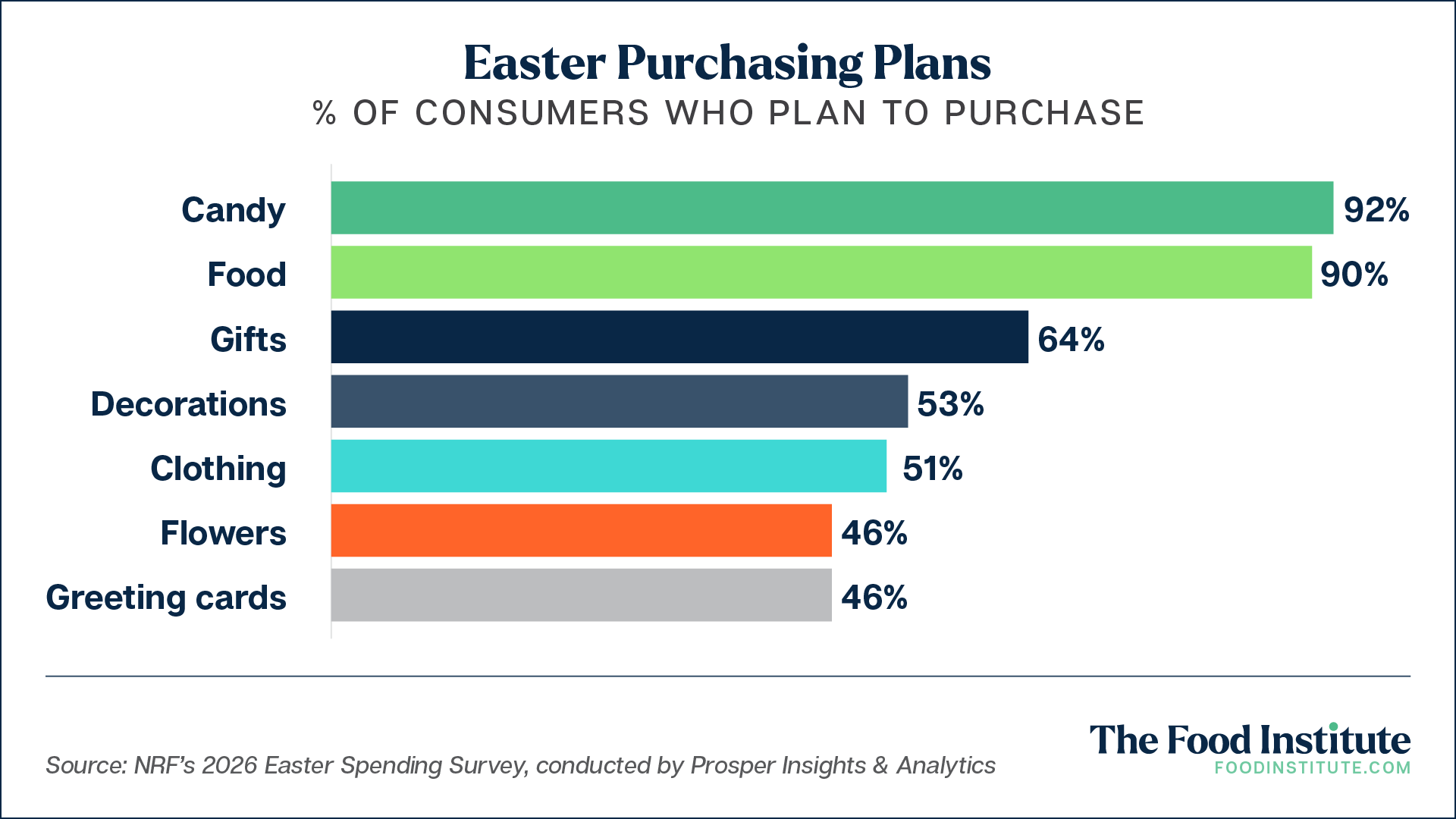
Looking more broadly, Easter spending is slated to hit $24.9 billion, topping the previous record of $24 billion in 2023. Candy represents the leading shopping category, with 92% of consumers planning to purchase sweets to celebrate, while food trails at 90%, according to the NRF.
Easter 2026 Sticker Shock
Growing inflation, to an extent, has tempered Easter spending projections.
“We’ve seen some pullback in recent weeks, especially as rising food and staple prices and ongoing affordable housing challenges keep spending relatively conservative,” Mark Wasilefsky, a TD Bank executive, told The Food Institute.
Lower-income consumers seem especially likely to rein in expenses this holiday season, Wasilefsky said. Surging gas prices, in particular, could cause many Americans to stay home on April 5.
“It’s an incredibly interesting time for travel, especially for the upcoming Easter holiday,” Wasilefsky said. “This year, Easter has come early, a full two weeks prior to 2025.
“There are a few macroeconomic issues affecting travel today, including ripple effects from geopolitical tensions on gas prices – for those driving to their destination – and aircraft fuel for those flying.”
Given the impact of geopolitical tensions such as the war in Iran, broader inflation, and soft consumer sentiment, industry experts don’t expect a significant rise in retail or restaurant volume for April 5.

Easter Dinner Demands
Preparing a traditional Easter meal at home for 10 people should cost upwards of $125 this year, largely dependent on the cost of (and type of) ham (and excluding dessert and drinks).
According to the NRF, among those celebrating Easter, the most popular activity entails cooking a holiday meal (56% of survey respondents).
However, when Easter rolls around, many consumers seek meaningful experiences that entail dining out, according to Jose Joaquin Cordova Ramirez, who leads F&B at the Macondo restaurant in Tulum, Mexico.
Ultimately, Easter is a time when many consumers lean into tradition – which often entails spending on a memorable brunch, a Honey Baked Ham … or even springing for a $6 pack of Reese’s Eggs.
The NRF found that 80% of consumers plan to celebrate Easter, with 58% citing “tradition” as their main inspiration.
“Easter traditions come to life in the moments families look forward to all year,” noted John Downs, the CEO of NCA.
“While economic uncertainty remains on the minds of many, consumers are still focused on holiday traditions like Easter,” NRF chief economist Mark Mathews stated. “Holidays provide an important opportunity for families to reconnect and create lasting memories, even as economic conditions fluctuate.”