Chipotle’s recent earnings report sounded warning bells with investors, posting a same-store sales drop of 2.5% in Q4 and 1.7% for the year. As a result, stocks tumbled roughly 7% on the day of the announcement (Feb. 3).
Thanks to a multi-part turnaround plan in everything but name (technically, the chain never used the word “turnaround”), it has regained some local stability.
Leveraging an age-old tactic to secure foot traffic, the brand is banking big on limited-time offers to get out of the rut. Last year, Wendy’s tried much the same thing following muted systemwide sales results. But Chipotle’s plan is more targeted: where Wendy’s went for LTO partnerships that leveraged cultural cachet, such as collaborations with SpongeBob and Taki’s, Chipotle is leaning deeper into its brand values.
On the recent earnings call, Chipotle CEO Scott Boatwright noted that the brand is looking to improve its fresh menu options with LTOs that increase the brand’s “menu innovation cadence” with four offers throughout the year. First on the menu: the return of the Chicken al Pastor.
“[Chicken al Pastor] is the most celebrated limited-time offer in history, with two times the requests on social media to bring it back compared to any other LTO,” Boatwright said.
He added that the move would secure brand growth and bolster positive same-store sales trajectories, citing internal data showing that core customer bases are more likely to choose a location with a new menu offering.
That’s not to say the Mexican-inspired chain is eschewing pop culture altogether. Starting Feb. 6, it swapped its silver foil wrapper for gold in a nod to the Winter Olympics. It also developed five custom bowls with top athletes to make customers feel connected to the culture.
Time will tell if burrito wrappers and themed bowls will get consumers through the door.

Real Protein, Real Returns
Boatwright acknowledged what he called a “dynamic consumer backdrop” of reduced restaurant spending and a focus on value and quality. To this end, it’s going all-in on protein to strengthen its value proposition.
In December, Chipotle unveiled low-cost entrants to the high-protein movement with a High Protein Cup snack (~$3.80) and a Single Chicken Taco (~$3.50). At the time, it cited the 70% of Americans who are prioritizing protein, as well as the recent rise of GLP-1 drug users. Now that pill forms of these drugs are hitting the market, GLP-1-friendly lifestyles are also likely to gain traction.
The additions accompanied a high-protein line of traditional menu items, most of which feature a larger serving of the protein, or tailored bowls to hit specific macronutrient goals.
“As we move into 2026, the consumer landscape is shifting with a heightened focus on value as well as high-quality protein, fiber, and clean ingredients, all of which are fundamental to Chipotle’s North Star brand positioning,” Boatwright said.
Chipotle’s menu lineup in the year to come will likely play into its “for real” ongoing campaign, emphasizing “53 ingredients you can pronounce,” and its “better for you, better for people, better for our planet” commitment. Despite a spending-weary consumer, CivicScience research found consumers anticipated increasing spending in health & wellness even as fast-casual and fast-food budgets dip.
Chipotle’s recent Super Bowl ad encapsulates its full-year strategy: giving away $1 million in free entrée codes to communicate its relative price differentiation, and an activation highlighting its real ingredients. This promotion is packaged in an AI-generated ad, which calls back to its plan to leverage AI in its rewards program “to power more personalized and impactful user experiences,” said Boatwright.
The Bottom Line
If Chipotle is clear in its strategy, it may resonate with these emerging need states and achieve its 2026 goals, which are realistic: the recent earnings report estimates same-store sales for 2026 to be “about flat.”
Despite a less-than-ideal 2025, the fast-casual chain continues to garner success, making it a long-time darling for investors. Plus, it knows how to shoulder an advantage.
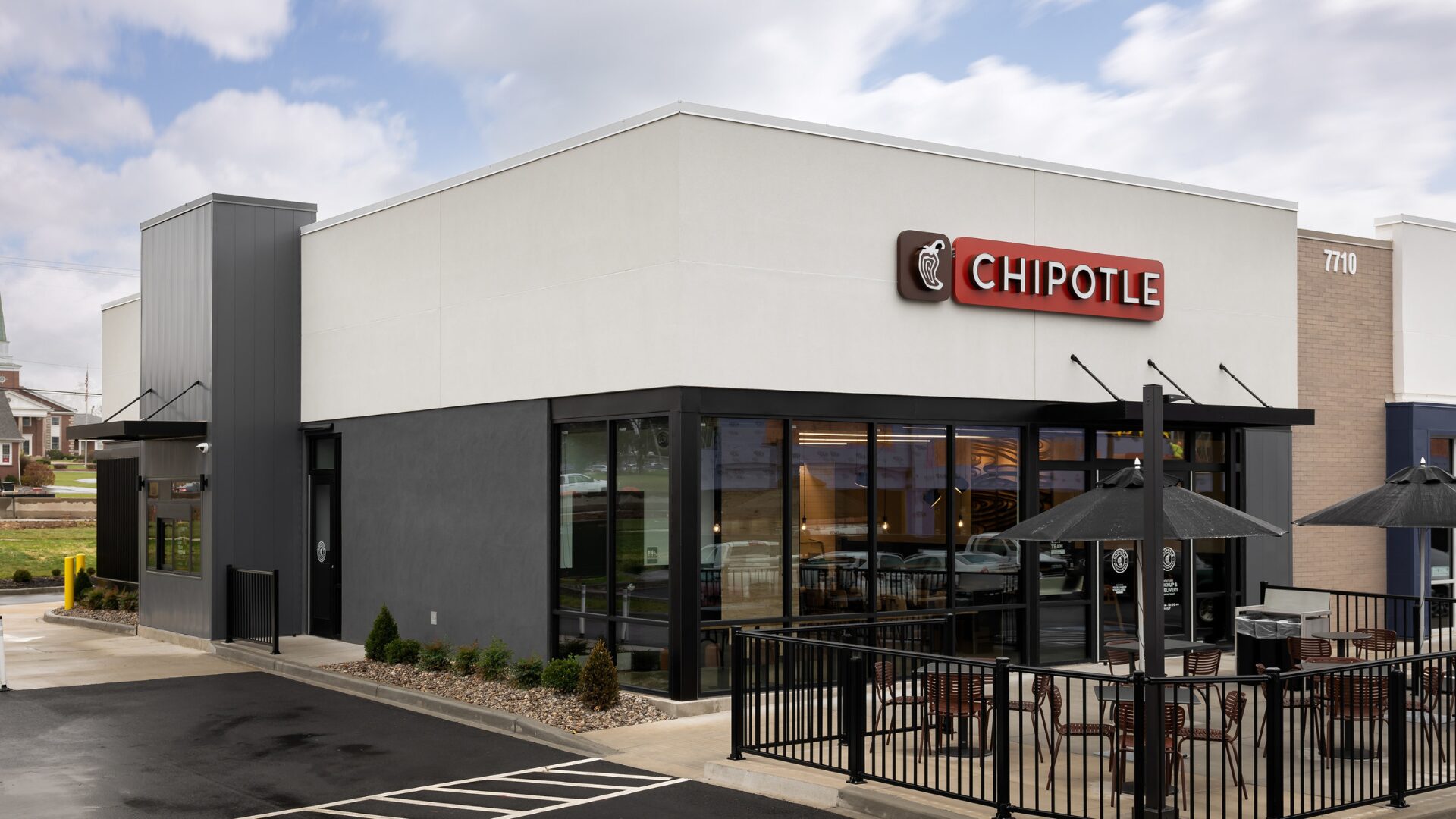
Right now, the chain is winning with store openings, because, despite its same-store sales stumble, it still achieved a total revenue increase of 4.9% thanks to 132 company-owned restaurant openings in 2025, and 97 Chipotlane drive-thru unveilings.
“Same-store visits are stabilizing while quick trips gain share,” noted Placer.ai. These drive-thru additions help facilitate quick-trip shoppers, leading to an overall increased share of visits lasting less than 10 minutes.
Fast-casual drive-thru makes sense for health-conscious families who may be considering a quick mealtime solution at a traditional QSR. As prices at pure-value competitors (Wendy’s, McDonald’s, etc.), Chipotle will look more attractive if it can meet its goal to keep prices down.
In 2026, Chipotle anticipates accelerating its footprint growth with 350-370 new locations and a lofty goal of 80% of its entire network having a Chipotlane option.
Analysts were likely not expecting Chipotle’s 2026 strategy to include “be fruitful and multiply,” but they were likely pleased, with stock valuations now slightly outpacing the pre-earnings-report tumble.
Still, the fast-casual chain is a far cry from its $65.4/share peak, equating to roughly $82 billion. Now, it sits comfortably at a bit more than $51 billion.
Food for Thought Leadership
In summer 2025, Nik Modi of RBC Capital Markets warned that consumers were in a “spending recession,” but is that still the case in early 2026? Modi discusses the potential impacts of GLP-1s, price cuts, agentic commerce, and more on the food and beverage sector for the rest of the year.