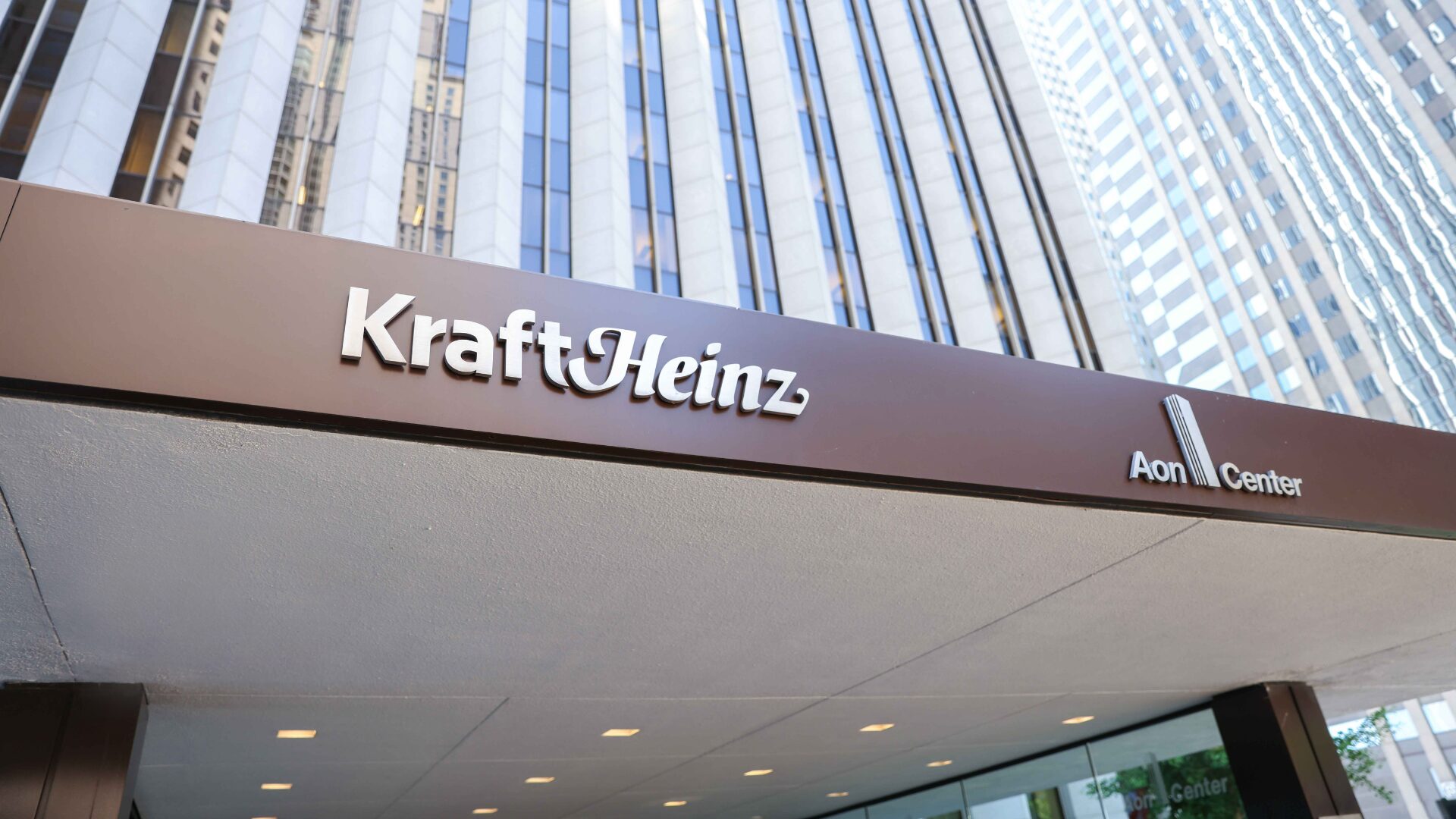
Last week, Kraft Heinz filed a prospectus with the U.S. Securities and Exchange Commission. That prospectus allowed Berkshire Hathaway, which owned 27.5% of Kraft Heinz shares, to begin selling off its stake “from time to time”.
The news sent Kraft Heinz stock down more than 6%, and to a six-year low in the process. But shares have largely recovered the losses since, for a reason that’s obvious in retrospect: Berkshire’s decision was hardly a surprise.
After all, Kraft Heinz became one of the rare misses for legendary Berkshire chairman Warren Buffett. Buffett and Berkshire, along with hedge fund 3G Capital, helped guide the 2015 merger between Kraft and Heinz that created the conglomerate. Yet the strategy behind the tie-up simply never played out: even with dividends, Kraft Heinz stock has posted returns of negative 46% since the deal closed.
With Buffett stepping down as CEO at the beginning of this year, the timing for an exit was right. It is new CEO Greg Abel, not Buffett, who is cutting the company’s losses. That’s not to say that Buffett isn’t involved: he remains chairman of the company, and no doubt Abel consulted him in making a decision about an investment still worth nearly $8 billion.
At this point, Buffett was probably content to move on even if he personally hadn’t forced the issue before giving up the CEO job. Making the move now allows Abel to position himself as independent from the strategies run by Buffett and his late partner, Charlie Munger.
And Buffett had publicly voiced his displeasure with the decision by Kraft Heinz to split into two companies; in early September, he told television network CNBC that he was “disappointed” in the decision. As we noted at the time, the legendary investor was far from alone.

Kraft Heinz Signals a Brand Power Problem
Investors dumped Kraft Heinz stock when the breakup was officially announced, which seemed driven not by the fact that the company was splitting up, but how it was splitting up. Investors likely wanted a model akin to that of Kellogg, which sent its ‘good’ business (faster-growing snacking and international products) to Kellanova and its more challenged products (notably U.S. cereals) to W.W. Kellogg. Both companies wound up being acquired, with Mars paying $36 billion for Kellanova.
Without that kind of financial engineering, investors simply don’t believe Kraft Heinz has that much to offer. Organic (ie, excluding the effect of divested products) sales volumes have been among the weakest in the industry; after third-quarter results in November, the company reduced its full-year guidance for organic revenue to a decline of 3 to 3.5 percent. Profit margins are weakening, in large part because Kraft Heinz brands just don’t have the pricing power they used to. (As we’ve noted before, Kraft Heinz has moved to promotional pricing on macaroni and cheese, which, not that long ago, was the standard product to which struggling consumers might trade down, and one where the company held dominant market share and name recognition.)
Kraft Heinz Turns to Steve Cahillane
The reason Kraft Heinz hit a six-year low last week is relatively simple: the brands aren’t good enough.
In the decade since the two companies united, American tastes have changed. Big, corporate, processed food has seen steadily lower demand; younger, more innovative, and more niche brands have been able to take share. And so, the problem with Kraft Heinz is not the two companies merging or even that they’re separating.
Rather, it’s that the company has not been able to reinvigorate longstanding brands like Philadelphia, Kraft, and Heinz. Innovation in general has been minimal: last year, CEO Carlos Abrams-Rivera said on an earnings call that “innovation” – i.e., new products – accounted for just 3% of sales. That was framed as good news, as the figure had been just 1.6% in 2022.
That’s not enough. The merger wasn’t enough. Kraft Heinz is bringing on a veteran, hiring Steve Cahillane as CEO to replace Abrams-Rivera. (Abrams-Rivera originally was tapped to lead the North America grocery business after the split, but the board of directors appears to have changed its mind.) Cahillane led the Kellogg split, and the hope here clearly is that he can work similar magic as Kraft Heinz splits into two.
But the Kraft Heinz stock price itself shows that investors aren’t terribly optimistic; instead, they’ve lost patience. Given that one of the best investors in history has done the same, it’s not hard to blame them.
Vince Martin is an analyst and author whose work has appeared on multiple financial industry websites for more than a decade; he’s currently the lead writer for Wall Street & Main. He has no positions in any securities mentioned.
Food for Thought Leadership
It’s undeniable that restaurants were challenged heavily in 2025, but what does that mean for 2026? Foodservice industry veteran John Inwright discusses the prospects for a new year, what’s working for successful operators, and the headwinds and tailwinds that could define the year.