NEW YORK CITY—Fresh off an adjustment year for the plant-based sector, the industry is primed for growth in key areas as it heads into 2026.
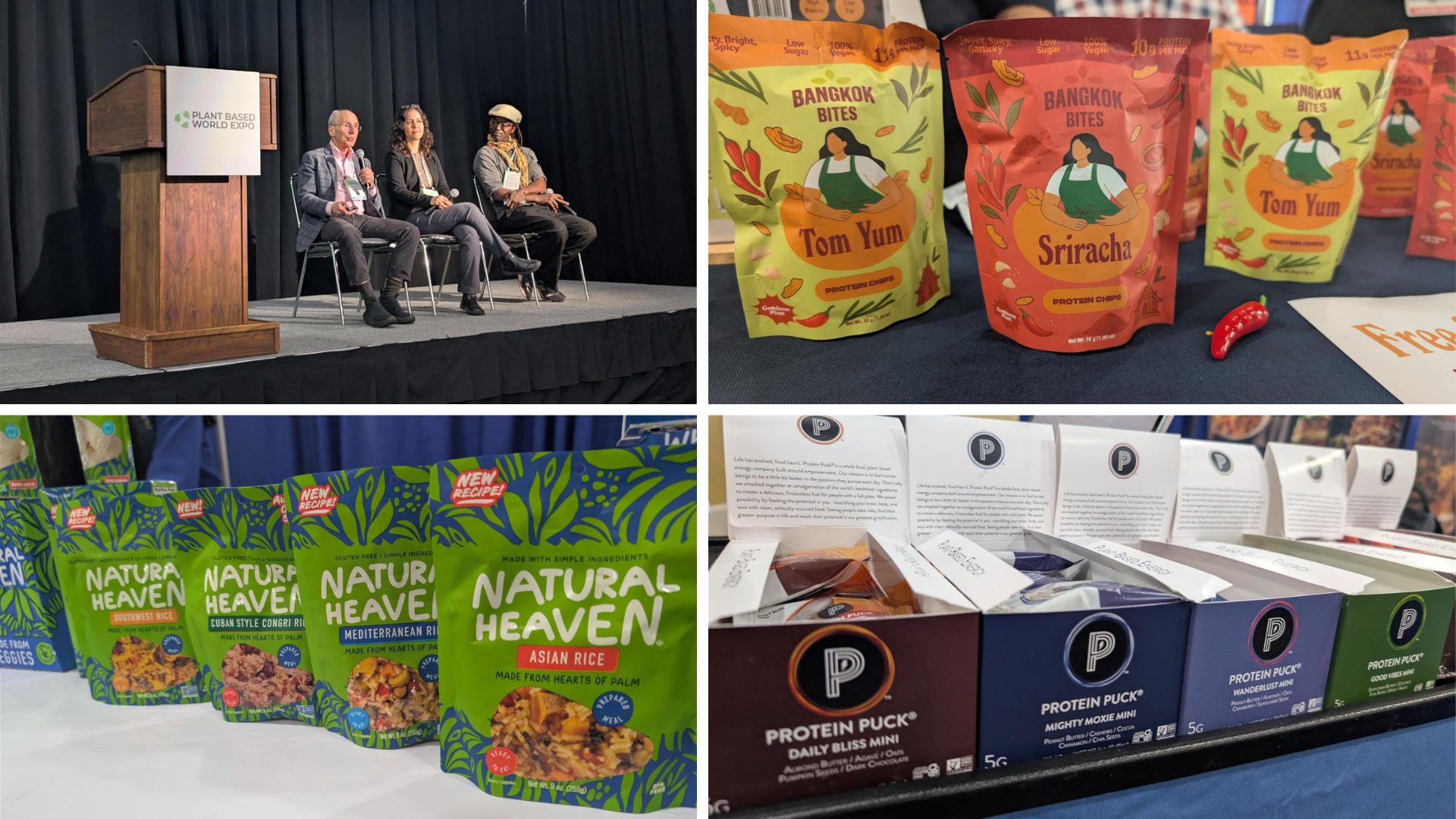
The Plant Based World Expo 2025 returned once again to New York City’s Javitz Center, this time bringing together more than 3,000 industry stakeholders. The $11.8 billion global plant-based market is projected to triple over the next ten years, and product innovation is the core lever to drive industry growth heading into 2026.
Macronutrient value propositions continue to be top-of-mind; however, messaging around these attributes, as well as plant-based values, is steadily becoming more nuanced. On the show floor, brands and buyers are showing hope for an industry that has weathered two years of relative stagnation.
“We have to meet people where they are, empower them, and push them,” said Lianna Levine Reisner, president of Plant-Powered Metro New York.
This sentiment encapsulates the next generation of plant-based positioning—respond to consumer behavior drivers without compromising on values.
Let’s dive into some of the salient themes on display at the industry gathering.
Tasty and Tastier
On the show floor, one thing was clear—innovation is everywhere.
Budding brands and those with mature EMEA (Europe, Middle East, and Africa) positions taking on the American consumer are tapping a larger breadth of plant-based ingredients, and investing more in their research & development to produce higher-quality, cleaner-label offerings that delight.
Much of this innovation is around the snacking space, which Joseph Saine, Impossible Foods’ director of sales, noted in an education session about the state of the consumer.
SPINS data showed that snacking occasion market growth increased 4.1% year-over-year, over-indexing compared to the overall industry and signaling a key opportunity heading into 2026. On the other hand, lunch and dinner center of plates fell 14.3% over the period.
He noted that snacks offer a “lower-stakes” environment to test a new product, compared to a more expensive main dish.
Bangkok Bites is a clear contender in this niche, with Thai-infused snacking flavors such as Tom Yum- and Sriracha-flavored protein chips. Additionally, plant-based edible coffee cup brand Cupffee explicitly defines a sustainability prerogative in addition to its animal-free position. The scup is meant to hold one’s coffee, then act as a biscuit treat after the beverage is consumed.
Although center-of-plate growth has fallen over the last year, high-protein advances are likely to improve the value proposition and inspire curious consumers to re-enter the plant-based category with occasional purchases.
Moreover, brands working behind the scenes are bringing innovation to the fore. Maia Farms, for example, leverages oyster mushrooms and peas to work with brands to create better-performing analogs of animal-based products by delivering improved texture and experience. Similarly, Redefine Meat invested heavily in its R&D to offer a wide range of plant-based products, including a 3D-printed skirt steak in addition to minced lamb, pulled pork, and bratwurst analogs.

Macronutrient Showdown
Tailwinds from the overarching better-for-you movement have made plant-based eating more attractive to conventional consumers. For one, shoppers are no longer afraid of plant-based protein sources, such as pea protein. Plus, fruits and vegetables are full of fiber, the latest nutrient movement to intrigue the better-for-you shopper.
As such, protein, fiber, and probiotics are the top three macronutrients shaping the future of the plant-based industry. On plant-based products alone, the performance of products with ingredients claiming probiotic benefits has increased 10% year-over-year compared to a 3% decline for total store plant-based sales.
This has contributed to an overall growth in “gut health” and “gut-friendly” market positioning, which benefits the conventional shopper as well as the GLP-1 consumer who tends to be more keenly aware of these attributes and their effects. No Bloat’s line of products delivers on this need state with a line of digestive-friendly animal-free center-of-plate offerings.
Protein-fortified foods are behind much of today’s new products across the entire grocery store. SPINS found that 1 in 4 new-to-market products boast a protein claim, highlighting the trend’s market saturation, as well as its importance.
“Protein is here to stay,” assured Saine.
Beastie Burger presented a mealtime option with 30 grams of plant-based protein, offering more than a standard beef burger. Snack brand Protein Puck also offered 5g protein in their snack bar bites.
In addition to standard soy, mushroom, and pea options for proteins, the show platformed heart of palm and various nuts and seeds as viable natural options for protein fortification. Natural Heaven, for example, offers a line of heat-and-eat meals delivering on protein goals with heart of palm. SPINS research also found that pumpkin seed protein, hemp protein, and bean protein all outperformed whey protein across all F&B.
Vegan Fatigue? No Problem!
“We’re seeing a lot of vegan and plant-based fatigue, so we’re focusing on adjacent labeling—clean label, allergen-free, etc.,” noted Michael Majcherczyk, Fabalish board member, in an education session on labeling.
He explained that the chickpea-based brand has seen other on-trend characteristics as the largest growth drivers, while vegan and plant-based labeling have waned.
The panelists agreed that, for the most part, a quick reference to the product’s vegan status, such as with a visual graphic or third-party certification, is enough to signal to the consumer base that it is for them, without alienating other potential consumers.
In fact, studies have shown that marketing a product with the word vegan can even decrease sales in A/B testing scenarios. Value-added attributes, such as sustainability, organic, and fair trade certifications, are more likely to move the needle on sales. Organic dollar sales growth, for example, is up 18% year-over-year, according to SPINS.
“It’s great if it’s vegan, but don’t make it the full value proposition,” warned Noah Hyams of Vegpreneur.
This, however, depends on the brand. Oshi’s plant-based salmon, for example, heavily positions itself as a purely vegan item to appeal to chefs of vegan restaurants. Co-founder Ofek Ron said that it tested plant-based to no avail.
To truly capture growth in today’s market Liz Dee, CEO of Edward & Sons Trading Company, explained that brands must listen to their consumer, see what they want, and deliver on those needs.
Food for Thought Leadership
This Episode is Sponsored by: Performance Foodservice
How important is it as a food distributor to build a brand for foodservice – especially since consumers may never see or recognize it? Mike Seidel, vice president of procurement at Performance Foodservice Corporate, shares how the company views the development of its existing foodservice brands, including Roma and Contigo, and how they helped in the creation of its most recent Mediterranean concept Zebec.