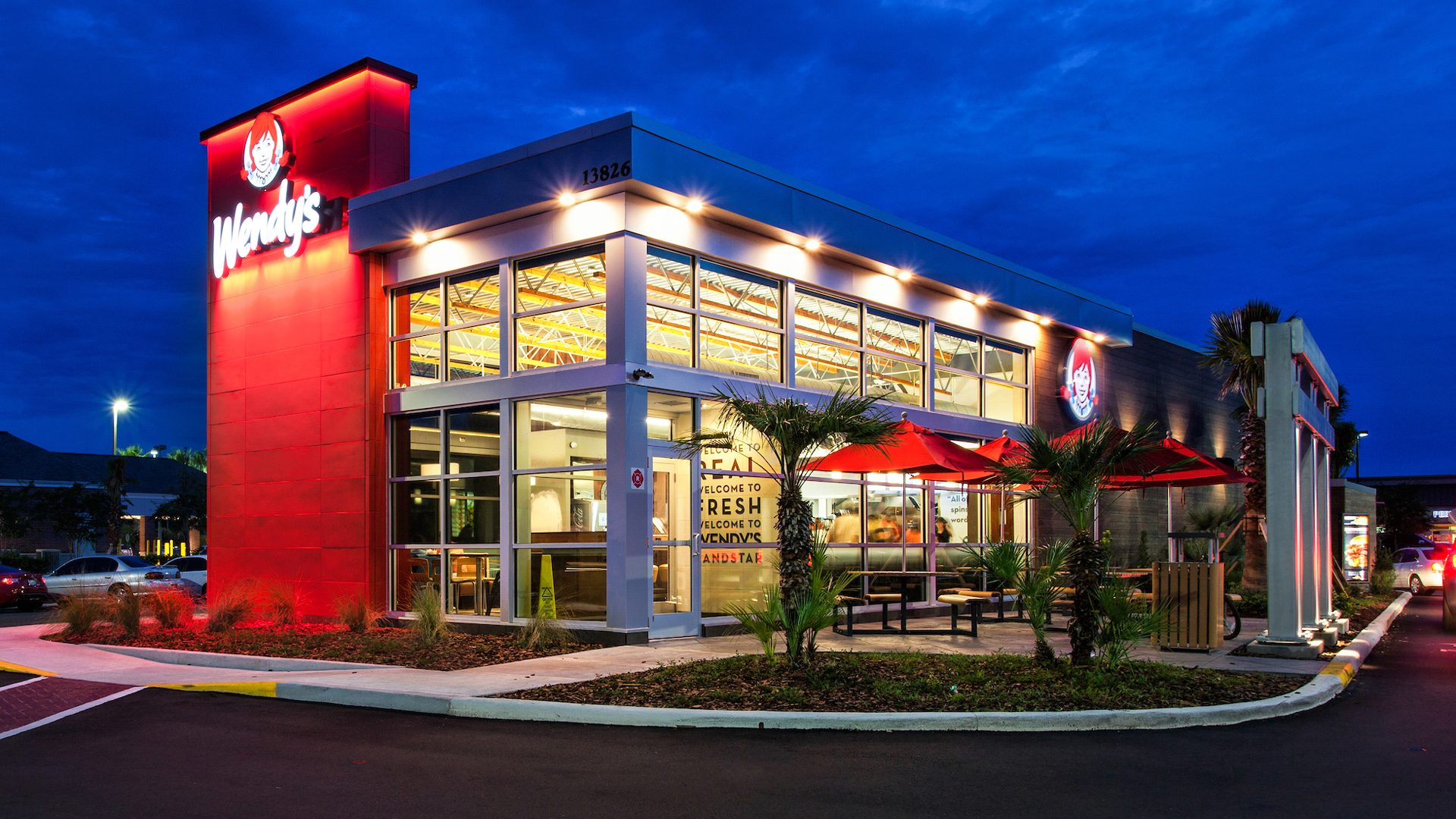
For Walmart, the headlines and the underlying business seem to contradict. The big news of late was that in 2025 Amazon finally surpassed Walmart as the country’s largest company by revenue. Meanwhile, investors largely shrugged at Walmart’s fiscal fourth quarter earnings report last week; Walmart stock fell a little over 1% on the day. Shares are now down almost 6% in less than two weeks, suggesting a loss of about $60 billion in market capitalization.
But for the most part, those headlines are just noise. Amazon has edged past Walmart in total revenue, but in the American retail space the relative position of the two companies is a bit fuzzier.
Excluding its international business, Walmart generated $483 billion in revenue in fiscal 2025 (ending January 2026). Amazon’s North America segment (which excludes overseas operations as well as its profitable Amazon Web Services cloud computing business) generated “just” $426 billion. (As an aside, both figures are staggering: sales for each company in the U.S. account for over 1% of gross domestic product. Per data from PYMNTS Intelligence cited by The Wall Street Journal, Amazon now drives 9% of U.S. retail spending, and Walmart over 8%.)
That said, in its Marketplace business Amazon only accounts for fees paid by third-party sellers as revenue; total dollar sales (accounting for third-party sales at their purchase price) for the online giant might well be higher. (Indeed, the PYMNTS data suggests as much.) But at the least Walmart is quite close, and it’s not as if the growth rates have diverged all that much. Revenue in Amazon’s North America segment rose about 10% in 2025, against a 4%-plus increase for Walmart U.S. and Sam’s Club. Amazon invested much more heavily to drive that growth as well.
The fact that Walmart has been able to keep its title as the country’s highest revenue generator for 17 years is a testament to how well it has executed.
Most incumbents in most industries have been disrupted far more severely and for more quickly by online competition.
And few, if any, of those incumbents were facing a new rival with the focus and growth that Amazon has shown over its 32-year history. The story seems less that Amazon has surpassed Walmart than that Walmart has gone toe to toe with one of the century’s great companies and, for the most part, held its own. In so many industries – including much of retail – that has hardly been the case.

Walmart’s “Sell‑off” Proves its Strength
At the same time, the recent sell-off in Walmart stock itself highlights how impressive the company has been. Investors essentially seem disappointed that performance in the fourth quarter of FY25 and the outlook for FY26 aren’t quite good enough.
Yet Walmart drove operating income up more than 10% in the quarter, capping a year in which it still expanded profit margins despite dealing with persistent, significant uncertainty around tariffs and macroeconomic factors. The company is looking for 6% to 8% operating profit growth this year – despite continued consumer pressure and perhaps even more uncertainty on the tariff front.
The company continues to take market share and outperform peers. And, as a result, Walmart stock has become historically expensive.
Relative to expected earnings over the next twelve months, shares are more highly valued than they have been since the late 1990s. Depending on the estimate chosen, shares are trading at about 40 times next year’s earnings; the market-wide multiple currently is in the low 20s, and a little over a decade WMT often traded at 12-13x.
And while the loss of ~$60 billion in market capitalization sounds high, that loss should be seen in the context of Walmart’s overall valuation, which still sits over $1 trillion. In that context, the sell-off is relatively small. And, in fact, that small sell-off has arrived because Walmart has posted such impressive execution and thus such impressive returns in its stock (567% over the past decade including dividends) that investors worry it almost can’t do much better.
To be sure, that is a legitimate concern for the stock. But as with the multi-year ability to hold off Amazon, it’s also a badge of honor for the business.
About the author: Vince Martin is an analyst and author whose work has appeared on multiple financial industry websites for more than a decade; he’s currently the lead writer for Wall Street & Main. As of this writing, he has no positions in any companies mentioned.
Food for Thought Leadership
This Episode is Sponsored By: Tibersoft
Foodservice manufacturers might develop option paralysis with all the data available in the current day, but what kind of focus can really help drive marketing returns? Suzanne Cwik of Tibersoft and Eric Anderson of Conagra help break down data best practices to develop a foodservice marketing engine for food away from home manufacturers.