“The health-forward movement is evolving beyond traditional wellness,” Kristen Walters, partner, Forvis Mazars US.
There’s no denying that health and wellness are top of mind as consumers consider their food and beverage purchases. The weight-loss movement supported by GLP-1 drugs, the demand for cleaner labels, general accelerated interest in the vertical, and the recent call to “Make America Healthy Again,” have come together to instigate a cultural shift.
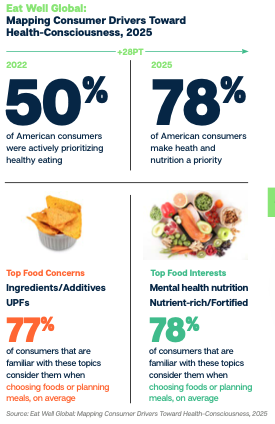 “Food brands must make nutrition strategy part of their overall brand strategy,” Geoffrey Russo, global insights and impact director at Eat Well Global, Inc., told FI. Health has become a top motivator for today’s consumers.
Whether that looks like portion control for indulgence, tapping less-processed ingredients, or adding some macronutrient benefits, consumers are responding better to positive health attributes.
The dominating scrutiny of synthetic colorants and additives in the media, are also compelling major companies, such as Walmart and Nestlé, to pledge intentions to gradually remove these from their products. For a closer look at the clean label movement, check out the FI Monthly Report on Innovative Trends for 2026.
To build trust for health-conscious shoppers, Russo recommends engaging with audiences in ways that build credibility, clarity, and consistency.
Challenger and specialty brands are uniquely suited to cater to this growing consumer need state, as they can often better address the tailored needs of their niche target audience.
“Often built around a single benefit, be it plant-based credentials, functional health, or ethical sourcing, [challenger brands] are able to speak directly to consumer desires in a way that feels fresh and authentic,” said PRS IN VIVO’s Patrick Young.
“In a noisy landscape, their narrow focus can be a strength.”
This, however, hasn’t stopped major brands from developing their health-forward focus, too. Recently, Starbucks developed a line of protein-infused coffee that, to some, highlights the absurd extremes of the movement, while others suggest the deep implications that macronutrient fortification has on the industry.
“Our point of view: the future looks like great-tasting, macronutrient-smart coffee – not wellness theater,” weighed in Wandering Bear Coffee co-founder Matt Bachmann.
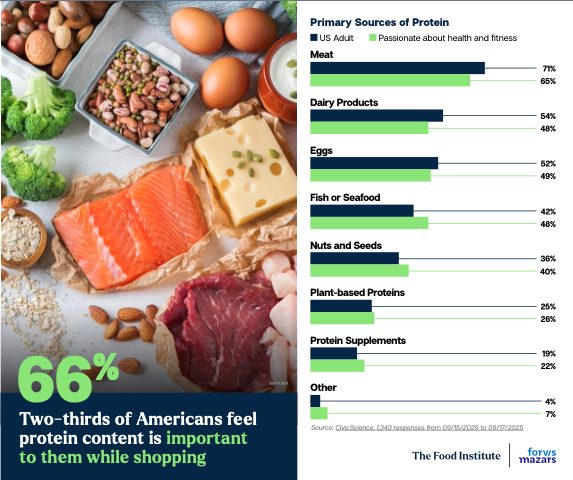
Plus, with recent reports noting health-focused activities such as gym visits, climbing to 25% of the U.S. population, opportunities for brands to meet the need states of these fitness enthusiasts continue to grow.
The Health & Wellness Calibration
“‘Health-forward’ isn’t just about clean ingredients anymore. It’s also about balance, mental health, and the environment,” said Nicole van Zanten, co-president and chief growth officer at ICUC.Social.
Consumers are looking for products that address multiple lifestyle-related goals and values. Whereas a decade ago, social and environmental values remained niche food industry attributes, ongoing policy shifts, such as the European Union Deforestation Regulation, and business initiatives to achieve carbon neutrality have challenged the industry to consider its relationship to the environment.
Van Zanten added that social media is a key driver of this movement, as it allows consumers to discover tailored products and better understand company positioning.
Additionally, healthy lifestyles today have developed a new system where “functional” is in.
Bachmann explained that this is no coincidence. He suggested that today’s macronutrient demand (protein, fiber, etc.) developed on the heels of a cultural shift of the term “functional,” transforming from “micro” nutritional benefits, such as adaptogens, nootropics, to a more inclusive definition.
That doesn’t mean that these situational benefits are less important, as the market still embraces an overall ‘food as medicine’ approach to support physiological and psychological processes; rather, it has made the health and wellness movement more accessible.